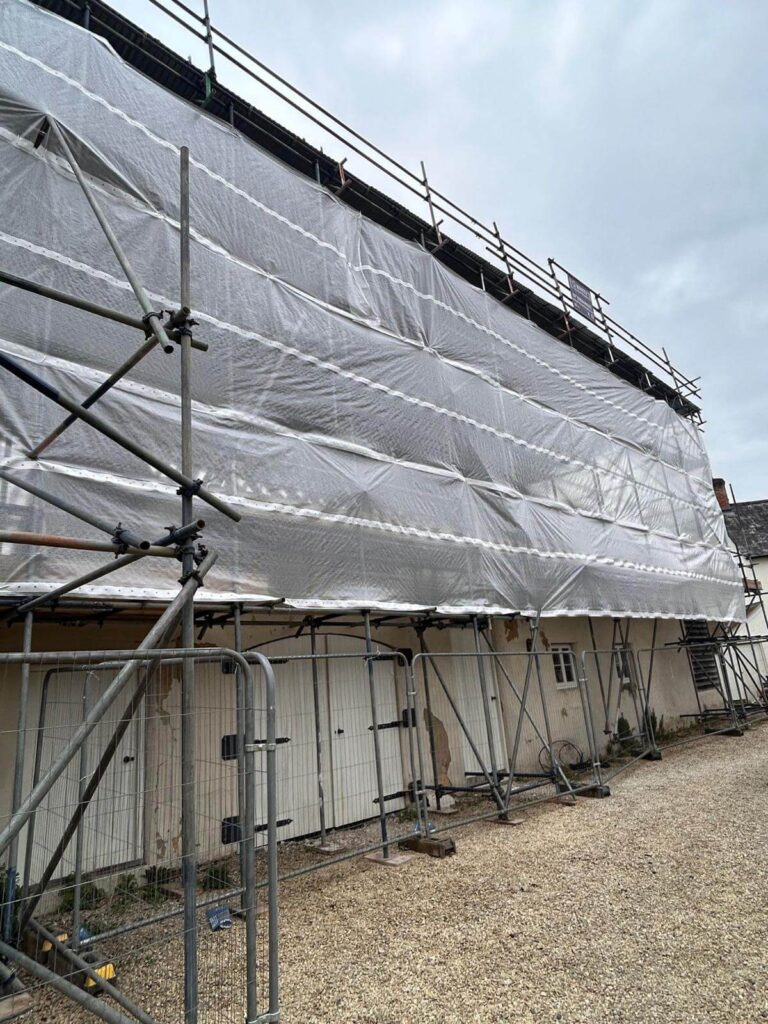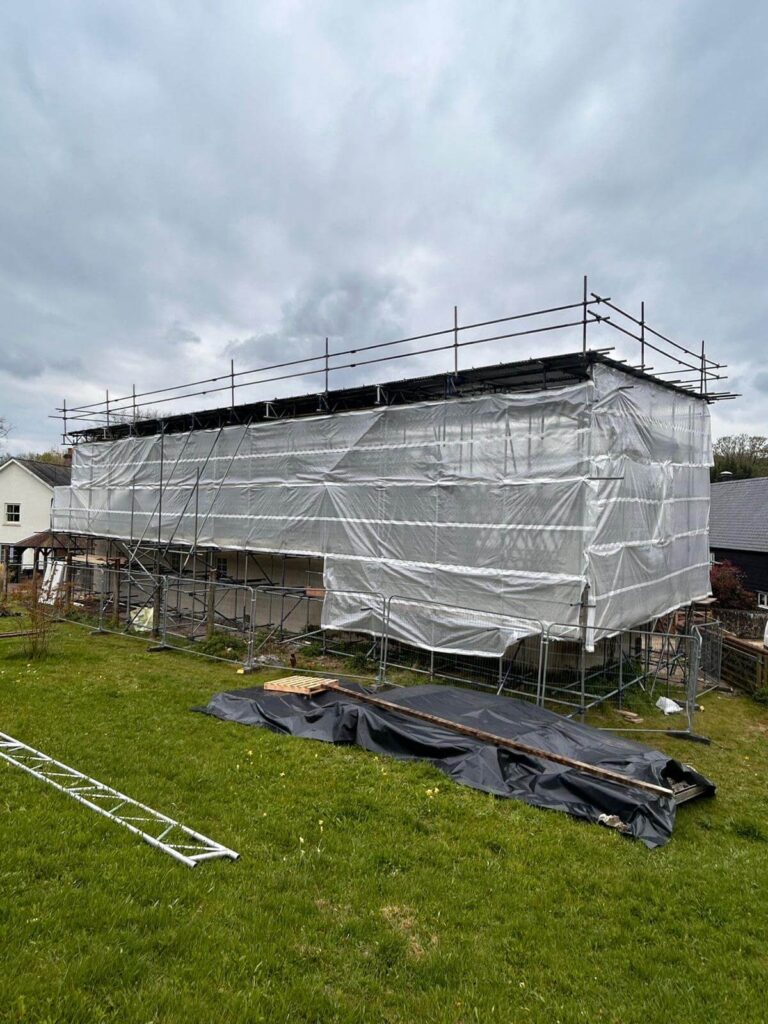
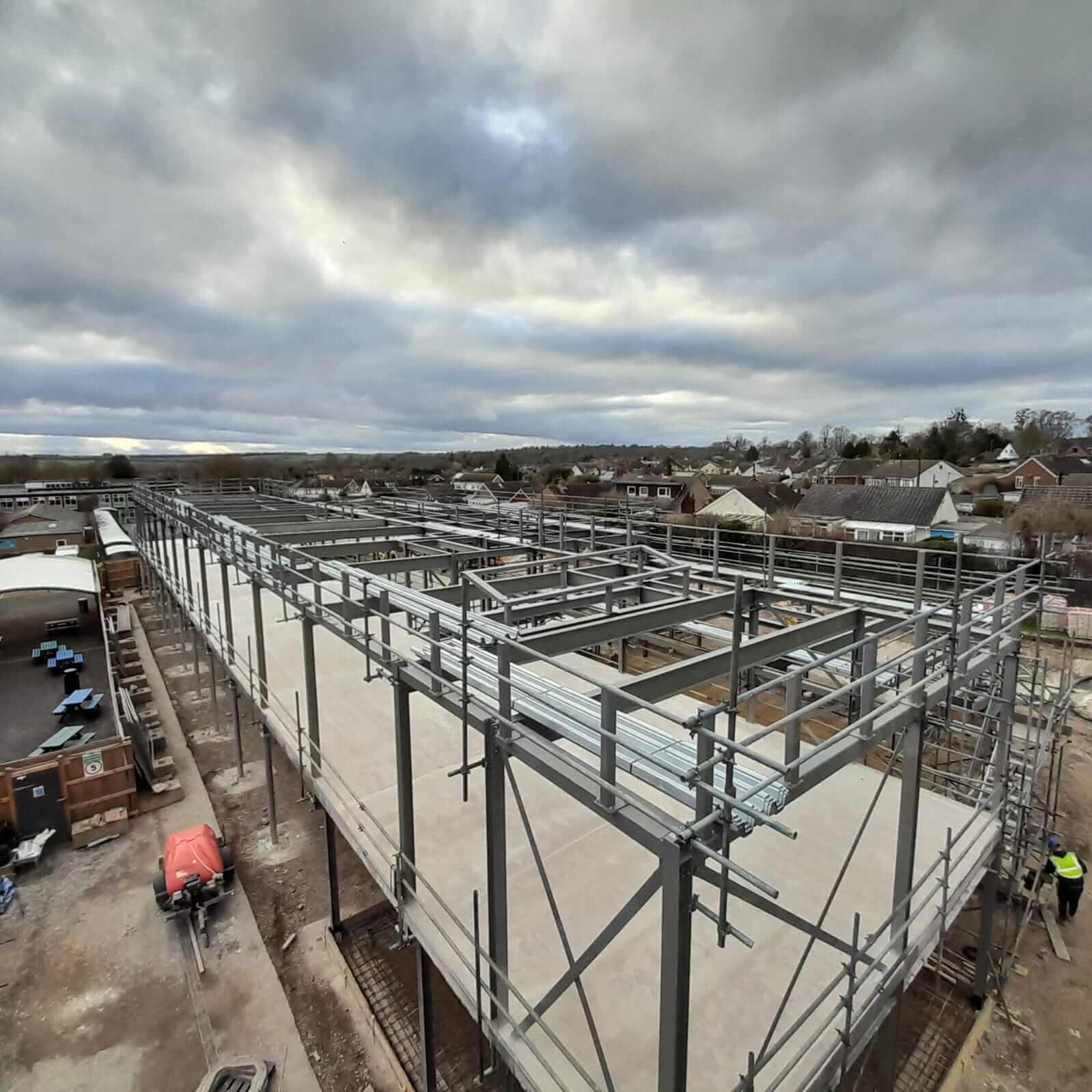
Scaffolding cost per square metre is one of the easiest ways to get a rough starting figure for a project, but it is also one of the easiest figures to misunderstand. A square metre rate can help you compare basic access requirements, estimate a likely budget and understand why a large elevation costs more than a small chimney scaffold. It does not, however, work like buying carpet, plasterboard or paving slabs. Scaffold pricing depends on height, access, labour, hire duration, loading requirements, safety inspections, transport, design complexity and how awkward the property is to work around.
In the UK, a simple domestic scaffold may often be estimated at around £20–£40 per square metre, although some straightforward work can sit lower and complex scaffold can cost much more. A basic residential elevation might be closer to £20–£25 per m², while awkward commercial access, temporary roofing, high-level structures, narrow sites, bridging work or public-facing scaffold can push the effective square metre rate higher. Some projects are not sensibly priced by square metre at all because the labour, access risk or setup complexity matters more than the measured scaffold area.
That is why square metre pricing should be treated as an estimating tool rather than a fixed promise. It helps you understand the scale of the job, but a scaffolder will usually quote based on the actual scaffold design, the number of lifts, the working height, the amount of elevation covered, the equipment needed and the time required to erect and dismantle the structure safely.
What Does Scaffolding Cost Per Square Metre Mean?
Scaffolding cost per square metre means the estimated cost of scaffold based on the area of access being provided. In simple terms, you multiply the height by the length of the scaffolded elevation to get an approximate square metre figure. For example, if a scaffold runs 10 metres along a wall and rises 6 metres high, the measured area is roughly 60 square metres.
If the estimated rate is £25 per square metre, that 60m² scaffold would suggest a starting budget of around £1,500. That sounds simple, but the final quote may be higher or lower depending on the details. A clear, flat, easy-access wall on private land is very different from a narrow terraced street with a pavement licence, limited parking, a bay window, a porch, overhead cables and a fragile roof below the work area.
Square metre pricing is most useful when you are comparing similar types of scaffold. It can work reasonably well for a straightforward independent scaffold along a flat elevation, such as access for painting, rendering, pointing or gutter work. It becomes less accurate when the scaffold needs bridging, cantilever sections, loading bays, temporary roofs, stair towers, debris netting, pavement protection or specialist design.
Typical UK Scaffolding Cost Per Square Metre
For many domestic projects, a rough UK range of £20–£40 per m² is a sensible planning figure. Smaller and simpler scaffold may sometimes work out lower, especially when only one lift is needed or the job is easy to access. More complex scaffold can move well beyond this range, particularly on taller buildings, commercial sites, difficult rooflines or projects with public safety requirements.
As a broad guide:
- Simple low-level domestic scaffold: £15–£25 per m²
- Standard house scaffold: £20–£40 per m²
- Higher or more awkward domestic scaffold: £35–£60 per m²
- Commercial or complex scaffold: £40–£80+ per m²
- Temporary roof scaffold: often priced separately and commonly higher than standard access scaffold
- Birdcage or crash deck scaffold: may use square metre pricing but depends heavily on height, loading and internal access
These ranges should not be treated as a guaranteed price list. They are useful for budgeting before a scaffolder visits or reviews photographs, but the final quote will depend on the actual site conditions. A scaffolder is not only supplying tubes, boards and fittings. They are also supplying labour, transport, risk management, insurance, inspections, dismantling and responsibility for creating a safe working platform.
Why Square Metre Rates Vary So Much
Square metre rates vary because scaffold is not a flat product. A 100m² scaffold on one property may be quick and simple to build, while another 100m² scaffold may need extra lifts, beams, protection, ties, loading points and several days of labour. The measured area can be the same, but the job can be completely different.
Height is one of the biggest reasons. A scaffold that rises two storeys is usually cheaper per square metre than a scaffold that rises four or five storeys. The higher the scaffold goes, the more labour is needed to pass materials up, build safely, tie the structure, inspect it and dismantle it afterwards. Higher scaffold also creates greater exposure to wind and movement, so stability becomes more important.
Access is another major factor. A scaffold built on a driveway or clear side path is easier than one built in a rear garden reached through a narrow house passage. If the scaffolders have to hand-carry equipment a long distance, work around parked cars, protect landscaping, bridge a conservatory or avoid damaging fragile surfaces, the labour time increases.
The type of work being carried out also affects the price. Scaffold for light gutter cleaning does not need the same loading or working arrangement as scaffold for brickwork, roof replacement, chimney removal or rendering. If materials, waste, tools and several trades need to use the platform, the scaffold may need to be stronger, wider or more carefully arranged.
How to Work Out the Scaffold Area
The basic calculation is simple:
Length of scaffold x height of scaffold = approximate square metres
For example:
8 metres long x 6 metres high = 48m²
If a rate of £25 per m² is used, the rough scaffold cost would be:
48m² x £25 = £1,200
That gives a useful starting figure, but it does not include every pricing factor. The scaffolder may need to add for extra lifts, edge protection, pavement licences, difficult access, bridging, return elevations, higher loading requirements, a staircase tower or longer hire. The quote may also include a minimum charge because even a small scaffold requires transport, labour, erection, inspection, dismantling and collection.
You also need to be careful about what height you use. The scaffold may need to rise above the working area to provide safe edge protection. For roof work, the scaffold may need to reach eaves height or above gutter level, not simply the height of the wall. For chimney work, a basic elevation measurement may not reflect the saddle scaffold needed around the stack.
Example Square Metre Calculations
A simple one-side scaffold for gutter or fascia work on a small two-storey house might measure around 8 metres long by 5.5 metres high. That gives an estimated area of 44m². At £25 per m², the rough figure would be around £1,100. If access is easy and the job is simple, the actual quote may be lower. If the scaffold needs extra height, awkward positioning or a longer hire period, it may be higher.
A larger semi-detached house scaffold covering two sides might measure 10 metres by 6 metres on one elevation and 7 metres by 6 metres on another. That gives 60m² plus 42m², or 102m² in total. At £25 per m², the rough estimate would be £2,550. However, many scaffolders may price this as a complete package rather than a strict square metre calculation, especially if the job has repeatable lifts and straightforward access.
A full detached house scaffold covering four elevations could easily measure 160m² to 250m² or more, depending on the size of the property. A basic square metre calculation may suggest a figure between £3,200 and £10,000 depending on the rate used, but real domestic quotes can vary widely because not all sides need the same lifts, loading or complexity. Some elevations may be simple, while others may need bridging over a conservatory, extra scaffold around a chimney or roof edge protection.
Linear Metre vs Square Metre Pricing
Scaffolders do not always price by square metre. Many domestic jobs are priced by linear metre, number of lifts, elevation, property type or total job complexity. Linear metre pricing looks at the length of the scaffold rather than the total area. This can make sense when the height and lift arrangement are fairly standard.
For example, a scaffolder may think in terms of one elevation with two lifts, rather than calculating every square metre. A short scaffold with several complicated lifts may cost more than a long, simple low-level run. This is why a strict square metre comparison can be misleading.
Square metre pricing is more common in some estimating guides because it is easy for customers to understand. On site, scaffolders often think more practically: how many lifts are needed, how much kit is required, how long will the team need, where can the lorry park, how will the scaffold be tied, what risk does the job carry, and how long will the scaffold stay up?
What Counts as a Square Metre of Scaffold?
A square metre estimate usually refers to the face area of the scaffold, not the floor area of the platforms. If a scaffold is 12 metres long and 6 metres high, the face area is 72m². That does not mean there are 72 square metres of boards to stand on. It is a way of measuring the overall elevation being scaffolded.
This distinction matters because some scaffold types are measured differently. Birdcage scaffold, crash decks and temporary roof structures may be priced by plan area, which is closer to floor area. Access scaffold on a building elevation is often understood by length and height. Temporary roofing may involve roof span, covering material, pitch, loading, edge protection and weather risk.
When someone says scaffold costs £25 per m², you need to know what type of scaffold they are talking about. A basic elevation scaffold, a birdcage platform and a temporary roof are not the same thing, even if they all use square metre language.
Scaffold Hire Duration and Square Metre Cost
Hire duration affects the final cost, but not always in a simple daily way. Many scaffold quotes include an initial hire period, often one, two or four weeks depending on the company and project type. If the scaffold stays up longer than the included period, an additional weekly hire charge may apply.
This can change the effective cost per square metre. A scaffold that costs £1,200 for a two-week hire has a different real cost from one that costs £1,200 but includes four weeks. When comparing quotes, always check the included hire period. A cheaper square metre rate may not be cheaper if the hire allowance is shorter.
Domestic customers often underestimate delays. Roofers may be held up by bad weather, materials may arrive late, rendering may need longer drying time, or chimney repairs may reveal additional work once the scaffold is up. If the job could run over, it is better to know the extension cost in advance.
Labour, Transport and Minimum Charges
Even when a scaffold is small, the scaffolder still has fixed costs. A team has to load the lorry, travel to site, unload materials, erect the scaffold, inspect it, return later, dismantle it, reload the kit and take it away. That is why very small jobs do not always price neatly by square metre.
A small scaffold that measures only 20m² may not cost 20 x £20. It may still have a minimum charge because the labour and transport cost cannot be reduced below a certain level. This is especially true when the site is far from the scaffolder’s yard or the job requires more than one visit.
This is also why local scaffold companies can sometimes be more competitive for small domestic work. Less travel time, easier logistics and better knowledge of local permit rules can reduce the overall cost. For larger or more specialised projects, the cheapest local option may not always be the best if the scaffold requires design experience or higher capacity.
Height and Number of Lifts
The number of lifts can make a big difference to the price. A lift is a working platform level within the scaffold. A single lift for gutter work is usually cheaper than several lifts for rendering or brickwork. More lifts mean more boards, more guardrails, more labour and more components.
For example, scaffold for painting the upper part of a wall may need fewer lifts than scaffold for full elevation repointing. Rendering often needs practical access across large wall areas, so the working platform arrangement may need to be more complete. Roof replacement usually needs safe access at eaves level, loading for materials and enough room for roofers to work efficiently.
Square metre pricing can hide this detail. Two scaffolds may have a similar height and length, but one may have more usable platforms, more guardrails and higher loading requirements. That scaffold will naturally cost more.
Property Type and Access Problems
The type of property strongly affects scaffold cost. A detached house with clear access around all sides may be simpler than a terraced house where scaffold has to be built from a pavement or through a narrow rear passage. A bungalow may be lower, but a wide bungalow with several roof angles can still need a lot of scaffold.
Common access issues include:
- Conservatories, porches and garage roofs below the work area
- Narrow side paths or rear gardens with limited carrying space
- Sloping driveways, uneven ground or soft landscaping
- Public pavements, roads or shared access routes
- Overhead cables, trees, extensions and fragile roof coverings
- Limited parking for scaffold lorries
Each of these can affect the effective cost per square metre. The measured scaffold area may stay the same, but the difficulty of building it changes.
Permits, Pavement Licences and Public Protection
If the scaffold sits on private land, you may not need a pavement licence. If it stands on or over a public pavement, road, verge or highway, the scaffolder will usually need permission from the local council. The cost depends on the local authority and the length of time the scaffold will be in place.
Public-facing scaffold can also need extra safety features. These may include lighting, foam protection, pedestrian barriers, debris netting, fans, alarms or pavement gantries. These additions can increase the final price and make the square metre rate look higher.
This is one reason why city scaffolding can cost more than similar work in a quieter residential area. The scaffold itself may not be much larger, but the permit requirements, parking restrictions, public safety obligations and working conditions can add time and cost.
Temporary Roof Scaffolding Per Square Metre
Temporary roof scaffolding is often priced differently from standard access scaffold. A temporary roof has to protect the building from rain while roof work, structural work or major repairs are underway. It may involve sheeting, beams, roof covering systems, higher wind loading considerations and more complex installation.
Because of this, temporary roof scaffold often has a higher square metre rate than ordinary access scaffold. The price depends on the span, roof pitch, covering type, height, duration and how exposed the property is. A small temporary roof over a domestic extension will be very different from a large temporary roof over a commercial building or full house renovation.
If your project involves removing roof coverings, opening up a structure or protecting exposed interiors, do not rely on a standard scaffold per m² figure. Temporary roof work needs its own quote because the risk and equipment requirements are different.
Birdcage Scaffold and Internal Platforms
Birdcage scaffold is commonly used inside buildings where workers need a platform over a large area, such as ceilings, atriums, halls, stairwells or internal refurbishments. Unlike external elevation scaffold, the price may relate more closely to floor area and working height.
A low birdcage platform in a clear room may be relatively straightforward. A high birdcage in a church, school hall, warehouse or listed building can be more expensive because the scaffold needs to be built safely inside the space, sometimes around sensitive finishes, uneven floors or restricted access points.
Square metre pricing can be useful for birdcage scaffold, but it still needs context. A 50m² birdcage at low height is not the same as a 50m² platform several metres high with loading requirements, internal protection and limited material access.
Commercial Scaffolding Per Square Metre
Commercial scaffold often costs more per square metre than simple domestic scaffold because the requirements are usually stricter. Commercial jobs may involve more trades, larger loading requirements, longer programmes, public interfaces, method statements, inspections, handover certificates and more complex access planning.
A shopfront scaffold on a high street may need pedestrian protection and out-of-hours work. A block of flats may need resident access maintained throughout the project. A school, office or healthcare site may have safeguarding, noise, access or timing restrictions. These factors do not show up in a basic square metre measurement, but they affect the quote.
For commercial work, a square metre rate can help during early budgeting, but it should not replace a proper scaffold design or site-specific quotation. The bigger the project, the more important it becomes to price the scaffold around risk, programme and access rather than area alone.
Why Online Scaffold Cost Calculators Are Only Estimates
Scaffold cost calculators are useful because they give you a quick idea of likely cost. They can help you understand the difference between a small access tower, a one-side scaffold, a full house scaffold and a more complex setup. They are especially helpful when you are at the early planning stage and want to know whether a project is likely to cost hundreds or thousands.
However, calculators cannot see your property. They do not know whether there is a conservatory in the way, whether the road needs a permit, whether the ground slopes, whether the chimney is set back from the roof edge, whether the scaffold needs to avoid glass, or whether parking is difficult. These details can change the cost significantly.
A good calculator should therefore give a realistic range, not a false exact price. The final figure should come from a scaffolder who has reviewed the property, checked the access and understood the work being carried out.
How to Get a More Accurate Quote
To get an accurate scaffold quote, give the scaffolder clear information from the start. Photos are often more useful than a long written description. Take pictures of the full elevation, the work area, the ground below, side access, rear access, parking, nearby obstacles and anything fragile under the scaffold line.
You should also explain the work being done. Scaffold for gutter repairs may be different from scaffold for roof replacement, rendering, chimney rebuilding or solar panel installation. The scaffolder needs to know how many trades will use it, whether materials will be loaded onto it, and how long the job is expected to take.
Useful details include:
- Property type and number of storeys
- Which elevations need scaffold
- Approximate length and height of each area
- Type of work being carried out
- Hire duration required
- Access restrictions and parking limitations
- Conservatories, extensions, porches or fragile roofs
- Whether any part of the scaffold will be on public land
The better the information, the more reliable the quote. It also reduces the risk of the scaffolder revising the price after arriving on site.
Common Mistakes When Estimating Scaffold by Square Metre
One common mistake is measuring only the wall area being repaired, rather than the scaffold needed to reach it safely. If a small patch of rendering sits high on a wall, the scaffold may still need to cover a larger area to provide safe access. The cost reflects the scaffold required, not only the repair size.
Another mistake is ignoring height above the work area. Scaffold often needs guardrails above the working platform, especially near roof edges. If you only measure up to the gutter or repair point, your calculation may be too low.
People also forget return elevations. A scaffold around a corner may need extra structure, ties and boards even if the main work is on one wall. Chimneys, dormers, bay windows and roof valleys can also complicate the setup.
The final mistake is comparing quotes without checking what they include. One quote may include four weeks’ hire, permits, dismantling and VAT. Another may exclude some of these. The square metre rate alone does not tell you which quote is better value.
Is the Cheapest Square Metre Rate the Best Option?
Not always. A low square metre rate can be attractive, but the scaffold still needs to be safe, suitable and properly erected. If the quote does not include enough working platforms, edge protection, access, hire time or permit costs, it may not be the best deal.
For domestic work, the best quote is usually the one that clearly explains what scaffold will be provided, how long it can stay up, what is included, what would cost extra and whether the setup is suitable for the contractor using it. For commercial work, you may also need evidence of insurance, competence, inspection procedures and compliance documentation.
A slightly higher scaffold quote can save money if it prevents delays, gives trades proper access and avoids last-minute changes. Poor access can slow down roofers, decorators, renderers and bricklayers, which may increase the cost of the main job.
Final Thoughts
Scaffolding cost per square metre is a useful way to estimate a project, but it is not a fixed pricing rule. For many UK domestic jobs, a planning range of around £20–£40 per m² is realistic, with simple scaffold sometimes lower and complex work much higher. The true price depends on height, access, hire duration, labour, property layout, scaffold type, permits, safety requirements and the work being carried out.
Use square metre pricing to understand the scale of the job, then get a proper quote based on your actual property. A scaffold that looks expensive on paper may be entirely reasonable once height, access, labour and safety are considered. The goal is not just to cover an area of wall. The goal is to create a safe, stable and practical working platform so the job can be completed properly.