How high can you build a scaffold without a licence? In England and Wales, there is no universal height at which scaffolding automatically requires a highway licence. The deciding factor is usually where the structure stands or projects, rather than how many metres it reaches.
If scaffolding is erected entirely on private land, without extending onto or over a public highway, a highway scaffolding licence will not normally be necessary. However, that does not mean a scaffold can be built to any height without proper design, competent installation or safety inspections.
For homeowners, builders and property managers, understanding the difference between council permits and safe scaffold heights can prevent unnecessary expenses, unsafe assumptions and project delays.
Is There a Maximum Scaffold Height Without a Licence?
There is no single statutory height limit that triggers a highway scaffolding licence. A two-storey scaffold might need a licence if its legs stand on the pavement, while a substantially taller scaffold on a suitable private site might not need that particular permission.
Licensing and structural safety address different questions. A highway licence authorises the occupation or obstruction of specified public highway space. It is not approval to build a scaffold of unlimited height, nor is it a substitute for a suitable scaffold design.
For example, scaffolding surrounding a detached property with sufficient garden space may remain entirely within its boundary. By contrast, a small scaffold around a terraced shopfront might extend over the public footway even if its supporting standards are on private land.
Check the whole structure, not just its feet. Platforms, beams, protection fans and other projecting elements can affect the highway. The contractor should examine the proposed layout before deciding that no licence is required.
When Does Scaffolding Need a Highway Licence?
Under Section 169 of the Highways Act 1980, a relevant scaffold that obstructs the highway on or above it generally requires written authorisation from the highway authority.
Situations that commonly require a licence include:
- Scaffold standards or base plates positioned on a public pavement.
- Working platforms projecting over a footway.
- Scaffolding occupying part of a road or other highway land.
- Protection structures extending above pedestrian routes.
- Street-frontage work where scaffolding cannot remain within private boundaries.
The legal position can be more complicated around shared access routes, verges and private streets over which the public has highway rights. Land ownership alone does not necessarily determine whether a route is public highway.
We recommend checking the status of the land with the appropriate highway authority whenever there is uncertainty.
A structure does not become exempt simply because its supporting standards are positioned a few centimetres behind the property’s boundary.
Who Is Responsible for Getting a Scaffolding Licence?
The builder or scaffolding contractor normally arranges the highway licence. GOV.UK also advises property owners to check that the licence exists and remains valid until the relevant work finishes.
Local authority procedures matter. Hampshire County Council, for example, requires scaffolding companies to apply on their customers’ behalf. Other authorities may specify who can apply, the evidence required and the conditions attached to permission.
An application may require:
- Scaffold dimensions and location plans.
- Proposed erection and dismantling dates.
- Public liability insurance details.
- Pedestrian access arrangements.
- Traffic management and safety measures.
- Details of lighting or protective structures.
A busy town-centre location might need additional protection or a separate road or footway closure approval.
Do not assume submitting an application permits immediate erection. The necessary licence must be granted before the relevant highway is occupied.
For budgeting, our explanation of how much a scaffolding licence costs covers different charges and potential additional expenses.
Does a Highway Licence Set a Maximum Scaffold Height?
A highway licence does not impose one nationwide maximum scaffold height. Instead, each authority can attach conditions appropriate to the particular road, pedestrian route and proposed structure.
Height may affect the information requested because taller or more complex scaffolds can introduce additional engineering, wind-loading and public-protection considerations.
The authority might also need to consider clearance over walkways, access to buildings, overhead services and the impact of projecting components.
A licence must therefore be considered alongside the scaffold design and site arrangements. Permission to occupy public space should never be interpreted as confirmation that every proposed configuration is structurally suitable.
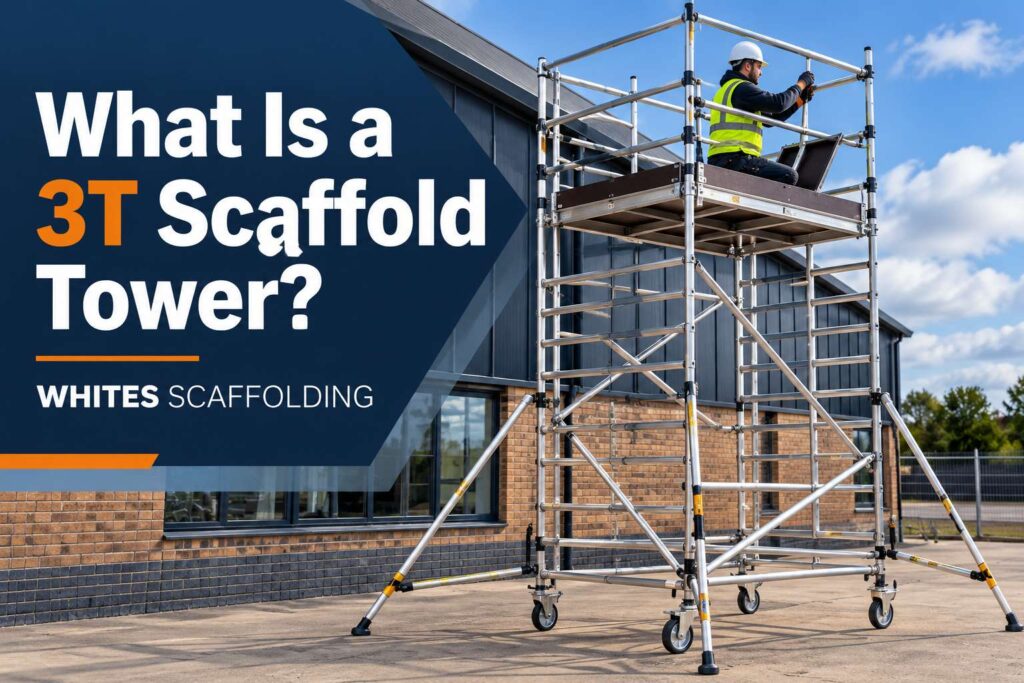
How High Can a Mobile Scaffold Tower Be?
Mobile access towers have their own design limits, which should not be confused with council licensing thresholds.
Standard prefabricated mobile towers covered by BS EN 1004-1 are commonly associated with maximum heights of:
- Outdoors: 8 metres.
- Indoors: 12 metres.
Those figures describe the scope of standard tower configurations, not a general rule allowing every tower to reach those heights.
The permitted configuration depends on the manufacturer’s instructions, stabilisers, ground conditions, loading and exposure to wind. It is also important to distinguish between platform height, overall tower height and working height.
Specialist tower systems can operate outside the scope of standard mobile towers when designed and assembled under the appropriate standards and instructions.
It would therefore be misleading to describe 8 or 12 metres as an absolute legal ceiling for all tower scaffolding.
A mobile tower on a private driveway may not need a highway licence, provided no part obstructs the highway. The same tower positioned on a public pavement can require permission despite being considerably lower.
Our mobile scaffold tower service provides access solutions where a compact working platform suits the task and site conditions.
How High Can Tied Scaffolding Be Built?
Traditional tube-and-fitting or system scaffolding tied to a building can reach considerably greater heights than many freestanding mobile towers.
However, there is no universal figure such as 30, 40 or 50 metres that applies automatically to every scaffold.
The appropriate height depends on several factors:
- Structural Design: The scaffold must be suitable for the proposed configuration and loads.
- Building Connections: Ties and anchors must provide appropriate restraint.
- Ground Conditions: Foundations must support the scaffold and its intended loading.
- Wind Exposure: Taller structures may be subject to greater wind forces.
- Working Loads: Platforms must accommodate the workers, equipment and materials involved.
- Bracing and Stability: Structural components must provide sufficient rigidity and restraint.
A taller structure may need stronger ties, additional bracing and more detailed assessments of the loads transferred to its supports.
Scaffolding should follow a recognised configuration, such as relevant NASC TG20 guidance where applicable, or be supported by a suitable bespoke design prepared by a competent person.
Our scaffolding design service covers situations where the proposed structure requires particular design consideration.
The important distinction remains the same: a tall, properly designed scaffold entirely on private land may not need a highway licence, while a low scaffold on a pavement still may.
What Safety Rules Apply on Private Property?
Avoiding a council highway licence does not remove responsibilities under the Work at Height Regulations 2005.
Employers, contractors and others who control work at height must plan the work, assess risks, select appropriate equipment and ensure those involved are competent.
A suitable scaffold needs more than a stable-looking arrangement of poles and boards.
Depending on the work and configuration, important precautions include:
- Adequate foundations and appropriate load distribution.
- Correct bracing, ties and structural connections.
- Suitable working platforms and edge protection.
- Safe access between working levels.
- Protection against falling materials.
- Controls for wind, poor weather and overhead services.
- Clear limits on the loads placed on working platforms.
- Measures to prevent unauthorised access where appropriate.
The Health and Safety Executive states that scaffolds should be designed, erected, altered and dismantled by competent people under competent supervision.
Homeowners should not interpret the absence of a council permit as permission to assemble a complex scaffold without the necessary skills.
For further information about selecting a suitable working level, see our safe scaffolding height guidelines.
How Often Must Scaffolding Be Inspected?
Scaffolding must be checked before it is first used.
For construction scaffolds from which a person could fall two metres or more, the regulations require inspection by a competent person at least every seven days and following circumstances likely to affect safety, such as substantial alterations or severe weather.
Inspection requirements also depend on the type of equipment and work. Risk assessments may identify the need for additional checks, while mobile tower instructions can specify particular inspection procedures.
A scaffold tag is not a substitute for an inspection. HSE guidance explains that visible tagging systems can be useful, but they are not themselves a legal requirement.
Where inspection reports are required, the appropriate records must be maintained.
The person organising the work should establish who will inspect the scaffold, how defects will be reported and what happens if the structure needs alteration.
Changes should only be made by competent people rather than by building trades moving components to suit their immediate tasks.
Could Other Permissions Be Needed on Private Land?
Yes. A highway licence is only one possible permission.
Depending on the project, separate considerations may include:
- Planning permission for certain works.
- Listed building consent.
- Rights to enter or use neighbouring land.
- Permission from landlords or property owners.
- Restrictions affecting shared access areas.
For example, installing scaffold ties into a neighbouring building or positioning components in somebody else’s garden requires the relevant rights or agreement to be considered.
Temporary scaffolding associated with lawful building work will not necessarily require its own planning application. However, the underlying work and unusual installations can raise planning or heritage issues.
It is safer to check the circumstances than to assume private land removes every permission requirement.
Examples of When a Scaffold Licence May Be Needed
Detached house with a private garden
Scaffolding for roofing repairs might fit wholly within the property. If it does not occupy or overhang the highway, a highway scaffolding licence will not normally be needed. Safe design and inspections remain essential.
Terraced house beside a pavement
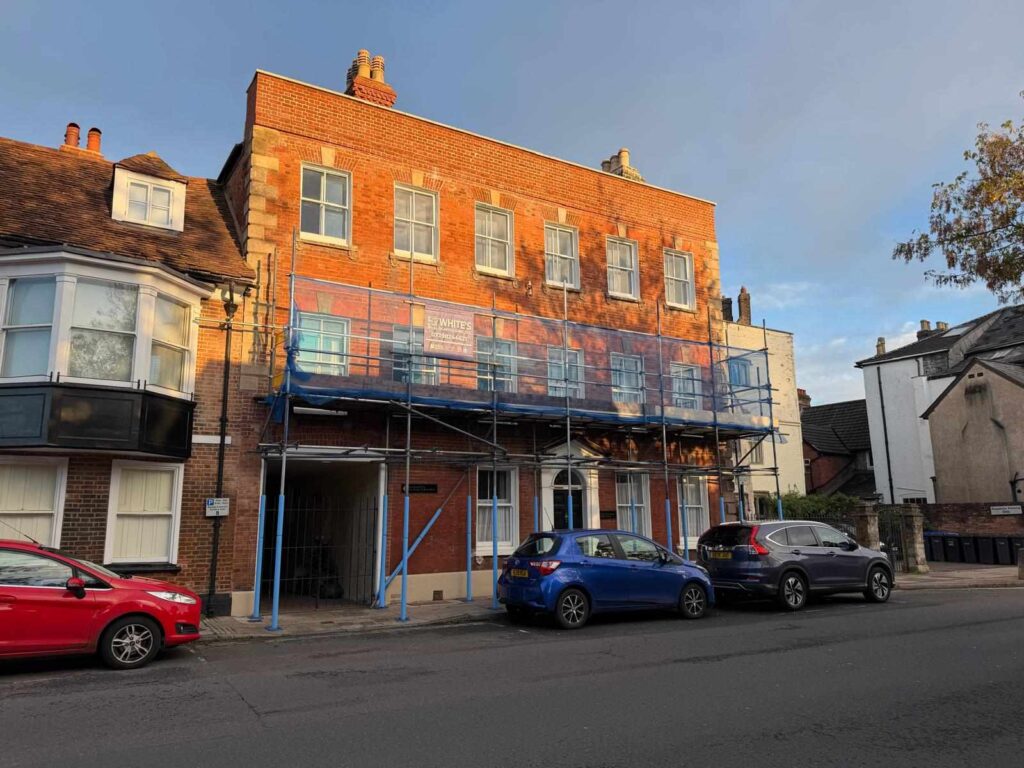
Even relatively low scaffolding may need permission where its uprights or platforms project into the public highway. The contractor should confirm the boundary and any required pedestrian protection.
Town-centre commercial building
Access across several storeys may involve highway occupation, shop entrances and busy pedestrian routes. Licence conditions and scaffold design need to be considered together.
Mobile tower inside a warehouse
An indoor tower on private premises does not normally raise a highway licensing issue. The tower configuration, manufacturer instructions and work-at-height controls still govern safe use.
For local projects, our scaffolding in Salisbury service includes access planning for different property types and site restrictions.
What Should You Check Before Booking Scaffolding?
The most useful first step is to explain exactly what work needs doing and where access is required.
A site assessment can establish whether a mobile tower, traditional scaffold or another arrangement is appropriate.
Before confirming the hire, ask whether the proposed structure will cross the property boundary, whether the contractor is arranging any highway licence and whether charges or extensions are included in the quotation.
Confirm who is responsible for design information, inspections and adjustments during the project.
If the scaffold is near a busy pavement, arrange the permit well before the proposed erection date. Consider whether doors, emergency exits, deliveries or pedestrian access will be affected.
Planning these matters early is easier than correcting them after scaffolding components have arrived on site.
Final Thoughts
There is no universal maximum height that determines whether a scaffold needs a highway licence. The normal trigger is whether the structure occupies or obstructs the public highway, including relevant projections over pavements and roads.
On private land, a highway licence will not usually be necessary when the entire scaffold remains clear of the highway.
That does not remove the need for competent erection, a suitable design, safe working platforms and the required inspections. The familiar 8-metre and 12-metre mobile tower figures concern standard equipment configurations, not council permit thresholds.
At White’s Scaffolding, we can assess your access requirements and help establish what scaffolding and permissions may be needed. Contact our team to discuss your property or construction project before arranging installation.