Scaffold access for homes, commercial premises and construction projects throughout Feltham.
- Domestic, commercial and development scaffolding.
- Access for occupied and restricted working sites.
- London enquiries: 020 7205 2798.

Scaffold access for homes, commercial premises and construction projects throughout Feltham.
With over 15 years of experience in the scaffolding industry, White’s Scaffolding delivers quality workmanship and dependable service across Wiltshire, Hampshire, and Dorset.
From domestic homes and extensions to industrial and commercial sites, we provide safe, reliable scaffolding tailored to every type of project.
We offer realistic, transparent rates with no hidden charges, providing exceptional value and professional results from start to finish.
Our fully trained and insured team works to strict health and safety standards on every job, ensuring secure structures and complete peace of mind.
White’s Scaffolding provides scaffolding in Feltham for roofing, property repairs, refurbishment, new construction and commercial projects.
Feltham combines suburban housing with a substantial town centre, retail premises and employment areas. The type of access required can therefore range from a straightforward house scaffold to a larger structure serving several contractors and working levels.
Sites around Feltham High Street may need entrances and pedestrian areas to remain usable while work takes place above. Residential properties can instead be affected by side passages, extensions, conservatories, driveways and neighbouring boundaries.
Feltham is also undergoing significant development. Where a building is being constructed from the ground up, new-build scaffolding can be adapted as the structure rises and the requirements of bricklayers, roofers, window installers and finishing trades change.
Planning access around the construction sequence can reduce unnecessary alterations later in the programme.
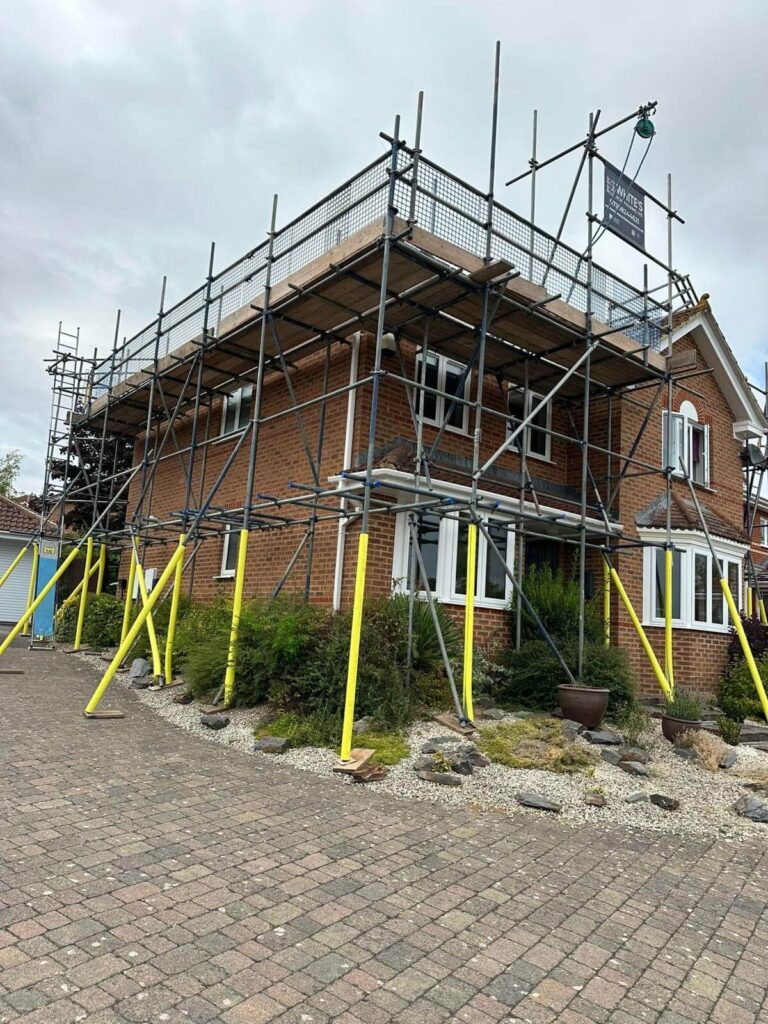
Feltham has substantial employment and industrial areas where scaffold access may need to work around loading activity, operational buildings and vehicle movements.
Commercial and industrial projects can involve:
A scaffold on an operational site should be positioned with the wider working environment in mind. Loading bays, vehicle routes, emergency access and staff entrances may all need to remain usable.
Where several trades are involved, platform locations and access points should also reflect how the building will be maintained rather than simply following the outside wall.
Clear site information before erection helps keep the scaffold compatible with everyday operations.
Some refurbishment projects need more than open scaffold platforms.
Full building encapsulation creates a substantially enclosed working environment around suitable buildings and can help separate extensive external work from surrounding areas.
It can be relevant for:
Encapsulation is not simply ordinary sheeting added to a completed scaffold. Enclosing a structure increases the surface exposed to wind, so the scaffold and covering need to be considered together.
A fully enclosed system is also unnecessary for many smaller repairs. The degree of containment should reflect the work being carried out and the conditions around the building.
The most effective layout starts with the practical details of the site rather than just the height of the building.
External repair work can take place above entrances, pedestrian areas, neighbouring property or occupied parts of a site.
Scaffold safety netting can form part of a protection system where suitable lightweight materials or debris need additional containment.
Applications can include:
Safety netting has limitations. It is not a substitute for controlling heavy falling materials and does not remove the need for suitable exclusion zones or other protective measures where required.
The type of work, expected debris and people or property below should therefore determine the protection arrangement.
Netting should also be considered when the scaffold is planned because additional coverings can affect wind loading.
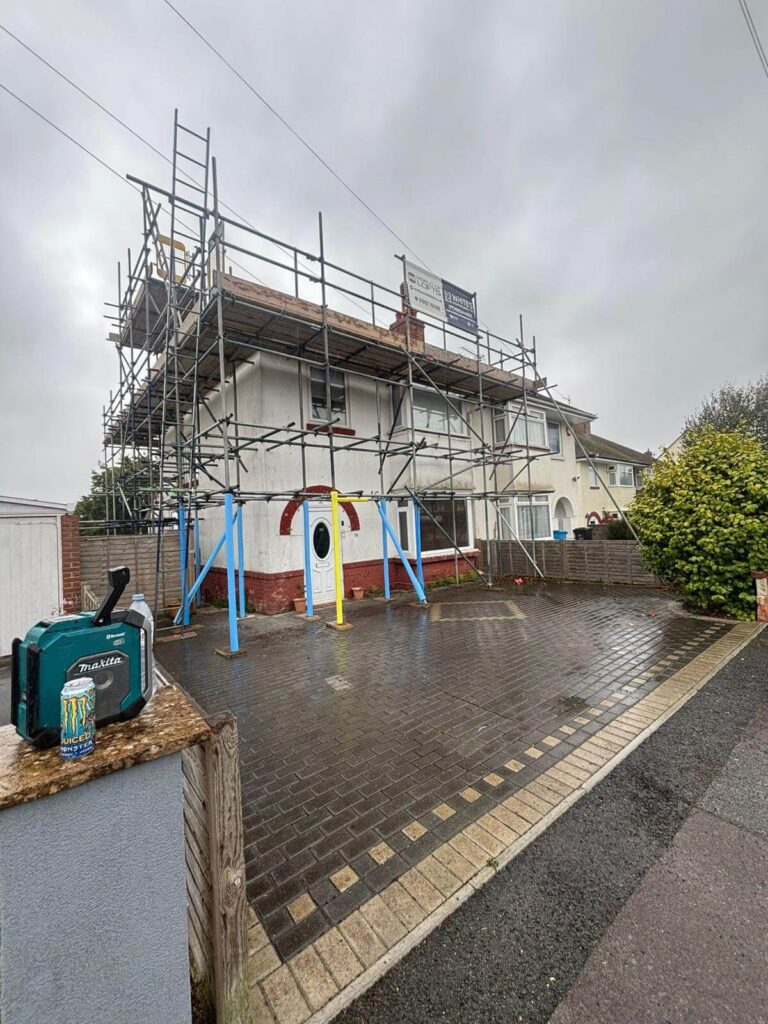
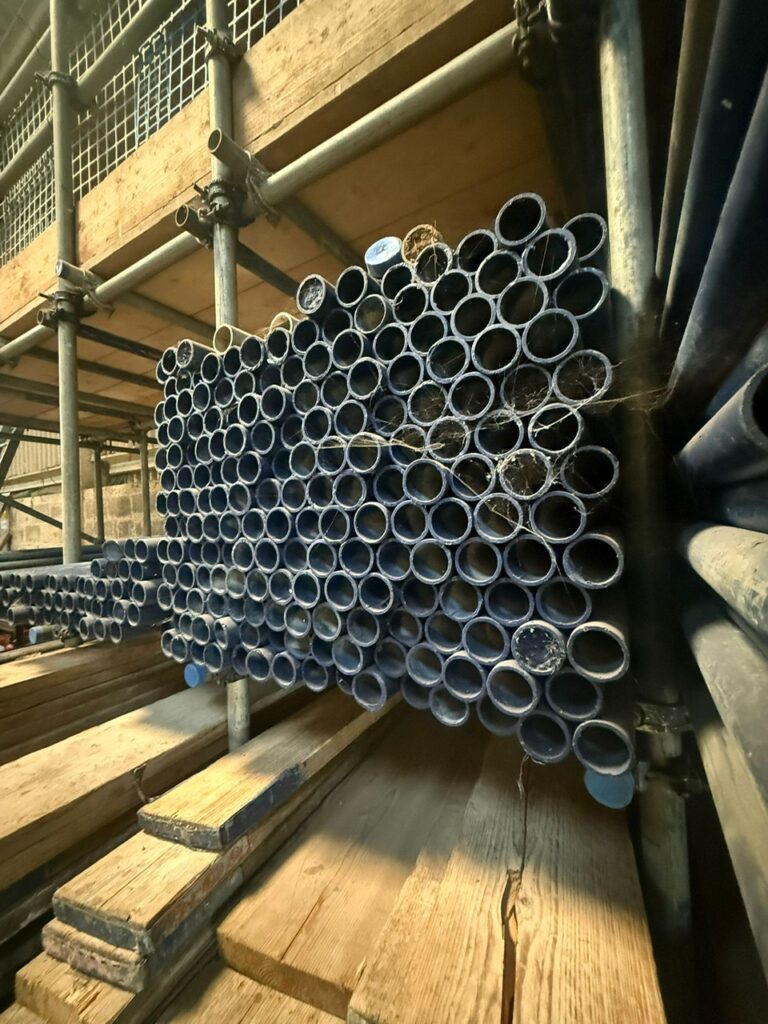
Some construction projects need support as well as access.
Removing or altering parts of a building can temporarily change how loads are carried through the structure. In those situations, ordinary access scaffolding may not be sufficient.
Dead-shore scaffolding is a specialist temporary support arrangement used where loads need to be transferred vertically while structural work takes place.
It may be required during:
Dead shoring should reflect the structural requirements established for the project. The scaffold contractor provides the temporary support arrangement, but the loads and structural strategy must be properly understood.
This makes early coordination particularly important on redevelopment sites where demolition, structural alterations and new construction overlap.
How much does scaffolding cost in Feltham?
The price depends on the height, length, number of working levels, hire period and site restrictions. Specialist support, enclosure or additional protection can also affect the quotation.
Can scaffolding be erected around an industrial building?
Yes. The layout should consider loading areas, vehicle routes, staff access, operational equipment and the specific elevations contractors need to reach.
Can scaffolding be used on a new-build development?
Yes. New-build scaffolding can be extended and altered as construction progresses, allowing access to follow brickwork, upper floors, roofing and external finishing.
Is full building encapsulation necessary for every refurbishment?
No. It is most useful where a project benefits from extensive containment or weather protection. Smaller or less disruptive work may only require open scaffolding or more limited protective measures.
Do I need a licence if scaffolding is placed on a public road or pavement in Feltham?
Yes. Hounslow Highways requires a temporary-structure licence where scaffolding is placed on the public highway. Scaffolding erected wholly on private land does not require that highway licence.
How early should I arrange scaffolding?
Allow enough time for the working areas, ground conditions and access restrictions to be assessed before contractors intend to start. Larger development or specialist structures can require additional planning.
Can scaffolding be altered as a new building gets taller?
Yes. Scaffold lifts and access arrangements can be changed as construction progresses, but alterations should be carried out by the scaffolding contractor.
Can builders remove scaffold components themselves?
No. Other trades should not remove ties, guardrails, boards or structural components. Changes should be referred back to the scaffold contractor.
Does scaffolding need inspecting during the hire period?
Construction scaffolding is subject to inspection requirements under the Work at Height Regulations. Inspections are also required after circumstances that could affect the safety of the structure.
How do I arrange scaffolding in Feltham?
Call White’s Scaffolding on 020 7205 2798 with details of the property, work being completed, required elevations and any access restrictions.
Tell White’s Scaffolding about the building, the work being planned and any restrictions around the site. We can discuss a practical scaffold arrangement for your Feltham project.