Safe scaffold access for factories, production areas, plant and manufacturing facilities.
- Internal and external industrial access.
- Planned around production and maintenance schedules.
- Project enquiries: 01722 398439.

Safe scaffold access for factories, production areas, plant and manufacturing facilities.
With over 15 years of experience in the scaffolding industry, White’s Scaffolding delivers quality workmanship and dependable service across Wiltshire, Hampshire, and Dorset.
From domestic homes and extensions to industrial and commercial sites, we provide safe, reliable scaffolding tailored to every type of project.
We offer realistic, transparent rates with no hidden charges, providing exceptional value and professional results from start to finish.
Our fully trained and insured team works to strict health and safety standards on every job, ensuring secure structures and complete peace of mind.
Manufacturing scaffolding provides safe working platforms and access routes for maintenance, repairs, installation and refurbishment within operational industrial environments.
Factories can contain production lines, overhead services, process equipment, storage systems, structural steelwork and machinery that make conventional access difficult.
White’s Scaffolding provides commercial and industrial scaffolding for factories and other demanding working environments where the scaffold needs to fit around existing operations.
Typical requirements can include:
Unlike an empty construction site, a manufacturing facility may contain machinery, employees, vehicles and production processes that must continue around the scaffold.
The access arrangement should therefore be planned around the site’s operational restrictions as well as the height contractors need to reach.
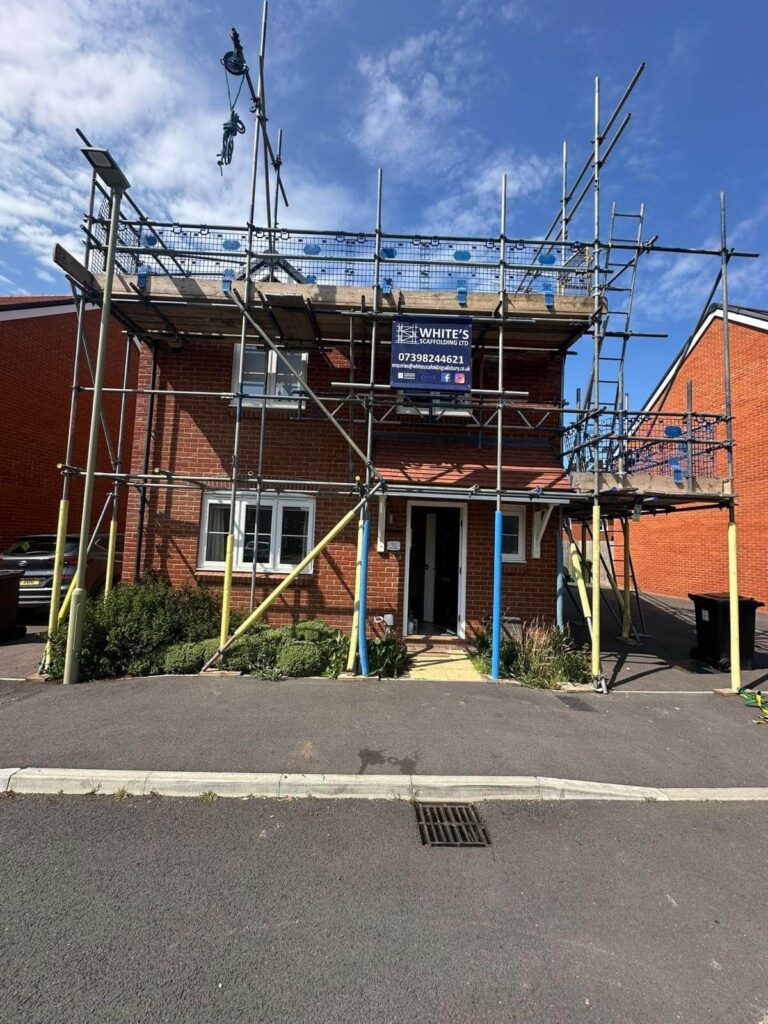
Factory shutdowns can create a limited window for maintenance teams to complete work that would be difficult while machinery is operating.
The scaffold should ideally be erected and ready when the specialist contractors need it rather than taking up valuable maintenance time after production has stopped.
Projects may involve:
HSE guidance recommends careful planning of maintenance and notes that using downtime can avoid some of the difficulties of coordinating maintenance with normal production.
This means scaffold erection, adaptations and dismantling may need to fit a defined shutdown programme.
Where a factory remains operational, the work can instead be phased so scaffold areas are separated from active production zones wherever practicable.
A fixed scaffold is not necessary for every manufacturing maintenance task.
Where maintenance teams need short-duration access at several separate points, a mobile scaffold tower can sometimes provide a more flexible solution.
Potential uses include:
The factory floor still needs to be suitable for the tower. Uneven surfaces, floor openings, vehicle routes, production equipment and insufficient clearance can make a mobile system unsuitable.
A mobile tower also needs to be correctly positioned and secured before use. It should not be moved while occupied.
Where maintenance extends across a large area or requires greater loading capacity, a fixed scaffold may provide the more practical access platform.
The factory layout, operating processes and contractor requirements should be understood before scaffold components enter the production area.
Industrial maintenance can require workers to move repeatedly between the factory floor and elevated platforms while carrying tools and smaller components.
A dedicated stair arrangement may be more practical than relying on ladder access where there is frequent movement between levels.
Scaffold stair towers can provide controlled access to:
The stair tower position should work with the factory’s established pedestrian routes while avoiding machinery, vehicle movements and emergency exits.
Access also needs to suit the intended workforce. A maintenance team making repeated journeys between levels can have different requirements from an inspector carrying out a short visual check.
Where tools or large components need moving, separate material-handling arrangements may still be necessary rather than using pedestrian access for unsuitable loads.
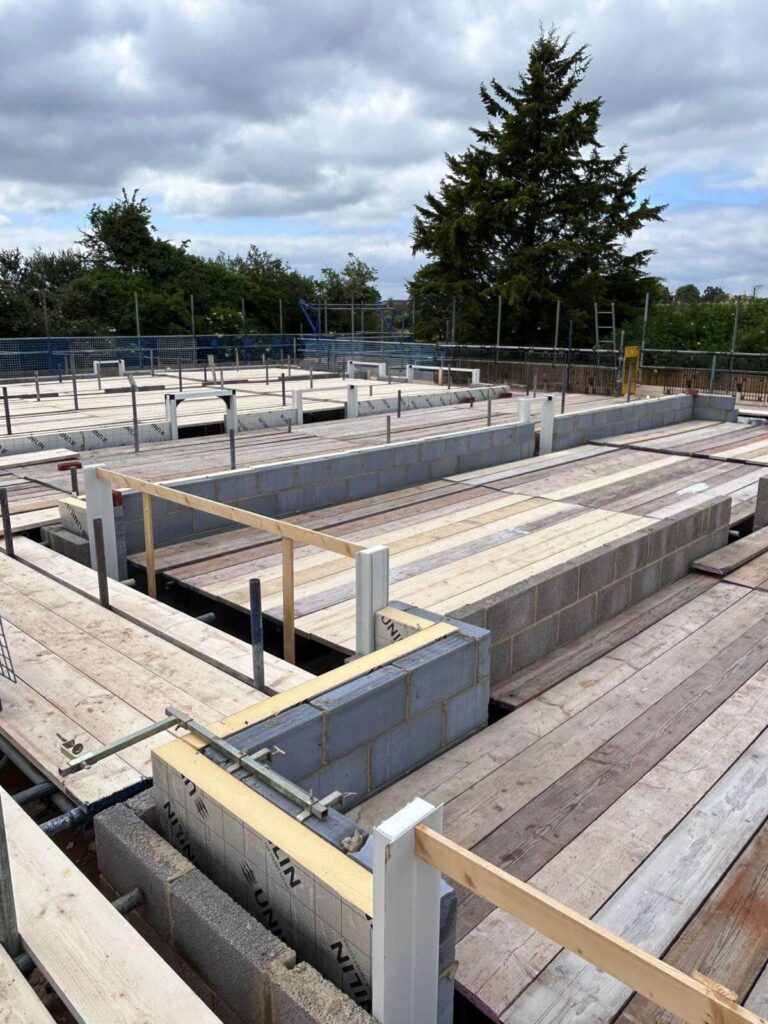
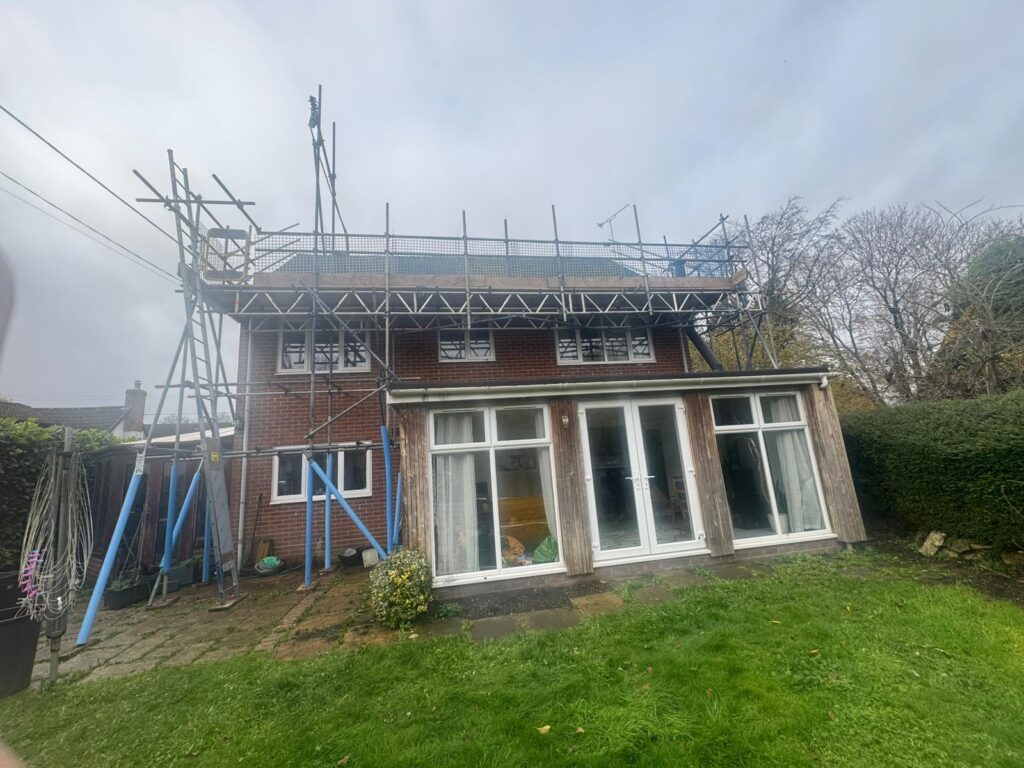
Factory maintenance can create dust, debris or falling-object risks in areas that are otherwise used for production, storage or staff movement.
Depending on the work, screen scaffolding and protection can help create a more clearly defined working zone.
Protection measures may be relevant during:
Sheeting, screens and netting have different capabilities. Lightweight containment should not be treated as protection against every possible falling object or industrial hazard.
The required system should reflect the work taking place and the people, equipment or processes nearby.
White’s Scaffolding’s health and safety policy also sets out its approach to safe scaffold erection, inspection, PPE, plant, site housekeeping and pedestrian and vehicle routes.
On manufacturing sites, those scaffold controls need to operate alongside the factory’s own site rules, permit systems and production safety procedures.
How much does scaffolding for a manufacturing site cost?
The price depends on the scaffold dimensions, working height, platform loading, access restrictions, hire period and whether erection needs to take place during shutdown or out-of-hours periods. A site-specific quotation is required for complex factories.
Can scaffolding be erected while the factory remains operational?
Yes, where the risk assessment and site arrangements allow it. Production zones, machinery, staff routes and vehicle movements need to be considered before erection starts.
Can scaffolding be built around machinery?
Often, yes. The available clearances, machine status, floor loading and maintenance requirements need to be established so the structure does not interfere with equipment or unsafe operating zones.
Can scaffolding provide access above a production line?
Potentially. The arrangement depends on the span, available support positions, required loading and whether the production line will remain operating beneath or near the work.
Is a mobile tower cheaper than fixed factory scaffolding?
It can be more economical for suitable short-duration tasks, but cost should not be the main selection criterion. The access equipment must suit the height, duration, working area, surface and task.
Should factory maintenance be carried out during a shutdown?
Where practical, shutdowns can simplify coordination between maintenance and production. HSE guidance recommends considering downtime for maintenance where this avoids risks associated with working alongside normal production.
Does PUWER apply to manufacturing maintenance?
Yes. The Provision and Use of Work Equipment Regulations require work equipment to be maintained in an efficient state, efficient working order and good repair, and maintenance operations must be capable of being carried out safely.
Can the scaffold be altered if maintenance requirements change?
Yes. Required alterations should be carried out by the scaffolding contractor. Factory staff and other maintenance contractors should not remove ties, guardrails, boards or structural scaffold components themselves.
Does manufacturing scaffolding require inspections?
Scaffolding used for work at height is subject to inspection requirements. It should also be checked following events or alterations that could affect its safety.
What information is useful when requesting a quote?
Provide drawings or photographs where available, required working heights, machinery positions, shutdown dates, access restrictions, expected platform loading and details of vehicle or pedestrian routes.
How do I arrange scaffolding for a manufacturing facility?
Call White’s Scaffolding on 01722 398439 to discuss the factory layout, maintenance programme, operating restrictions and required access.
Tell White’s Scaffolding about the production environment, required working areas, shutdown programme and site restrictions. We can discuss a scaffold arrangement built around safe access and practical factory operations.