Scaffold access planned for West Kensington homes, commercial properties and refurbishment projects.
- Residential and commercial scaffold systems.
- Solutions for compact and difficult-access sites.
- London enquiries: 020 7205 2798.

Scaffold access planned for West Kensington homes, commercial properties and refurbishment projects.
With over 15 years of experience in the scaffolding industry, White’s Scaffolding delivers quality workmanship and dependable service across Wiltshire, Hampshire, and Dorset.
From domestic homes and extensions to industrial and commercial sites, we provide safe, reliable scaffolding tailored to every type of project.
We offer realistic, transparent rates with no hidden charges, providing exceptional value and professional results from start to finish.
Our fully trained and insured team works to strict health and safety standards on every job, ensuring secure structures and complete peace of mind.
White’s Scaffolding provides planned scaffolding in West Kensington for property maintenance, refurbishment, roofing, construction and commercial work.
The area contains a mixture of terraced streets, converted houses, mansion blocks, apartment buildings and commercial premises around locations such as North End Road, Hammersmith Road and the wider Olympia area. These buildings can present very different access requirements even when they are only a short distance apart.
A scaffold may need to work around basement areas, front steps, railings, extensions, neighbouring boundaries, shop entrances or restricted pavement space. These details influence where standards can be positioned and where working platforms need to sit.
For larger business premises and contractor-led projects, commercial and industrial scaffolding can provide multi-level access for façade work, maintenance, refurbishment and construction.
The scaffold should ultimately be planned around the work being completed, rather than expecting trades to adapt their work to an unsuitable structure.
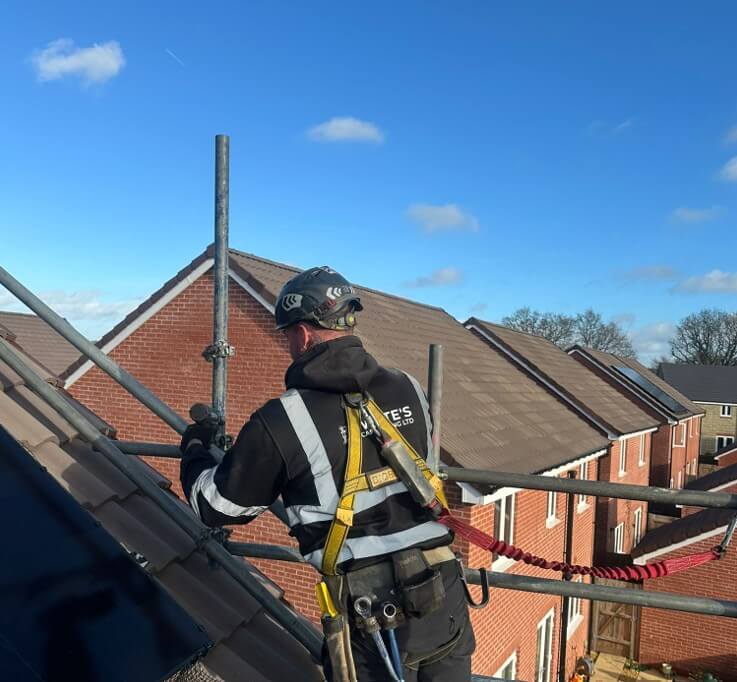
Roof-level work is one of the situations where suitable scaffold access can make a significant difference to both safety and practicality.
West Kensington properties may require high-level access for:
A chimney can sit well above the main roofline, making access from a ladder unsuitable for substantial repair work. Purpose-built chimney stack scaffolding can provide a working platform around the stack while accounting for roof pitch, surrounding surfaces and the area the contractor needs to reach.
Where roofing work leaves part of a property exposed, temporary weather protection may also need to be considered.
Some projects need more than a working platform. If roof coverings or sections of a building are being opened up, weather can affect both the programme and the property below.
Temporary roofs and tin hats create protective coverage above a scaffold so work can continue beneath a sheltered structure. They can be useful during roof replacement, structural alterations and longer refurbishment projects where uncontrolled rainwater could cause damage.
For more extensive schemes, full building encapsulation can enclose a greater proportion of the structure.
The correct level of protection depends on:
Weather protection should therefore be planned as part of the scaffold arrangement rather than treated as an afterthought once work has begun.
The more accurately the work and site restrictions are understood at the outset, the easier it is to plan useful access for the trades who will use the scaffold.
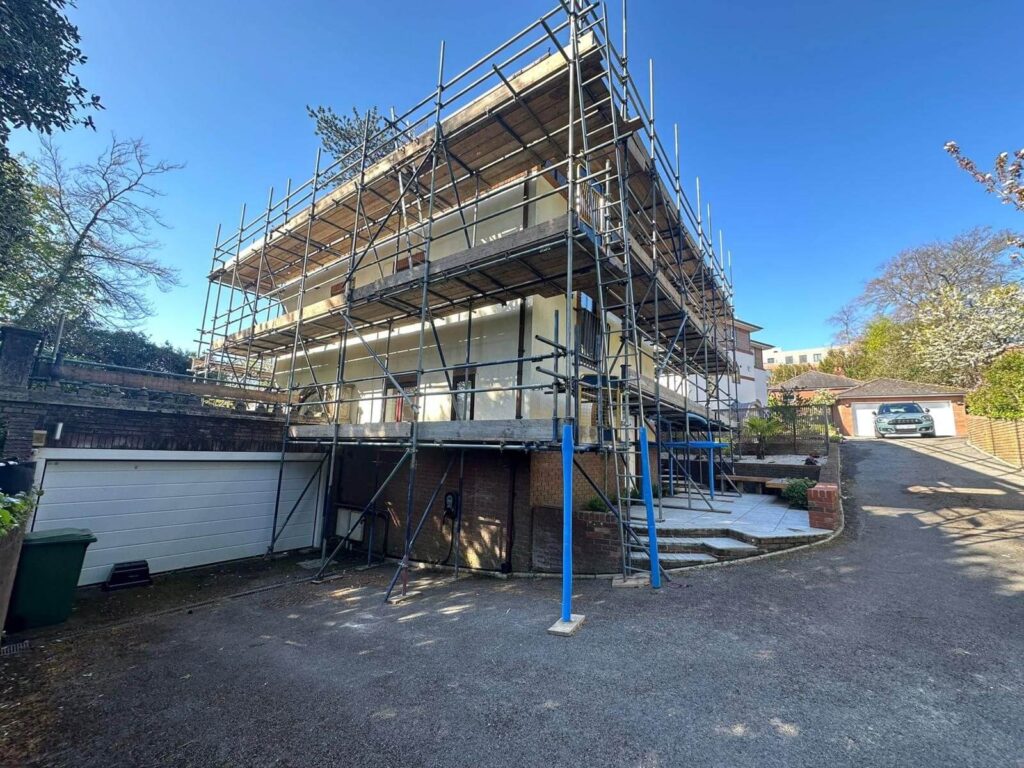
A lower structure immediately beneath the work area can prevent scaffold standards from being positioned in the usual way.
This is common where a house or residential building has:
In suitable situations, scaffolding over garages can bridge the obstruction rather than transferring inappropriate loads onto the roof below.
The same principle applies to other fragile or restricted areas: the scaffold needs to carry loads back to suitable support positions while still creating the working platform required above.
This type of access should be planned from the physical layout of the property rather than assuming the roof beneath can support scaffold components.
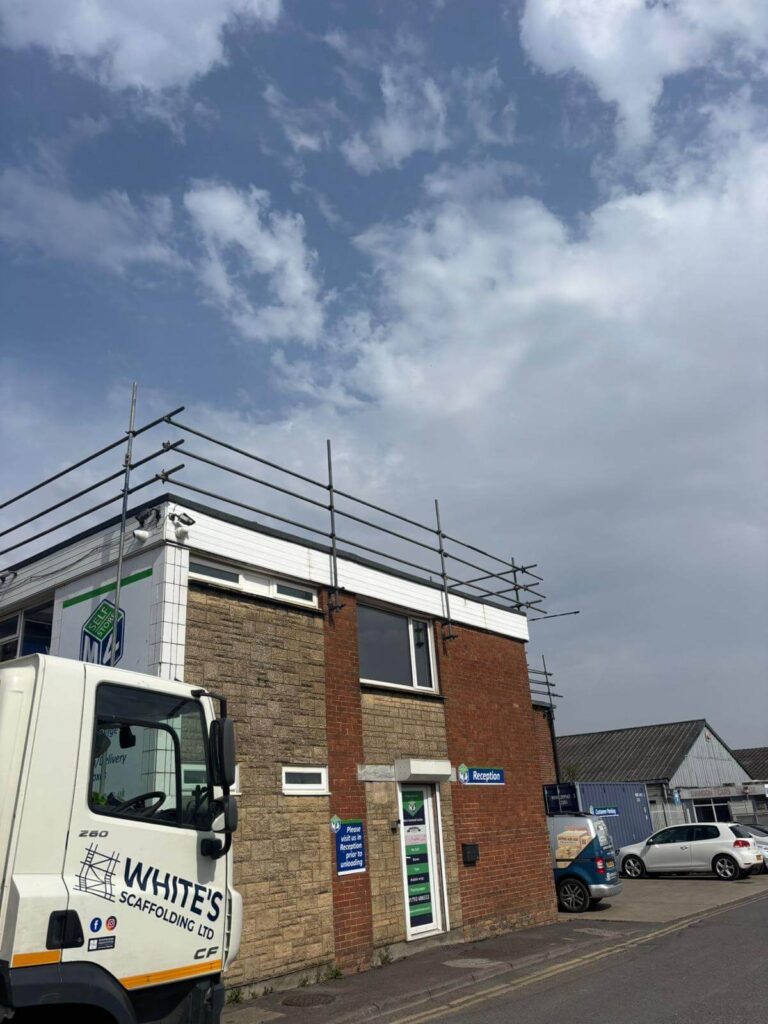
Material handling becomes more important as the height and scale of a project increase. Carrying equipment and materials manually through a building is not always practical, particularly when several trades are working simultaneously.
A hoist gantry scaffold can create a designated structural framework for lifting materials vertically where the project calls for this type of arrangement.
This may be considered for:
A lifting area introduces its own loading, access and operational considerations, so it must be planned around the intended equipment and loads rather than added casually to an existing scaffold.
On busy West Kensington sites, defining where materials enter the site, where they are lifted and how workers move around those areas can also reduce unnecessary congestion.
How much does scaffolding cost in West Kensington?
Scaffolding is normally priced for the individual project. Height, number of elevations, hire length, working platforms, loading requirements, restricted access and specialist structures can all affect the quotation.
Can you scaffold a property with a basement at the front?
Often, but the basement or lightwell can affect where the scaffold is supported. The site needs to be assessed so loads are transferred to appropriate positions rather than onto unsuitable surfaces.
Can scaffolding be erected for chimney work only?
Yes. Where only a chimney requires attention, the access arrangement can be planned specifically around the stack and the part of the roof that trades need to reach.
Should scaffolding be arranged before the contractor starts?
Yes. The scaffold should be planned around the work programme so the required access is available when roofers, builders, decorators or other trades arrive.
What if the scope of work changes after erection?
Do not make informal alterations to the scaffold. If different platform levels, access points or structural changes are required, the scaffold contractor should assess and carry out the necessary alteration.
Does a temporary roof make the building completely weatherproof?
A temporary roof is designed to provide substantial protection from weather, but its exact performance depends on the design, covering system, interfaces with the building and site conditions. It should not be treated as identical to a completed permanent roof.
How do I arrange scaffolding in West Kensington?
Provide White’s Scaffolding with the property details, type of work, required access and any known site restrictions. Call 020 7205 2798 to discuss the project.
Tell White’s Scaffolding what work is planned, which parts of the property need access and whether there are any restrictions around the building. We can discuss a suitable scaffold arrangement for your West Kensington project.