Scaffold access for homes, offices, shops and building projects throughout Hammersmith.
- Domestic, commercial and multi-storey scaffolding.
- Solutions for busy and restricted properties.
- London enquiries: 020 7205 2798.

Scaffold access for homes, offices, shops and building projects throughout Hammersmith.
With over 15 years of experience in the scaffolding industry, White’s Scaffolding delivers quality workmanship and dependable service across Wiltshire, Hampshire, and Dorset.
From domestic homes and extensions to industrial and commercial sites, we provide safe, reliable scaffolding tailored to every type of project.
We offer realistic, transparent rates with no hidden charges, providing exceptional value and professional results from start to finish.
Our fully trained and insured team works to strict health and safety standards on every job, ensuring secure structures and complete peace of mind.
White’s Scaffolding provides scaffolding in Hammersmith for maintenance, roofing, refurbishment and construction work on residential and commercial property.
Hammersmith contains a dense mix of houses, apartment blocks, offices, shops, hotels and mixed-use buildings. Properties around King Street and Hammersmith Broadway can present very different access requirements from quieter residential streets further from the town centre.
A scaffold may need to fit around shop entrances, basement areas, loading points, communal doors or buildings that remain occupied throughout the work.
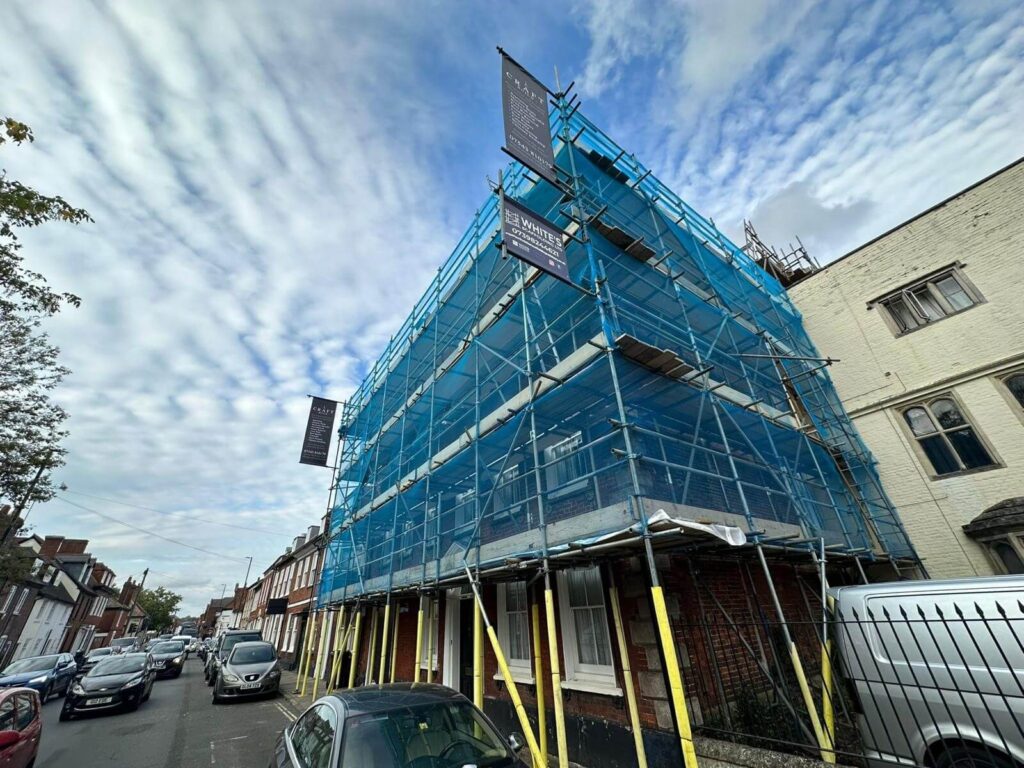
For larger residential developments and blocks, multi-unit building scaffolding can provide coordinated access across several floors and elevations.
The useful starting point is the work itself: which areas need to be reached, which trades will use the scaffold and what needs to continue operating underneath or around it.
Some projects require workers to travel across a roof rather than remain on one scaffold elevation.
Plant maintenance, inspections and repair work can involve fragile surfaces, changes in roof level or equipment that makes unrestricted foot traffic unsuitable.
Scaffold access walkways can create a defined route across elevated or difficult areas.
They may be useful where contractors need:
The walkway route should be established from where workers enter the roof and where they actually need to reach, rather than simply following the shortest line across the building.
External refurbishment can affect far more than the elevation being repaired, especially where neighbouring properties or pedestrians remain close to the work.
Shrink wrap and Monarflex scaffold sheeting can create a more controlled enclosure around suitable projects.
Depending on the work, enclosure may help:
Sheeting changes how wind acts on the scaffold. It therefore needs to be considered as part of the scaffold arrangement rather than attached later without assessment.
The degree of enclosure should match the work, exposure and surrounding environment.
A built-up site can place several competing demands on the same limited area, so ground-level logistics matter as much as working height.
Hammersmith has a strong entertainment and events economy, and some temporary projects require structural platforms rather than conventional building-access scaffolding.
Stage scaffolding can be configured for productions, performances, temporary installations and event infrastructure.
A stage scaffold may need to provide:
Unlike a façade scaffold, the loads and movement can be concentrated on the platform itself. Equipment positions, expected occupancy, access points and ground conditions therefore need to be understood before installation.
Temporary does not mean informal: the structure still needs to be planned around its intended use.
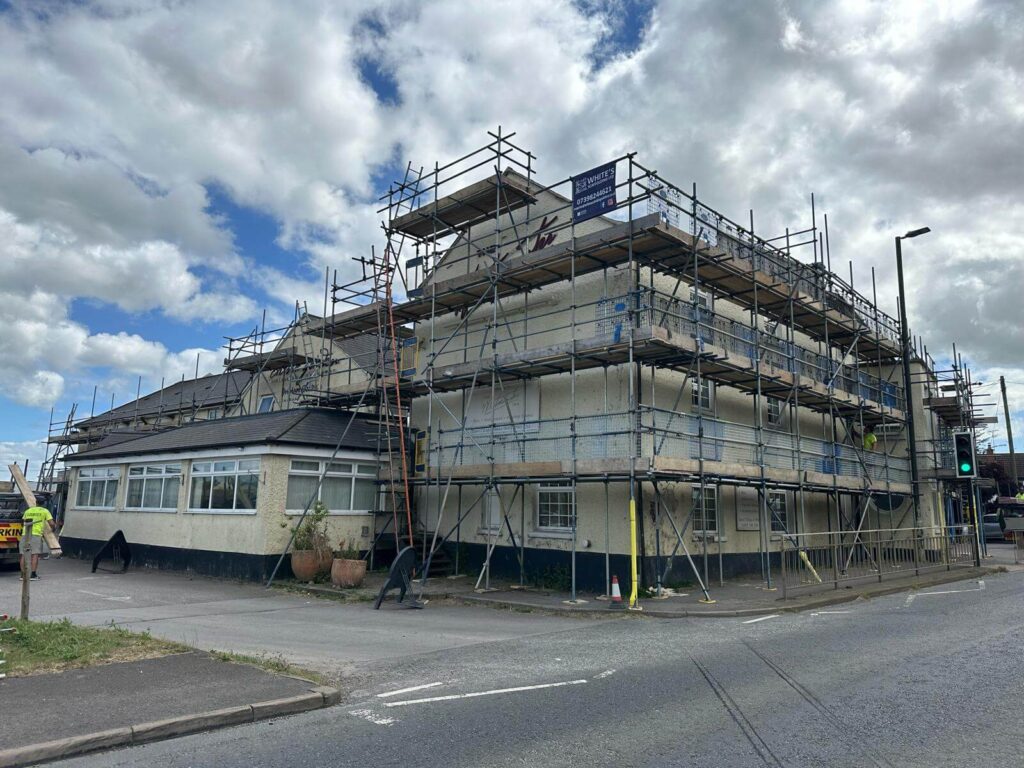
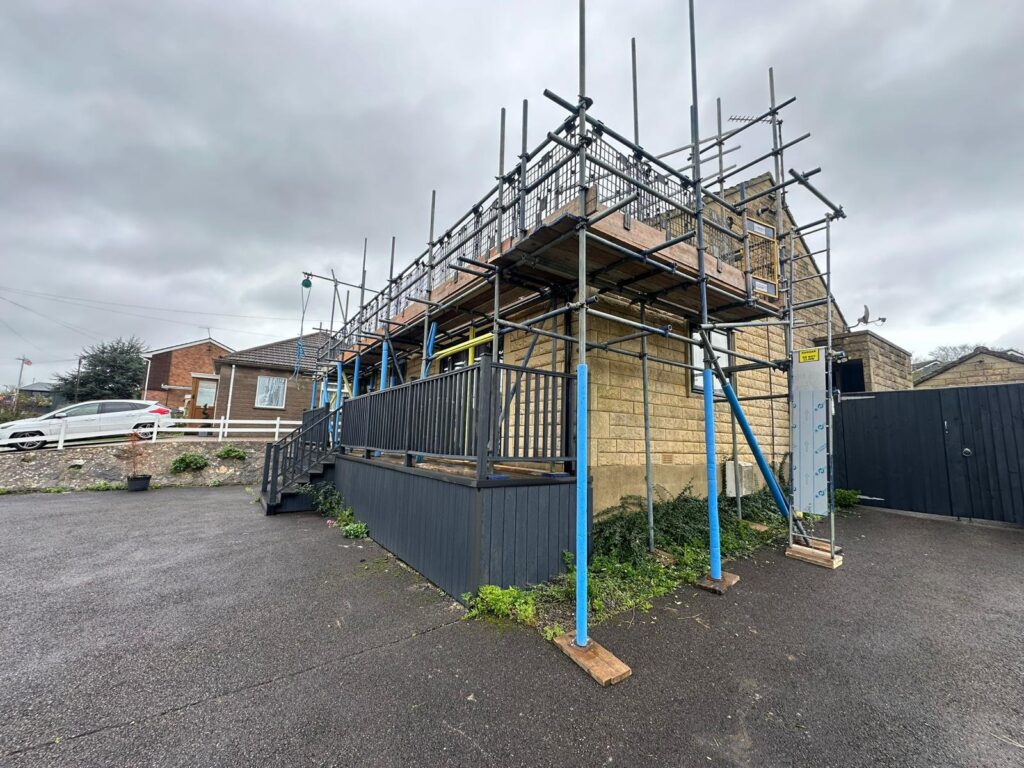
On a busy Hammersmith property, the space directly below the scaffold may still be needed every day.
An apartment block can have a communal entrance beneath the working elevation. A commercial building may need staff and visitors to reach reception. Shops can depend on a clearly visible route from the pavement to the door.
These requirements should be identified before erection.
Planning can include:
The exact arrangement depends on the frontage and nature of the work. Where adequate access cannot be maintained with a straightforward layout, the scaffold configuration may need to change.
This is particularly important on buildings where several occupiers share the same ground-floor access.
How much does scaffolding cost in Hammersmith?
The cost depends on the scaffold dimensions, working height, number of elevations, hire period and complexity of the site. Public access requirements, specialist platforms, sheeting or larger structures can also affect the quotation.
Can scaffolding be erected outside a shop or office?
Yes, in many situations. The frontage should be assessed so entrances, pedestrian movement and the contractor’s working area can be considered together.
Can scaffolding be installed around an apartment block?
Yes. Larger blocks may require several scaffold lifts, separate access points and planning around communal entrances, balconies and occupied parts of the building.
Can scaffold sheeting be added later?
It should not simply be added without assessment. Sheeting changes the wind loading on the scaffold, so the requirement is best identified before erection.
Do I need a licence for scaffolding on a Hammersmith pavement?
Where scaffolding or hoarding occupies public highway land, a highway licence may be required. Hammersmith & Fulham operates a scaffold and hoarding licensing system, so the requirements should be established before erection.
How long does scaffold erection take?
Timescales vary with the structure. A straightforward residential elevation can normally be erected more quickly than a multi-storey, enclosed or restricted-access commercial scaffold.
Can several contractors use the same scaffold?
Yes, where the scaffold has been planned for their work and loading requirements. Platform positions that suit one trade may not suit another, so the intended users should ideally be known in advance.
Can the scaffold be changed during the project?
Yes, where necessary. Any structural alteration should be carried out by the scaffolding contractor rather than by builders, roofers or other trades using the scaffold.
What information should I provide for a quotation?
Provide the address, work being completed, elevations requiring access, likely hire period and any restrictions such as public pavements, shared entrances, lower roofs or limited loading space.
How do I arrange scaffolding in Hammersmith?
Call White’s Scaffolding on 020 7205 2798 to discuss your property, programme and access requirements.
Tell White’s Scaffolding where contractors need to work, how the building is used and what access needs to remain available. We can discuss a suitable scaffold arrangement for your Hammersmith project.