Scaffolding for Data & Telecom Towers

Specialist scaffold access for telecom towers, rooftop communications equipment and technical infrastructure.

  • Access for inspection, repair and equipment replacement.
  • Solutions for restricted and elevated telecom sites.
  • Project enquiries: 01722 398439.

Experienced Scaffolders

With over 15 years of experience in the scaffolding industry, White’s Scaffolding delivers quality workmanship and dependable service across Wiltshire, Hampshire, and Dorset.

All Projects, Large or Small

From domestic homes and extensions to industrial and commercial sites, we provide safe, reliable scaffolding tailored to every type of project.

Fair and Competitive Pricing

We offer realistic, transparent rates with no hidden charges, providing exceptional value and professional results from start to finish.

Safety First, Always

Our fully trained and insured team works to strict health and safety standards on every job, ensuring secure structures and complete peace of mind.

Access scaffolding for telecom and communications infrastructure

Telecom scaffolding creates stable working platforms around towers, rooftop antenna installations and supporting communications equipment where technicians need more room than a ladder or fixed tower access system can provide.

Work can range from a short inspection to replacement of antenna sectors, cable routes, structural components or equipment mounted at several different levels.

The scaffold arrangement therefore needs to reflect the exact workface rather than simply reach the maximum height.

Projects may involve:

  • Lattice telecommunications towers.
  • Monopoles and mast structures.
  • Rooftop mobile communications installations.
  • Microwave and point-to-point equipment.
  • Antenna and feeder-cable replacement.
  • Structural inspection and repair.

For sites combining communications equipment with other technical infrastructure, White’s existing data centre scaffolding service also demonstrates the importance of controlled access around sensitive equipment and operational systems.

The scaffold provides the physical access platform. Radio-frequency controls, transmitter isolation and permitted working zones remain matters for the relevant network operator and competent site dutyholders.

Scaffolding around restricted tower bases

Telecom sites do not always provide enough clear ground for a conventional independent scaffold.

Equipment cabinets, security fencing, cable routes, generators, access roads and other infrastructure can prevent standards from being positioned directly beneath the required working area.

Cantilever and hanging scaffolding can provide access where the working platform needs to project beyond the normal support position.

This can be relevant where:

  • Equipment compounds must remain accessible.
  • The tower base occupies most of the available footprint.
  • Ground-level cabinets cannot be obstructed.
  • Platforms are required outside the main structural footprint.
  • A lower roof or structure sits beneath the telecom equipment.

The suitability of a cantilevered arrangement depends on the structure, loads and available support points.

It should be designed around the actual maintenance activity, including the number of operatives, tools and replacement equipment expected on each working platform.

Rooftop telecom scaffolding where ground support is impractical

Many communications installations sit above offices, apartment blocks, industrial buildings and other occupied properties.

In these situations, the equipment may be positioned close to roof edges, behind parapets or above areas where a scaffold cannot simply rise from ground level.

Suspended scaffolding can provide a specialist option where conventional support from below is impractical.

Potential applications include:

  • Access below or beside rooftop antenna frames.
  • Maintenance to communications equipment near roof edges.
  • Work above entrances or occupied ground-level areas.
  • Inspection beneath elevated steelwork.
  • Access where ground conditions or obstacles prevent a base scaffold.

A suspended system requires suitable structural support and project-specific assessment.

The scaffold solution also needs to work with the technicians’ route onto the platform, fall-prevention arrangements and any roof restrictions already in place.

Access to the scaffold and access beyond it should therefore be considered as one coordinated working-at-height plan.

What needs to be established before scaffolding a telecom site?

The scaffold should be planned around the communications equipment, working zones and site restrictions before components arrive on site.

Required working levels

Identify the antenna, dish, steelwork or cable routes technicians need to reach so platforms can be positioned at useful heights.

Radio equipment status

The network or site operator should identify any transmitter isolation, controlled zones or electromagnetic-field precautions needed before work begins.

Compound access

Cabinets, gates, generators and maintenance routes may need to remain accessible while the scaffold is erected and in use.

Equipment loading

Replacement antenna equipment, tools and components can affect the required platform size and permitted loading.

Protecting equipment and areas below tower work

Telecommunications maintenance often involves small fixings, tools, brackets, cable components and other items being handled at significant height.

Where people, buildings or equipment remain below the workface, falling-object controls can form an important part of the scaffold arrangement.

Scaffold safety netting can help contain suitable loose materials around elevated working areas.

Protection may be useful where:

  • A mast stands within an operational compound.
  • Ground-level cabinets remain beneath the working area.
  • Technicians or other contractors use adjacent routes.
  • The installation is located above an occupied building.
  • Maintenance takes place beside public or shared areas.

Netting is not a substitute for proper tool management, exclusion zones or other controls required by the task.

It also adds wind resistance to the scaffold, particularly on exposed tower sites. The effect of netting or sheeting should therefore be considered when the scaffold is planned.

The appropriate protection system depends on what is being handled at height and what must remain operational below.

Scaffolding for urgent telecom repairs and outages

Some tower access requirements follow planned upgrade programmes. Others arise after storms, impact damage, structural concerns or failure of equipment that cannot wait for the next maintenance cycle.

Emergency scaffolding can provide rapid access where inspection or repair teams need to reach a damaged structure safely.

Possible situations include:

  • Storm-damaged antenna supports.
  • Loose or damaged tower components.
  • Urgent rooftop access following structural damage.
  • Failure of external cable-support systems.
  • Access required for immediate engineering inspection.

Urgency does not remove the need for proper planning.

The condition of the structure, safe support positions and any live telecom equipment still need to be understood before scaffolders enter the affected area.

Where a telecommunications tower itself may be structurally compromised, the relevant structural engineer or other competent professional should establish the condition of the tower and any restrictions on loading or access.

The scaffold can then be configured around the repair or inspection strategy.

Data and telecom tower scaffolding FAQs

How much does scaffolding for a telecom tower cost?

The cost depends on tower height, working levels, scaffold configuration, available ground space, platform loading and the hire period. Cantilevered, suspended or specially protected structures can also affect the quotation.

Can scaffolding be erected around an operational telecom mast?

Potentially, yes. The network operator or site controller must establish any transmitter shutdowns, RF exclusion zones or other restrictions before work takes place near live equipment.

Can scaffold platforms be installed at several antenna levels?

Yes. Multiple working platforms can be positioned where technicians need access, subject to the tower layout, scaffold design and available support points.

Can scaffolding be used around rooftop mobile-phone equipment?

Yes. Rooftop installations can often be accessed using conventional, cantilevered or suspended systems depending on the building and equipment location.

Can scaffolders work around live antennas?

This depends on the site’s electromagnetic-field assessment and the controls established by the relevant telecom operator or dutyholder. The scaffold itself does not determine whether a transmitter can remain operational.

Planning, maintenance and telecom site safety

Who is responsible for radio-frequency exposure controls?

The employer and relevant telecom/site dutyholders are responsible for assessing occupational exposure to electromagnetic fields and applying appropriate controls under the Control of Electromagnetic Fields at Work Regulations 2016.

Does telecom tower scaffolding need regular inspections?

Yes. Scaffolding used for construction and maintenance work requires appropriate inspections, including after alterations or events that could affect its safety.

Can the scaffold be modified when antenna positions change?

Yes. Planned alterations can move platforms or adapt access as work progresses. Changes should be carried out by the scaffolding contractor rather than telecom technicians removing boards, ties or structural components themselves.

Can equipment be stored on the scaffold?

Only within the platform’s permitted loading and project arrangements. Heavy antenna assemblies, batteries and other equipment should not be placed on working platforms without confirming that the scaffold has been planned for those loads.

Is suspended scaffolding always required for rooftop telecom work?

No. It is one specialist option. Conventional scaffolding, cantilever systems or other access arrangements may be more suitable depending on the building, tower position and available support.

How do I arrange scaffolding for a data or telecom tower?

Call White’s Scaffolding on 01722 398439 with the tower or rooftop layout, required working levels, equipment locations, access restrictions and planned programme.

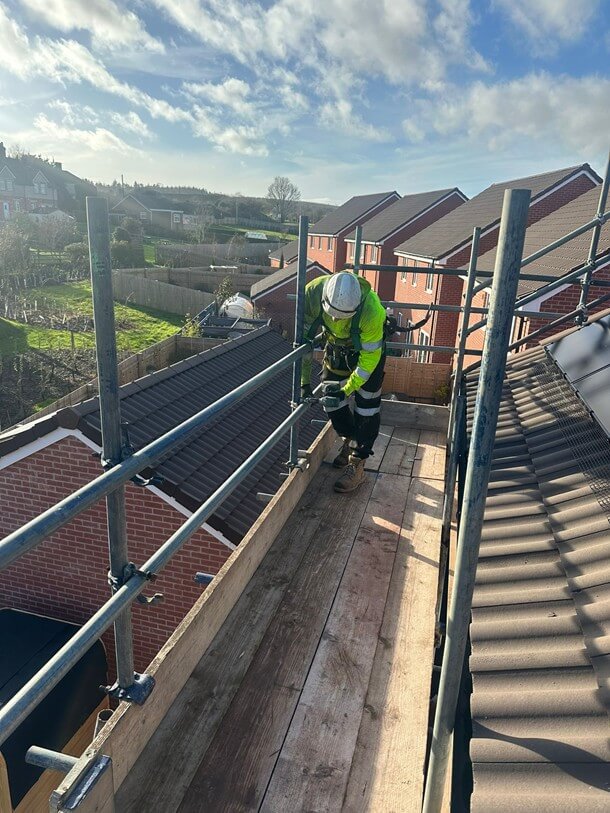
Need access to a telecom tower or rooftop installation?

Tell White’s Scaffolding about the structure, required working heights, equipment positions and site restrictions. We can discuss an access arrangement planned around the technicians and infrastructure involved.