Scaffolding is essential for safe access at height, but the process of erecting it must follow strict safety procedures and legal requirements. In the UK, scaffolding must only be erected, altered, or dismantled by competent, trained professionals who understand the regulations, risks, and correct assembly techniques. This expanded guide explains how scaffolding is erected safely, the legal standards involved, the essential stages of the build, and what keeps workers, property, and the public protected.
Erecting scaffolding is not a simple case of stacking components together. It requires planning, risk assessment, technical knowledge, and a clear step-by-step system that ensures stability at every stage. Whether you’re a property owner, contractor, or simply want to understand the process, this detailed guide breaks down each part of safe scaffold erection in the UK.
Legal and Safety Standards in the UK
Before any scaffold is erected, it must comply with UK law—specifically the Work at Height Regulations 2005. These regulations outline who is qualified to erect scaffolding, how equipment should be maintained, and what inspections must take place. Only competent, trained individuals should handle scaffold installation, and all work must follow recognised safe systems.
Competence Requirements
A competent person is someone with sufficient training and experience to build scaffolding safely. Typically, this means holding recognised qualifications such as CISRS cards or undergoing approved industry training. The law prohibits untrained individuals from erecting, adapting, or dismantling scaffolding.
Inspection Requirements
Scaffolding must be inspected:
- Before first use
- After any material alteration
- After adverse weather conditions
- At least every seven days while in use
Inspection records must be kept, and only competent inspectors may sign off a scaffold as safe.
Assessing and Preparing the Site
Before any components are unloaded, scaffolders must conduct a site assessment to ensure the ground and surrounding environment can safely support the structure. This planning stage is crucial for preventing structural instability.
Ground and Surface Conditions
The base surface must be firm, even, and capable of supporting the scaffold load. Uneven, weak, or waterlogged ground requires adjustments such as using:
- Timber sole boards
- Base plates
- Adjustable jacks
These components ensure a level and stable foundation.
Identifying Hazards
Scaffolders must check for nearby hazards including:
- Overhead cables or electrical lines
- Trees, fences, or neighbouring structures
- Uneven ground or trenches
- Public access routes
If the scaffold encroaches on a pavement or road, the company must obtain the correct local authority permits before starting work.
Safe Scaffold Erection Sequence
Erecting scaffolding safely requires a systematic process in which each stage builds structural stability. The following sequence reflects widely accepted industry practice.
Laying the Foundation
Scaffolders begin by placing sole boards on the ground, followed by base plates or adjustable jacks. These ensure the upright standards sit on a level, stable, and load-bearing base.
Building the First Lift
Standards (vertical tubes) are positioned and connected using ledgers and transoms. The first lift must be perfectly level, as it determines the alignment of the entire scaffold.
Bracing for Stability
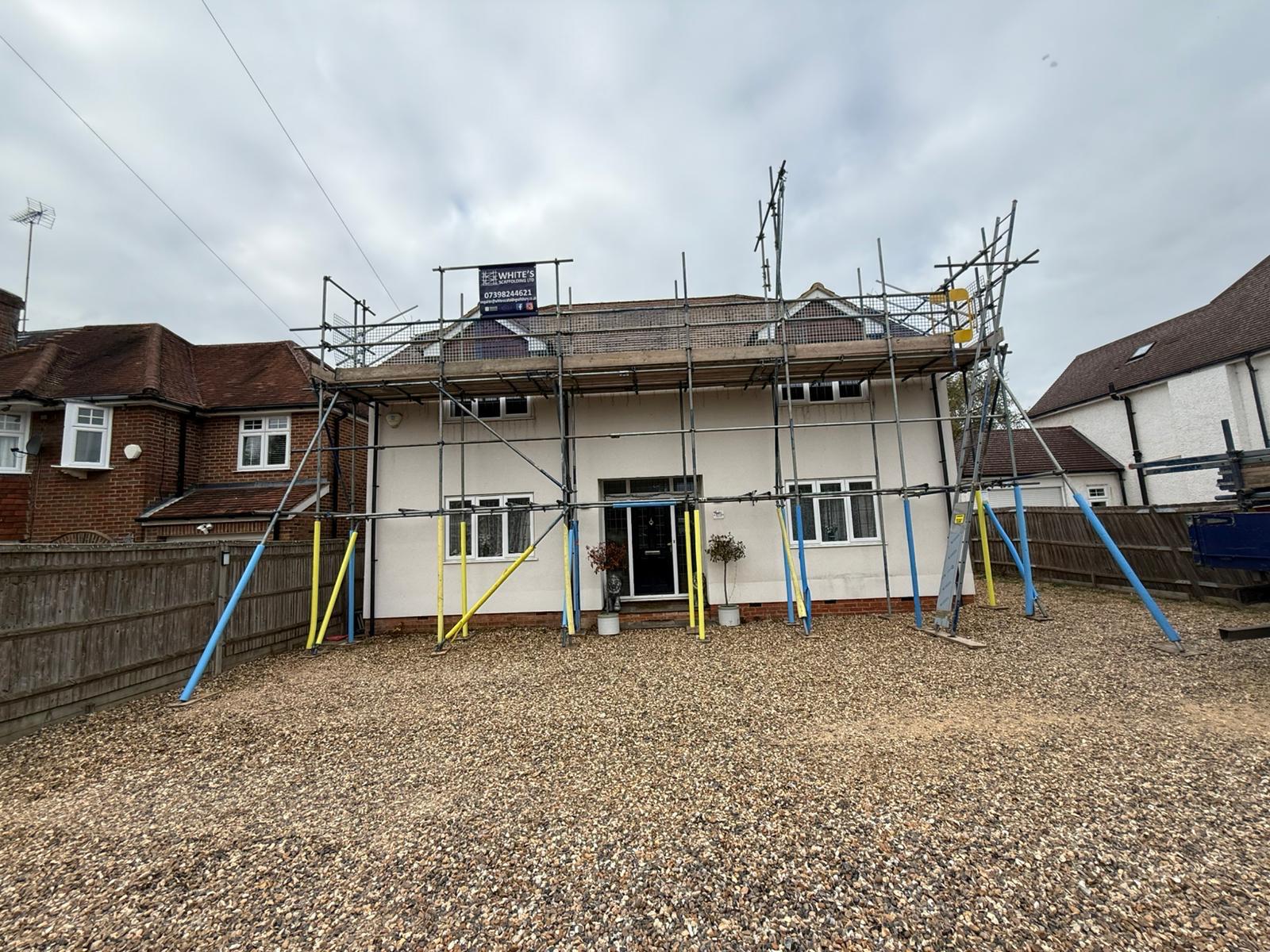
Diagonal braces are added to prevent sway and increase rigidity. Without adequate bracing, scaffolding is at risk of collapse or lateral movement.
Adding Platforms
Scaffold boards or metal platforms are laid across transoms. These form the first working platform and must be fully supported, with no excessive overhang.
Installing Guardrails and Toe Boards
To comply with UK fall-protection standards, each platform must have:
- Guardrails at the correct height
- Midrails
- Toe boards to prevent falling objects
These elements are essential and must not be omitted.
Access and Ladders
Safe access must be provided, usually with securely fixed ladders that extend above the landing platform. Ladder openings must be protected to prevent falls.
Higher Lifts and Ties
As additional lifts are added, the structure is tied to the building at prescribed intervals. Ties prevent the scaffold from moving away from the building and are critical for overall stability.
Safety Measures During Erection
Safety must be maintained throughout the entire erection process. Scaffolders follow controlled procedures to minimise risks.
Use of PPE
Workers erecting scaffolding must wear:
- Hard hats
- Gloves
- Safety boots
- High-visibility clothing
- Fall-arrest equipment when required
Handling Materials Safely
Components must be lifted and passed safely between workers. Scaffolders often work at height during erection, so safe handling is essential to avoid strain injuries and falling equipment.
Weather Considerations
Strong winds, storms, snow, and icy conditions may require work to pause. Weather significantly affects safety and stability during scaffold assembly.
Inspection and Handover
Once the scaffold is erected, a final inspection must be completed before anyone begins using it. This inspection ensures all components are secured, platforms are level, and safety features are properly installed.
The Handover Certificate
After inspection, the scaffolding company issues a handover certificate confirming the scaffold is safe for use. From this point forward, the structure must be inspected weekly or after specific events such as modifications or storms.
Common Mistakes to Avoid
Avoiding common errors is an essential part of safe scaffold erection. Mistakes can compromise the entire structure and put workers at risk.
Skipping Bracing or Ties
These elements are crucial for stability. Missing or incorrectly installed bracing significantly increases the risk of collapse.
Building on Poor Ground
Unstable or uneven bases cause leaning, sinking, or tilting.
Leaving Out Guardrails
Falls from height are among the most serious risks in construction. Missing guardrails or toe boards are unacceptable.
Overloading Platforms
Every scaffold has a load rating. Exceeding it can cause structural failure.
When You Should Never Erect Scaffolding Yourself
DIY scaffolding is never advisable unless you are trained, qualified, and competent. UK law requires scaffolding to be erected by competent people, and untrained work puts everyone at risk. Professional scaffolders understand load calculations, safe assembly methods, and legal obligations.
If your project requires scaffolding—even a small amount—always use a qualified scaffolding contractor.
Our Final Say!
Erecting scaffolding safely requires planning, technical knowledge, and adherence to UK regulations. With a detailed site assessment, proper foundation setup, structured assembly sequence, and compulsory safety features, scaffolders ensure the structure remains secure and fit for purpose. Inspections, competent labour, and careful handling all play vital roles in maintaining safety. When done correctly, scaffolding provides a stable and reliable platform for work at height across domestic, commercial, and industrial projects.
This guide gives you a clear understanding of the process, but only trained professionals should erect scaffolding. If you’d like this adapted for your scaffolding firm or integrated into your website, I can rewrite it in your company’s voice.