Planned scaffold access for homes, period buildings and commercial projects across Isleworth.
- Domestic, refurbishment and specialist scaffolding.
- Solutions for older, occupied and restricted properties.
- London enquiries: 020 7205 2798.

Planned scaffold access for homes, period buildings and commercial projects across Isleworth.
With over 15 years of experience in the scaffolding industry, White’s Scaffolding delivers quality workmanship and dependable service across Wiltshire, Hampshire, and Dorset.
From domestic homes and extensions to industrial and commercial sites, we provide safe, reliable scaffolding tailored to every type of project.
We offer realistic, transparent rates with no hidden charges, providing exceptional value and professional results from start to finish.
Our fully trained and insured team works to strict health and safety standards on every job, ensuring secure structures and complete peace of mind.
White’s Scaffolding provides scaffolding in Isleworth for roofing, restoration, maintenance, decorating and construction work.
Isleworth contains several very different working environments. Old Isleworth has narrow historic streets and older riverside buildings, while areas around London Road, Spring Grove and the station include terraces, semi-detached homes, flats and commercial premises.
These differences affect more than appearance. Older façades, basement areas, front gardens, extensions and limited side access can all influence where scaffold standards are positioned and how materials reach the working area.
In the Isleworth Riverside Conservation Area, buildings can also contain architectural details that require a more considered approach. Where the structure is historically sensitive, scaffolding for heritage and listed buildings can be planned around vulnerable masonry, decorative features and unusual building geometry.
The most useful scaffold is one designed around the work itself: the elevations being repaired, the trades using the platforms and the space available around the property.
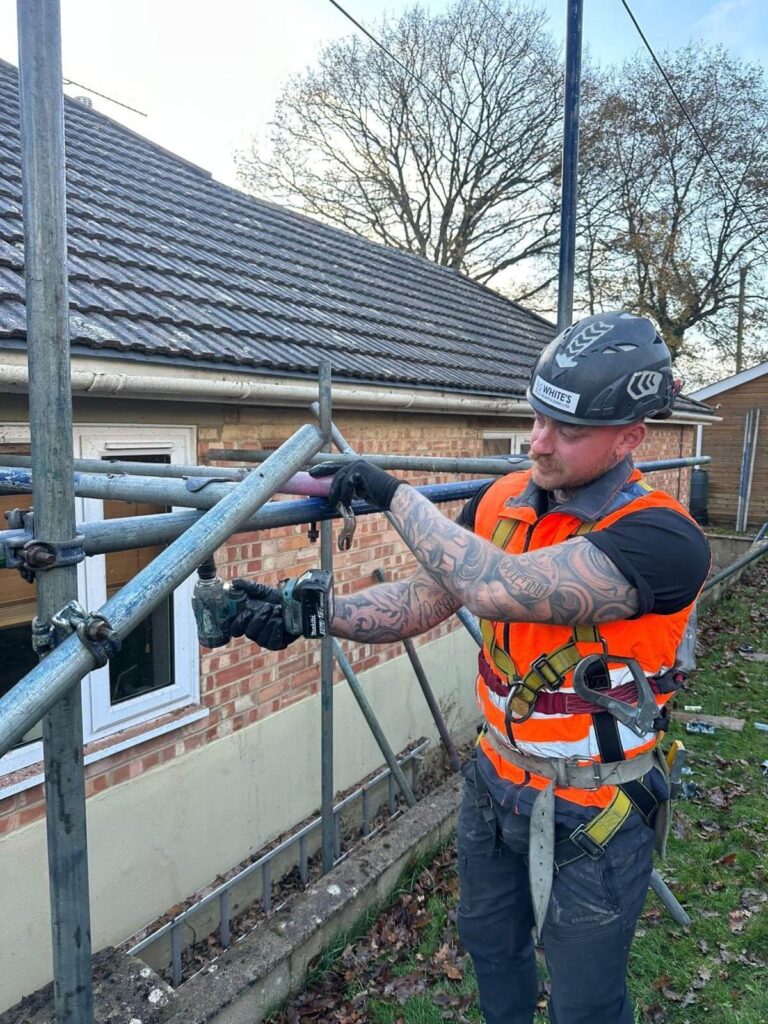
Scaffolding is often installed while tenants or residents continue living in the property.
That means the project should consider more than the contractor’s working platform. Residents may still need to use doors, gardens, paths, parking areas and communal access while erection, building work and dismantling take place.
For landlords and property managers, early communication can reduce disruption. White’s Scaffolding’s guide to notifying tenants about scaffolding work explains why occupants should be given useful information about the programme and how the scaffold may affect the property.
Practical points include:
Where several flats share the same entrance, that route should form part of the scaffold planning from the beginning.
A full fixed scaffold is not always necessary for smaller or short-duration work.
Where contractors need a working platform at several separate positions, a mobile scaffold tower can sometimes provide more appropriate access than scaffolding an entire elevation.
Typical uses include:
A tower is not automatically suitable simply because the job is small. The supporting surface needs to be appropriate, the required height must suit the equipment and there needs to be enough clear space for safe positioning.
Where the work extends across a roofline or full elevation, fixed scaffolding may provide the more practical working platform.
Isleworth sites can vary considerably, so a useful assessment looks at the building, the work area and the routes around the property.
Major roof work can leave part of a building vulnerable once tiles, coverings or structural elements have been removed.
A temporary roof or tin hat creates a protective covering above the work area so refurbishment can continue with less direct exposure to rain.
Temporary roof systems can be useful for:
They are different from ordinary weather sheeting. A temporary roof is a substantial structure that spans the work area and must account for its size, supporting scaffold and exposure.
It does not make an open building identical to a completed permanent roof, but it can substantially reduce direct weather exposure while work progresses.
The requirement is best identified before the main scaffold is erected so both structures can be planned together.
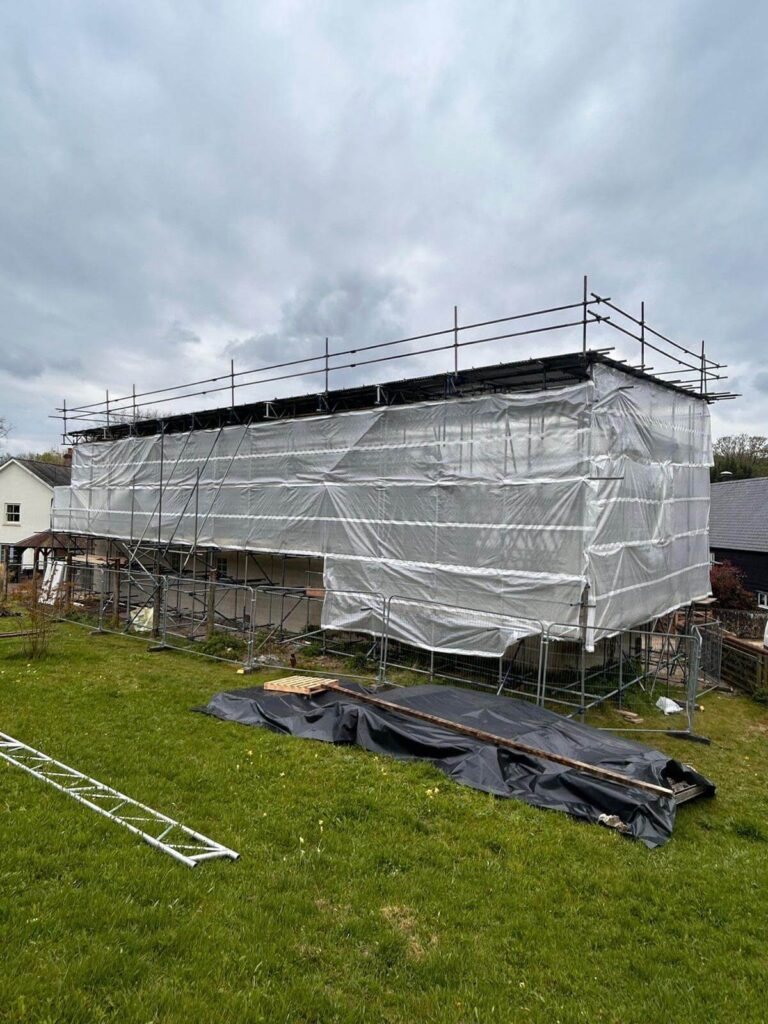
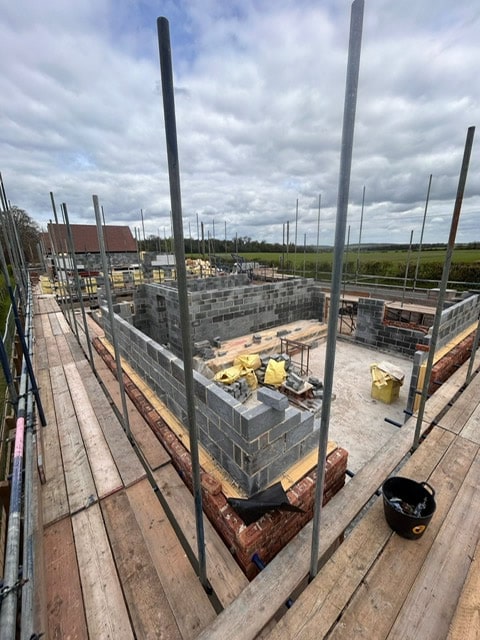
Some access requirements cannot wait for a normal refurbishment programme.
Storm damage, loose masonry, an unstable chimney or an unexpected structural problem may create an immediate need to prevent access to a hazardous area and provide contractors with controlled working platforms.
Emergency scaffolding may be appropriate where urgent work is needed following:
The first priority on a damaged property is not routine maintenance access. The condition of the structure needs to be understood and the unsafe area controlled.
Engineers, surveyors or repair contractors may need scaffold access to inspect areas closely before the permanent repair method is confirmed.
Where the building condition changes during those investigations, the scaffold may also need to be adapted to suit the revised work.
How much does scaffolding cost in Isleworth?
The price depends on the scaffold length, working height, number of lifts, hire period, access restrictions and any specialist design or protection required. A site-specific quotation is more useful than a generic fixed price.
Can scaffolding be erected on an older property in Old Isleworth?
Yes, subject to the building and site conditions. Historic façades, decorative features, restricted streets and unusual rooflines can require more detailed access planning.
Can you scaffold a house with very limited side access?
Often, yes. Restricted side access can change how equipment reaches the rear of the property and may influence the erection sequence. The available route should be assessed before the installation date.
Can I use a scaffold tower instead of full scaffolding?
Possibly. Towers suit certain short-duration and localised tasks, but they are not automatically appropriate for extended roof work, complete elevations or projects needing large working platforms.
Do I need permission for scaffolding on the pavement in Isleworth?
A temporary-structure or highway licence may be required where scaffolding occupies or projects over public highway land. The exact requirements should be confirmed for the property before erection.
How often does construction scaffolding need inspecting?
Scaffolding used for construction work should be inspected before first use, at intervals of no more than seven days and after circumstances that could affect its safety, such as substantial alterations or adverse weather.
Can my builder alter the scaffold?
No. Builders, roofers and other trades should not remove ties, guardrails, boards or structural scaffold components. Required alterations should be referred back to the scaffolding contractor.
Can scaffolding remain up for a longer refurbishment?
Yes. The hire period can reflect the project programme, subject to the agreed terms and any relevant permissions. Longer projects also require the scaffold to continue meeting inspection and safety requirements.
What should I provide when asking for a quotation?
Provide the address, the work being completed, which elevations need access, likely project dates and any known restrictions such as narrow passages, public pavements, extensions or shared entrances.
How do I arrange scaffolding in Isleworth?
Call White’s Scaffolding on 020 7205 2798 to discuss the property, work programme and access requirements.
Tell White’s Scaffolding what work is being carried out, which elevations need access and what restrictions surround the property. We can discuss a scaffold arrangement suited to your Isleworth project.