Professional scaffold access for property work throughout Earls Court.
- Access for houses, mansion blocks and commercial buildings.
- Scaffolding planned around busy and restricted London sites.
- London enquiries: 020 7205 2798.

Professional scaffold access for property work throughout Earls Court.
With over 15 years of experience in the scaffolding industry, White’s Scaffolding delivers quality workmanship and dependable service across Wiltshire, Hampshire, and Dorset.
From domestic homes and extensions to industrial and commercial sites, we provide safe, reliable scaffolding tailored to every type of project.
We offer realistic, transparent rates with no hidden charges, providing exceptional value and professional results from start to finish.
Our fully trained and insured team works to strict health and safety standards on every job, ensuring secure structures and complete peace of mind.
White’s Scaffolding provides scaffold access in Earls Court for maintenance, refurbishment, construction and repair projects.
The area combines period townhouses, mansion blocks, hotels, converted properties and commercial buildings around Earls Court Road, Warwick Road and the wider Cromwell Road area. A scaffold therefore needs to suit the individual building rather than rely on a standard arrangement.
Front elevations may sit close to pavements, while rear access can involve extensions, basement areas, boundary walls or limited routes for bringing scaffold materials onto the property. Larger blocks can also require several working levels for separate trades.
The first step is identifying exactly where work will take place. Platform heights, access positions, loading requirements and the surrounding site can then be considered before erection begins.
For internal refurbishment where operatives need access across a wide ceiling or high open space, birdcage scaffolding can create a broad, level working deck rather than relying on access from the perimeter.
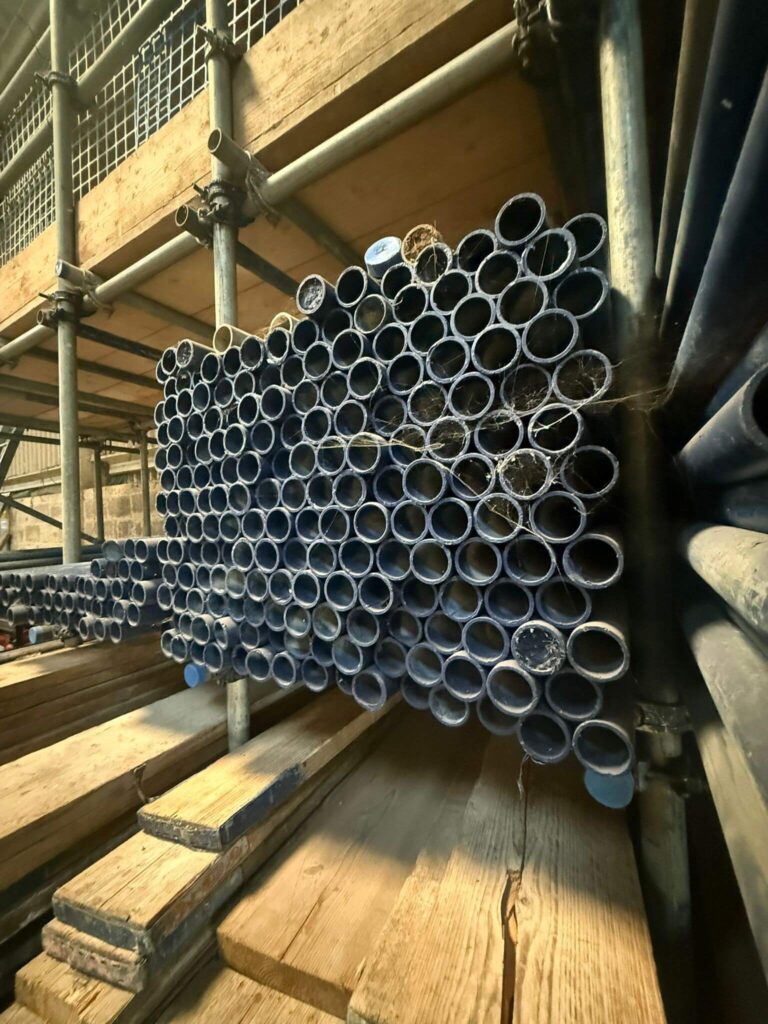
A project involving repeated movement between several working lifts may benefit from dedicated staircase access.
Ladders remain appropriate for many scaffold arrangements, but they may not always provide the most practical route where numerous workers, tools or trades regularly move between levels.
Scaffold stair towers can provide a more defined route through the scaffold. They may be particularly useful for larger refurbishment projects, blocks of flats and contractor-led works where access is required throughout the working day.
A stair arrangement can help:
Whether a stair tower is appropriate depends on the available footprint, scaffold height and expected site activity.
Not every job needs a fixed scaffold around an entire elevation. Short-duration work at several positions may sometimes be better suited to a tower.
Mobile scaffold towers provide a raised working platform that can be repositioned where site conditions allow. They can be useful for maintenance, inspection, decorating and installation work where access requirements change as the job progresses.
Typical examples include:
A mobile tower is not automatically a replacement for fixed scaffolding. Height, ground conditions, the duration of the work, required reach and whether materials need to be stored on the platform all influence which solution is appropriate.
The height of the property is only one consideration. The ground-level environment and the way the building remains in use can have an equally important effect on the final arrangement.
Refurbishment and strip-out work can generate significant quantities of waste. Moving loose debris manually through an occupied building or carrying it down scaffold access routes can create avoidable handling and housekeeping problems.
Rubbish and safety chutes provide a controlled route for suitable waste to travel from an elevated working level to a designated collection point below.
They can be useful during:
The chute position needs to work with both the scaffold and the ground-level waste area. On a restricted Earls Court site, the position of a skip or collection point can therefore influence the scaffold layout from the outset.
A chute does not remove the need for proper waste controls. It provides a defined route that can form part of a wider site-management plan.
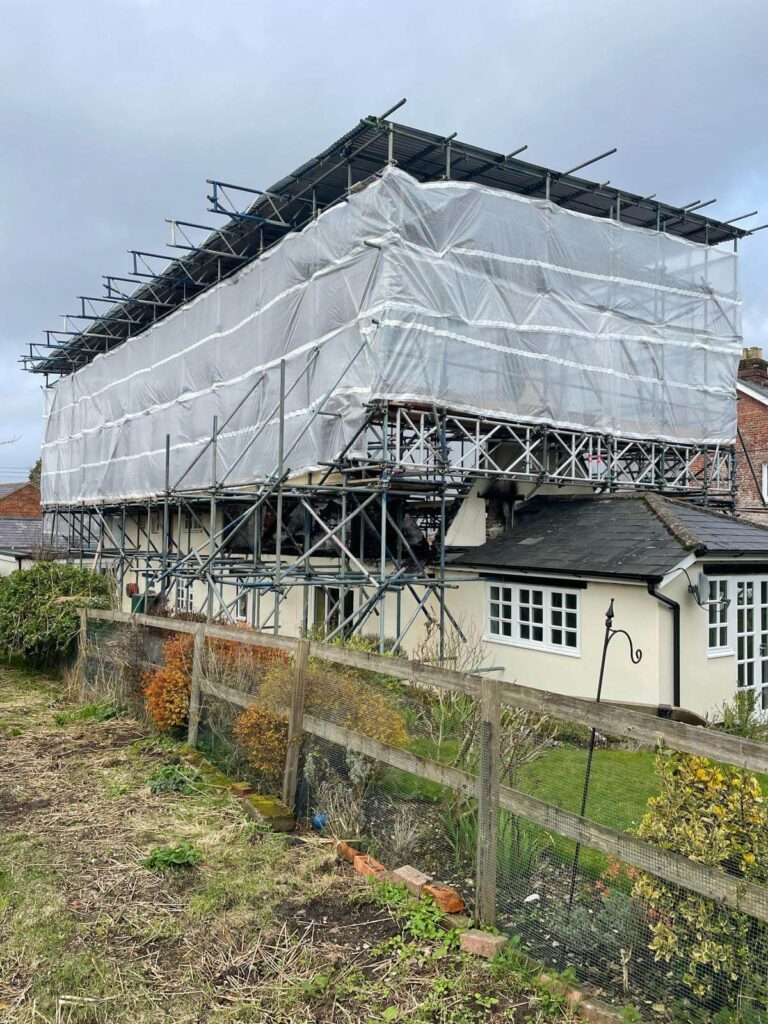
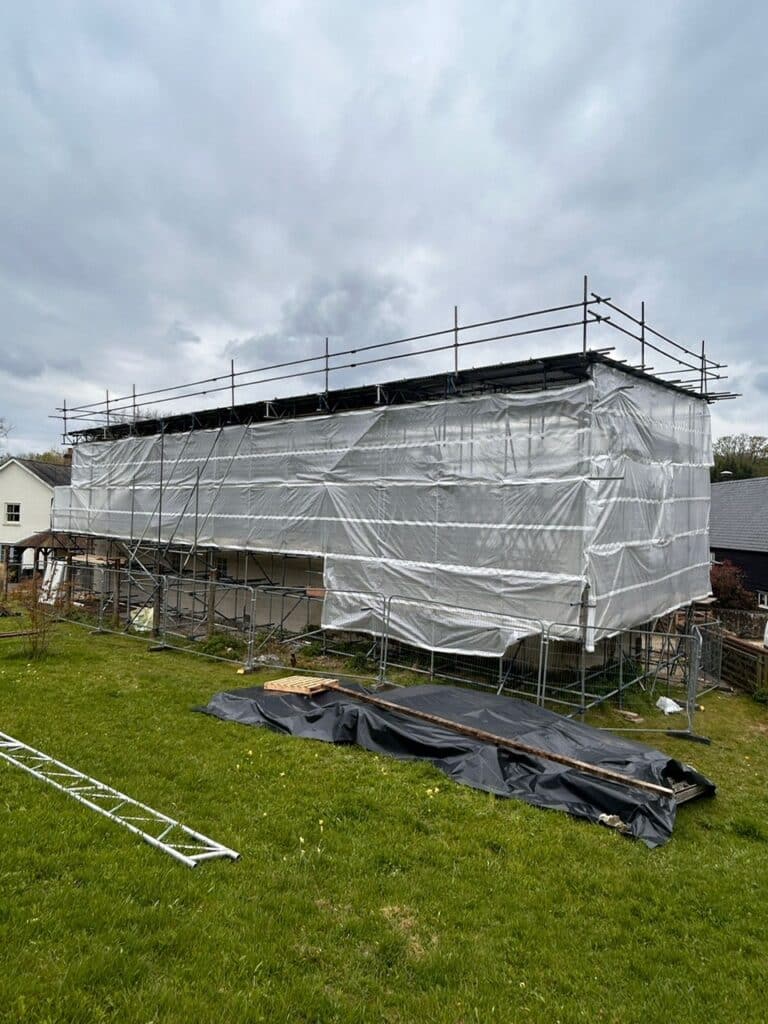
Scaffolding beside entrances, pavements or occupied areas may need additional measures where the work creates a risk of loose material leaving the working level.
Scaffold safety netting can form part of a protection system by helping contain suitable lightweight debris around the scaffold.
It may be considered for projects involving:
Netting is not a universal solution for every falling-object risk. The type of work, size and weight of potential debris, wind exposure and proximity of people below all affect the protection measures required.
On busy urban sites, protection therefore needs to be considered alongside the scaffold itself rather than added only after work has started.
How much does scaffolding cost in Earls Court?
The price depends on the scaffold dimensions, number of working elevations, required platforms, hire period, access restrictions and any specialist components. A site-specific quotation provides a more useful figure than a generic fixed price.
Can scaffolding be erected around an occupied block of flats?
Yes, this is possible on many projects. Shared entrances, resident routes, deliveries and other building access should be considered when the scaffold is planned.
Is fixed scaffolding always necessary?
No. Some short-duration or localised work may be suitable for a scaffold tower. Larger façade, roofing or multi-level projects normally require a more extensive access arrangement.
What if structural work needs temporary support?
Structural alterations can require more than conventional access scaffolding. Where loads need temporary support during openings, wall removal or repairs, a specialist arrangement such as dead-shore scaffolding may be required. The support arrangement should reflect the structural requirements of the project.
How far in advance should scaffolding be arranged?
Allow enough time for the site to be assessed and for any design, access or permission issues to be addressed. Straightforward work may require less preparation than a complex scaffold around a large occupied property.
Can a scaffold be altered once work has started?
Yes, where the project requires it, but scaffold alterations should be carried out by the scaffolding contractor. Trades should not remove ties, boards, guardrails or structural components themselves.
Who do I contact for scaffolding in Earls Court?
Contact White’s Scaffolding on 020 7205 2798 with details of the property, the work being completed and the elevations that need access.
Tell White’s Scaffolding what work is planned, which parts of the building need access and whether there are any known restrictions around the property. We can discuss the appropriate next steps for your Earls Court scaffolding project.