Professional scaffold access for homes, businesses and building projects in Barons Court.
- Scaffolding planned around restricted London sites.
- Domestic, commercial and specialist access systems.
- London enquiries: 020 7205 2798.

Professional scaffold access for homes, businesses and building projects in Barons Court.
With over 15 years of experience in the scaffolding industry, White’s Scaffolding delivers quality workmanship and dependable service across Wiltshire, Hampshire, and Dorset.
From domestic homes and extensions to industrial and commercial sites, we provide safe, reliable scaffolding tailored to every type of project.
We offer realistic, transparent rates with no hidden charges, providing exceptional value and professional results from start to finish.
Our fully trained and insured team works to strict health and safety standards on every job, ensuring secure structures and complete peace of mind.
If you need scaffolding in Barons Court, White’s Scaffolding can plan, erect and dismantle an access system around the needs of your property and the work being completed.
Local projects can involve narrow residential streets, period terraces, mansion blocks, converted flats and properties close to busy routes. Space at pavement level can therefore be just as important as working height when deciding how a scaffold should be configured.
Traditional tube and fitting scaffolding is particularly useful where a structure needs to follow an irregular elevation, bridge an obstruction or adapt around architectural details. Its individual tubes and couplers allow the scaffold arrangement to be adjusted to the shape of the building rather than relying on fixed modular dimensions.
Before erection, the working area, access points, ground conditions, required platform levels and intended use should all be considered. This helps ensure the scaffold supports the actual job rather than simply providing generic access at height.
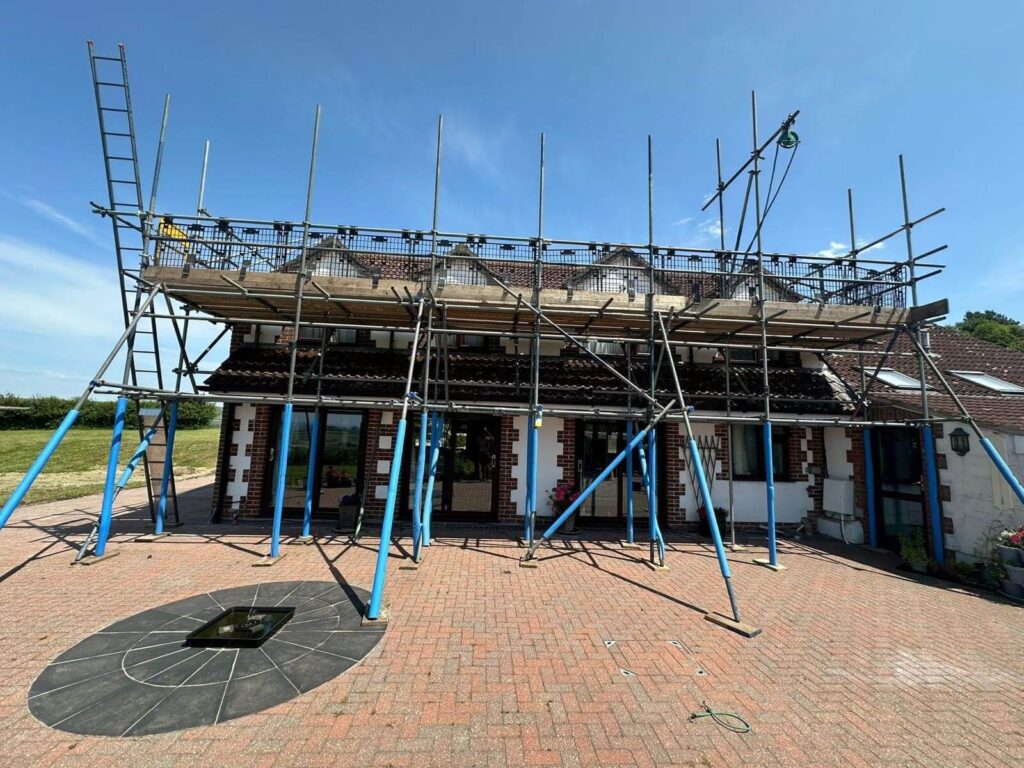
A residential scaffold should give each trade a stable working position without unnecessarily obstructing the property below.
Barons Court scaffolding can be arranged for:
Properties with difficult ground-level access may require a different approach from a conventional scaffold erected directly from the pavement or garden. Suspended scaffolding, for example, can provide elevated access where a ground-supported arrangement is impractical.
The most appropriate system depends on the building and the exact area trades need to reach.
Many London scaffolds are erected around buildings that remain occupied throughout the work. In these circumstances, planning needs to consider more than the working platforms themselves.
Residents, staff, contractors and visitors may still need to enter and leave the property. Deliveries may continue, bins may need to be moved and emergency routes must not be casually blocked by scaffold components or stored materials.
Useful considerations include:
Where overhead work creates a specific falling-object risk, a properly designed crash deck scaffold may be appropriate as part of the protection strategy.
The scaffold configuration should be based on what needs to be reached, how the property is used and what physical restrictions exist around the building.
A straightforward independent scaffold works well on many buildings, but it is not suitable for every site. Restrictions at ground level, unusual elevations or changes to the structure can require a more specialised arrangement.
Situations that may need additional planning include:
A cantilevered or suspended arrangement can sometimes overcome these restrictions by transferring support away from the obstructed area.
White’s Scaffolding also provides emergency scaffolding where urgent access or temporary protection is required following unexpected damage or a structural issue. The appropriate response depends on the condition of the building and the immediate site risks.
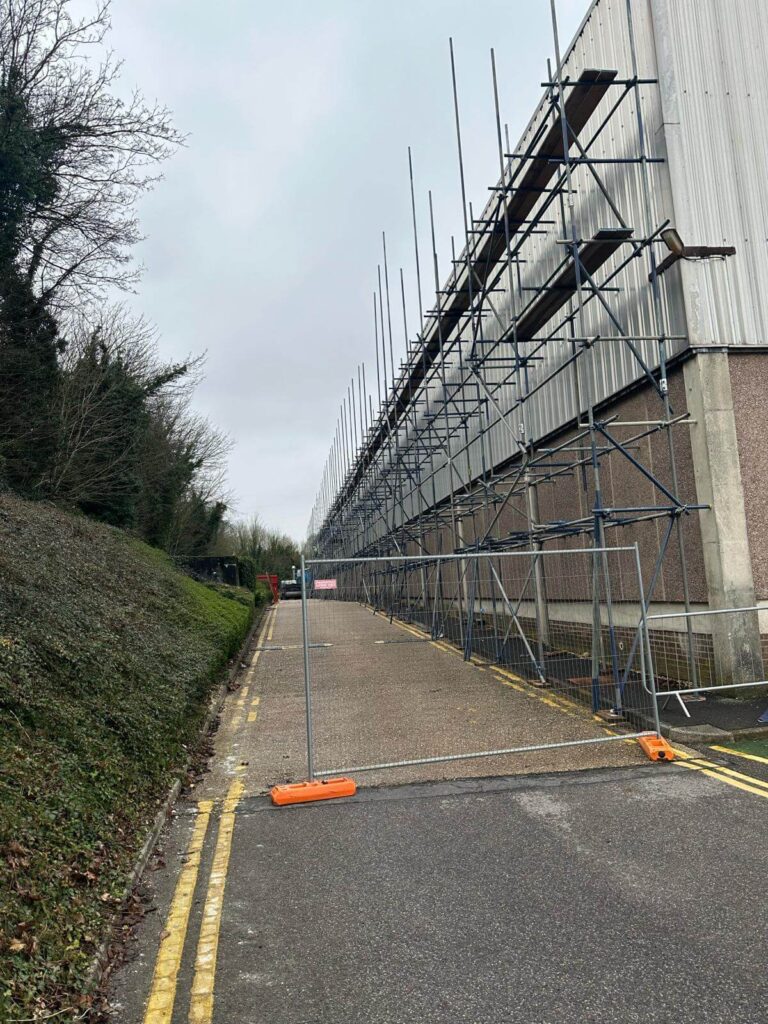
Scaffolding that occupies part of a public pavement or highway cannot simply be erected in the same way as scaffolding entirely within private land.
Depending on the site, the relevant highway authority may require a scaffold licence or permit before the structure is erected. Conditions can cover matters such as lighting, guarding, pedestrian clearance, the scaffold footprint and the period for which the structure may remain in place.
White’s Scaffolding provides support with pavement licences and scaffold permits, including the information needed to support an application where applicable.
This is particularly relevant on London projects where:
Licence requirements and approval times vary, so this should be considered before fixing the scaffold installation date.
How much does scaffolding cost in Barons Court?
There is no single fixed price. Cost is affected by scaffold size, height, number of elevations, access restrictions, hire duration, loading requirements and whether specialist design or pavement licensing is needed.
Can scaffolding be erected on a narrow frontage?
Often, yes. Restricted space does not automatically prevent scaffolding, but the available footprint and nearby obstructions need to be assessed before deciding on a configuration.
Can the property remain occupied?
In many cases it can. Entrances, pedestrian routes and the day-to-day use of the building should be considered when planning the scaffold so access can be maintained where reasonably possible.
Do I need a licence for scaffolding outside my house?
A licence may be required if the scaffold occupies or projects over a public pavement or highway. Scaffolding contained entirely within private property is a different situation, so the exact boundary and layout need to be established.
How quickly can scaffolding be erected?
The programme depends on the size of the structure, site access, availability and whether design work or third-party permissions are required. A simple domestic scaffold can generally be planned more quickly than a complex structure requiring highway approval.
Does scaffolding need inspecting after installation?
Scaffolding must remain safe and suitable while it is being used. Inspection requirements apply under UK work-at-height legislation, including following circumstances that could affect the scaffold’s safety. White’s Scaffolding sets out its approach to compliance in its health and safety policy.
Speak to White’s Scaffolding about the property, the work being carried out and any access restrictions. We can help determine a practical scaffold arrangement for your Barons Court project.