Scaffold access for homes, period properties and commercial buildings across Twickenham.
- Domestic, refurbishment and commercial scaffolding.
- Access for restricted and occupied properties.
- London enquiries: 020 7205 2798.

Scaffold access for homes, period properties and commercial buildings across Twickenham.
With over 15 years of experience in the scaffolding industry, White’s Scaffolding delivers quality workmanship and dependable service across Wiltshire, Hampshire, and Dorset.
From domestic homes and extensions to industrial and commercial sites, we provide safe, reliable scaffolding tailored to every type of project.
We offer realistic, transparent rates with no hidden charges, providing exceptional value and professional results from start to finish.
Our fully trained and insured team works to strict health and safety standards on every job, ensuring secure structures and complete peace of mind.
White’s Scaffolding provides scaffolding in Twickenham for roofing, exterior repairs, renovation, decorating and planned property maintenance.
Twickenham changes considerably between its historic riverside, commercial streets and suburban residential areas. Church Street and the older centre contain closely spaced buildings and narrow routes, while areas away from the centre include larger houses, terraces, flats and properties with gardens and extensions.
This variety means that scaffold access should be based on the individual property rather than a standard layout.
White’s provides residential scaffolding for work including roofing, masonry repairs, external decoration and home improvement projects.
Before erection, it is useful to establish which elevations need access, the intended working heights, how materials will reach the scaffold and which entrances or paths must remain available.
A scaffold covering only the areas contractors actually need can be more practical than unnecessarily surrounding the entire property.
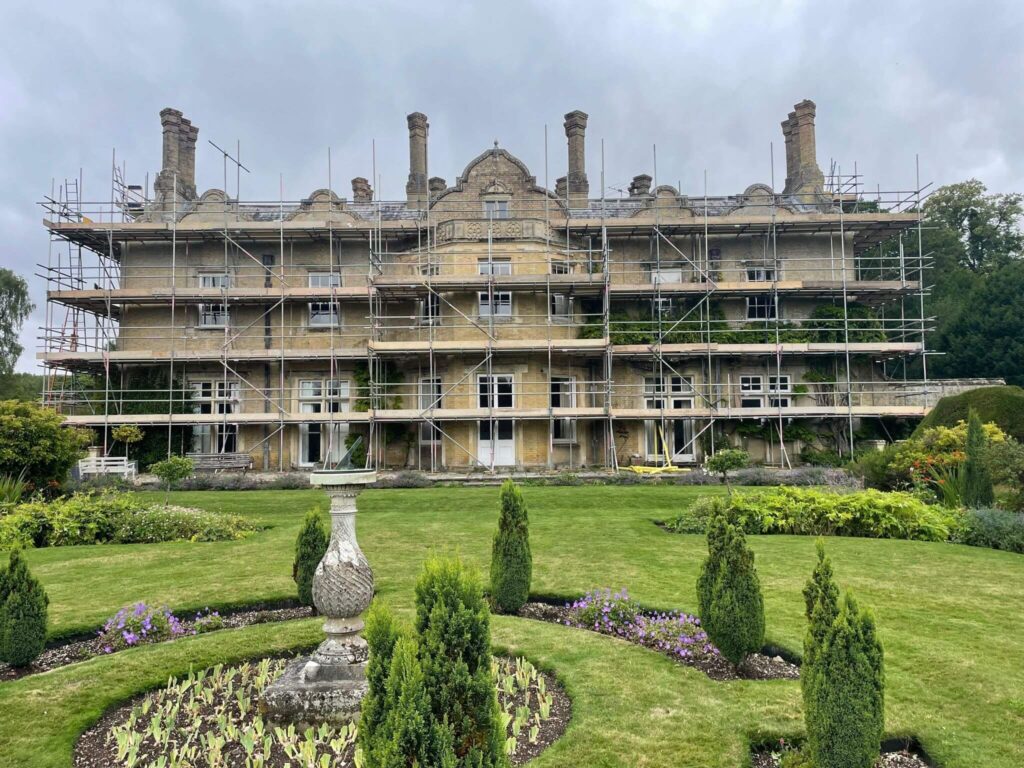
Rear elevations can be difficult to reach when a conservatory, glazed extension or single-storey addition sits directly beneath the work.
The roof of a conservatory should not be assumed to be capable of supporting scaffold loads.
A purpose-planned scaffold over a conservatory can bridge the lower structure and transfer loads to more suitable positions.
This arrangement can provide access for:
Rear access should also be considered. On a terraced property, tubes, boards and fittings may have to reach the garden through a side passage, shared route or another agreed access point.
The dimensions of the conservatory and the available supporting ground should be established before erection.
Some projects require a large working platform inside the building rather than access up an external wall.
Birdcage scaffolding creates a broad, supported working deck that can be useful where contractors need access across much of a ceiling or internal area.
Typical applications include:
Unlike a narrow façade scaffold, a birdcage normally uses a grid of standards beneath the working platform.
That makes the available floor area important. Doorways, furniture, fixed equipment and routes through the building may all affect the layout.
The platform height should also be selected around the actual task so trades can work comfortably without excessive reaching.
Twickenham includes compact historic streets, busy commercial routes and residential sites where the available space can change significantly from one property to the next.
Strip-out, roofing and refurbishment projects can generate waste at levels well above the normal collection point.
Carrying loose material repeatedly through a building can create unnecessary handling and interfere with residents, customers or other trades.
Rubbish and safety chutes can provide a defined route from an elevated working area to a suitable collection point below.
They may be useful during:
The chute position should be considered with the scaffold layout rather than added as an afterthought.
There needs to be an appropriate discharge area at ground level, and the location should work with skips, waste containers or the contractor’s collection arrangements.
On compact Twickenham properties, this can be particularly important where frontages and rear access are restricted.

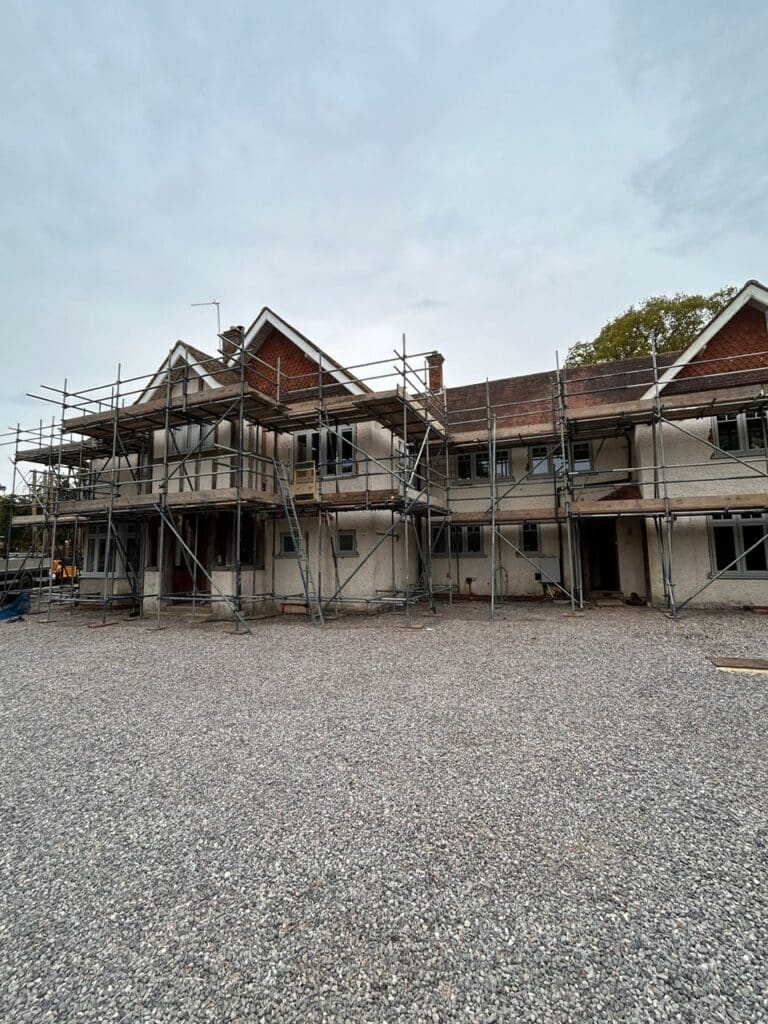
Some Twickenham properties have little or no private space between the building and the public pavement.
If scaffolding needs to occupy any part of an adopted highway in the London Borough of Richmond upon Thames, a highway scaffold licence is required before erection.
White’s Scaffolding provides guidance on scaffold licences and pavement permits for projects where public land is involved.
Planning may need to address:
A highway licence is separate from any planning permission or building consent that may apply to the underlying construction work.
Properties wholly within private land do not require a highway scaffold licence simply because scaffolding is being used.
For busy locations around King Street or York Street, highway requirements should be established before agreeing the erection date.
How much does scaffolding cost in Twickenham?
The cost depends on the size and height of the structure, number of working levels, required elevations, hire period and site restrictions. Specialist access or highway requirements can also influence the quotation.
Can scaffolding be erected on a property in a conservation area?
Yes. Conservation-area status does not itself prevent scaffolding from being erected. However, the underlying building work may be subject to planning or conservation controls, particularly where historic fabric is affected.
Can scaffolding reach the rear of a terraced house?
Often, yes. The available route for transporting scaffold materials needs to be established first. Narrow side passages, shared access or internal routes can affect how the erection is organised.
Can scaffolding be built over a conservatory?
Yes, where the site allows a suitable bridging arrangement. The conservatory roof should not simply be assumed to be capable of carrying scaffold loads.
When should I arrange scaffolding?
Arrange it early enough for the working areas, site access and any licensing requirements to be assessed before your builder or roofer is due to start.
Can the scaffold be altered during the project?
Yes. A scaffold can be adapted where the work programme changes, but alterations should be completed by the scaffolding contractor.
Can my builder remove scaffold boards or ties?
No. Other trades should not remove ties, guardrails, boards or structural scaffold components themselves. Unauthorised changes can affect the safety of the structure.
Does scaffolding need regular inspections?
Yes. Construction scaffolding is subject to statutory inspection requirements, including inspection before first use, at intervals of no more than seven days and after circumstances that could affect its safety.
What information helps when requesting a quote?
Provide the property address, work being carried out, elevations requiring access, likely hire period and details of obstacles such as conservatories, lower roofs, narrow passages or public pavements.
How do I arrange scaffolding in Twickenham?
Call White’s Scaffolding on 020 7205 2798 to discuss the property, planned work and access requirements.
Tell White’s Scaffolding which areas of the property need access, what work is planned and what restrictions surround the building. We can discuss a practical scaffold arrangement for your Twickenham project.