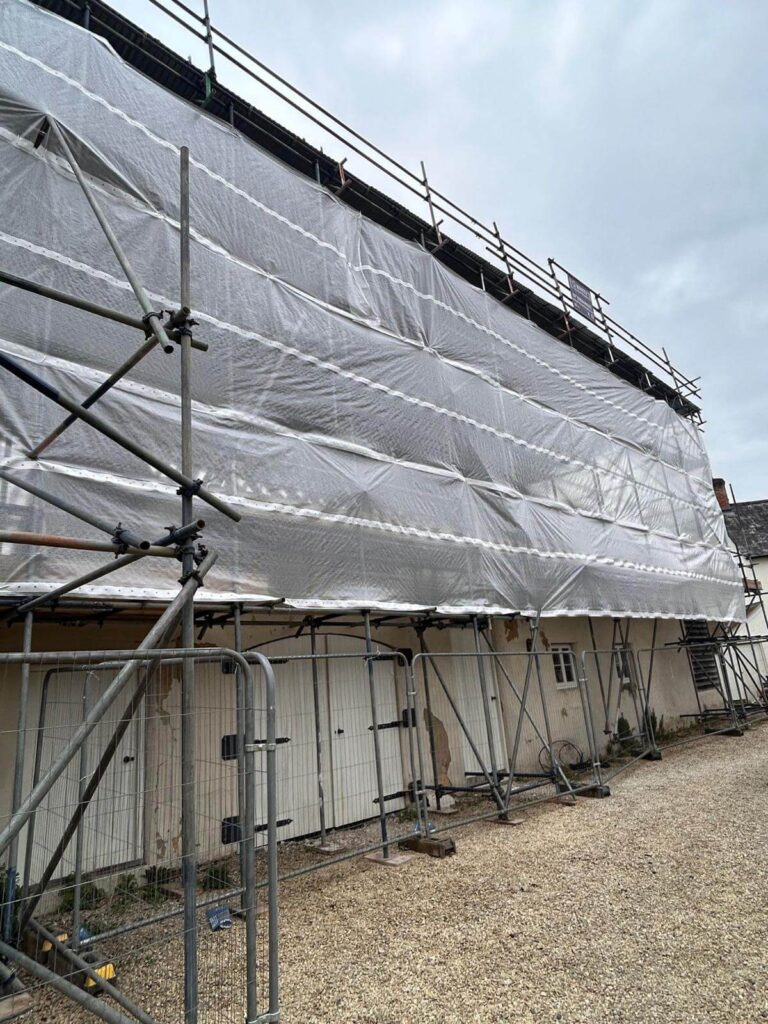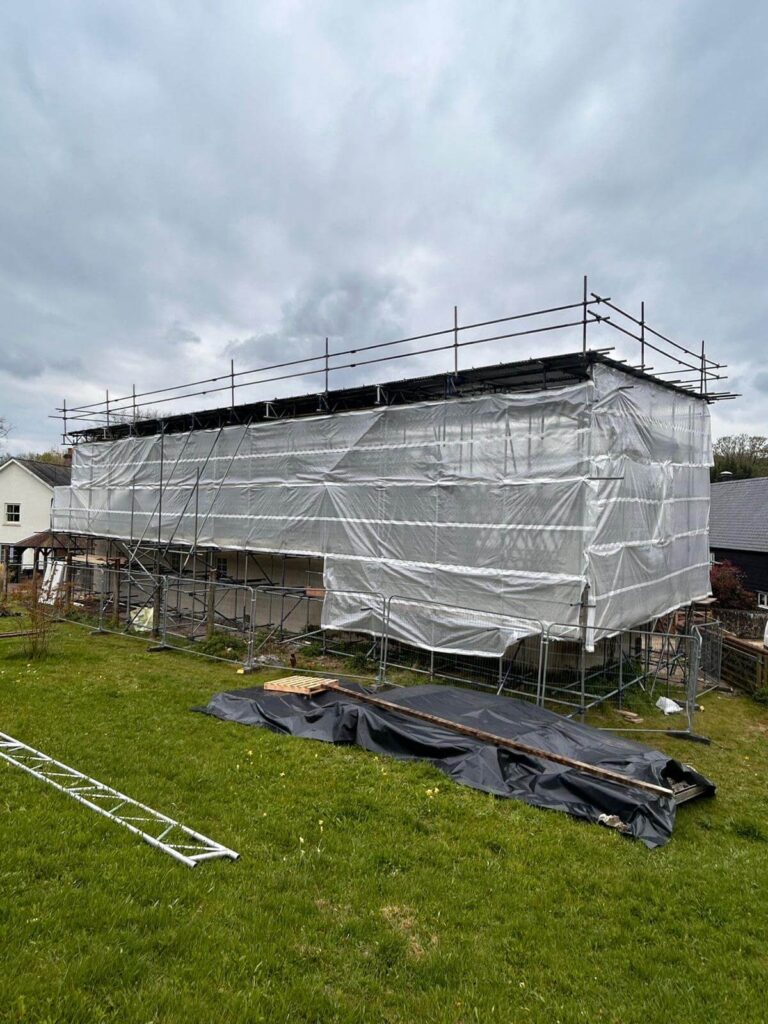
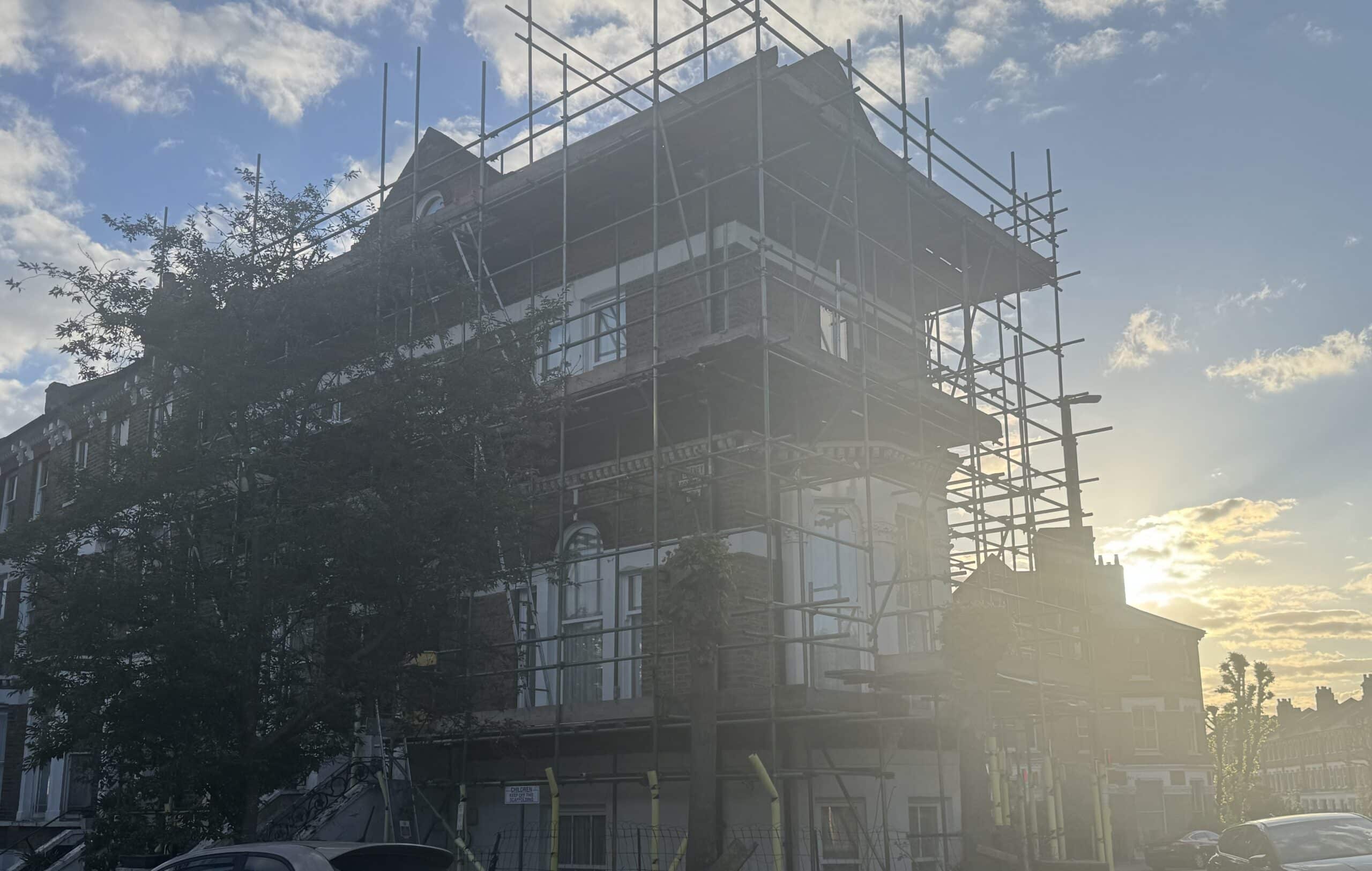
When a chimney needs repointing, lead flashing, removal, repair or inspection, the scaffold is often one of the first costs you need to understand. Chimney work is rarely safe from a ladder alone, especially when the stack sits high on a pitched roof, close to a party wall, above a conservatory or near a public footpath. A properly built chimney scaffold gives roofers, bricklayers and chimney specialists a stable working platform around the stack, which makes the job safer, cleaner and easier to complete properly.
For most homes in the UK, a chimney scaffold will usually cost somewhere between £500 and £1,200 for a straightforward domestic job. Smaller bungalow chimney access may start from around £300–£500, while more awkward two-storey or three-storey properties can move into the £900–£1,500+ range. If the scaffold needs to bridge a conservatory, sit on a narrow side passage, include a full saddle around the stack, cover several roof elevations or be installed in a city centre location, the final price can rise further.
The important point is that chimney scaffold costs are not based on the chimney alone. They are based on height, access, property layout, roof shape, hire duration, labour, transport, safety requirements and how much scaffold is needed to create a usable working platform. Two houses can have chimneys that look similar from the street, yet the scaffold cost can be very different once the scaffolder has checked the roof line, ground conditions and safe access route.
Average Chimney Scaffold Cost in the UK
A typical chimney scaffold for a domestic property usually falls into a broad price band because each setup is slightly different. As a general guide, you can expect the following rough figures:
- Small bungalow chimney scaffold: £300–£600
- Standard two-storey chimney scaffold: £500–£1,000
- Two-storey chimney scaffold with a saddle around the stack: £700–£1,200
- Three-storey chimney scaffold: £900–£1,500+
- Chimney scaffold over a conservatory or fragile roof: £800–£1,600+
- Complex chimney scaffold in London or restricted access areas: £1,000–£2,000+
These figures are best treated as planning ranges rather than fixed prices. A simple side elevation scaffold to reach the base of a chimney stack may sit at the lower end, while a scaffold that needs to wrap around the stack on several sides will cost more. The difference is not just extra tube and boards. It also means more labour, more design consideration, more ties, more time on site and often a more careful method of installation.
Many chimney scaffolds are hired for one to two weeks as standard. If the chimney repair takes longer, the scaffolder may charge an extension fee. Some companies include a set hire period within the original quote, while others price weekly. Always check what the quote includes before comparing two prices, because a cheaper quote can become more expensive if the included hire period is too short.
Why Chimney Scaffolding Can Cost More Than You Expect
Chimney scaffolding can look small compared with a full house scaffold, but it can still be awkward to build. The working area is often high, exposed and positioned on a pitched roof. The scaffold may need to give access not only to the front of the stack but also to the sides and rear, especially if the work involves repointing, flaunching, flashing repairs or taking the stack down.
A chimney scaffold also has to be practical for the tradesperson using it. It is not enough to place a tower near the roof and hope the worker can lean across safely. The platform must give secure footing, guardrails, toe boards and enough working room for tools, materials and safe movement. If brickwork is being removed, the scaffold may also need to support debris handling and prevent materials falling onto roof coverings, paths, gardens or neighbouring property.
Roof shape plays a large part in the price. A chimney at the edge of a gable wall may be easier to reach than a central chimney stack sitting on a steep roof. A stack shared between two terraced houses may need careful planning around party walls, neighbouring roofs and public-facing elevations. If the scaffold has to rise from a narrow alleyway, bridge over a lower roof or sit partly on uneven ground, the labour and equipment requirements increase.
What Is Included in the Price?
A proper chimney scaffold quote should normally include delivery, erection, hire for an agreed period, dismantling and collection. It should also include the standard safety components needed for the job, such as working platforms, guardrails, toe boards and suitable access. On many domestic jobs, the scaffolder will inspect the site before confirming the price, either in person or through clear photographs and measurements.
The quote may also include:
- Scaffold boards and working lifts so the contractor can stand safely while carrying out chimney repairs.
- Edge protection to reduce fall risk around the roof line and working platform.
- Ladders or stair access depending on the height, layout and expected use.
- Ties and bracing to keep the scaffold stable and suitable for the property.
- Dismantling and collection after the work has been completed.
There can be extra costs if the scaffold needs a pavement licence, parking suspension, temporary roof covering, debris netting, extra loading bays, out-of-hours erection or specialist design input. These are not always needed for a normal domestic chimney repair, but they can apply when the property is on a busy road, close to the public, unusually tall, awkwardly shaped or difficult to access.
Chimney Scaffold for a Bungalow
A bungalow chimney scaffold is usually one of the cheaper setups because the working height is lower. In some cases, a small scaffold tower or short access scaffold may be enough to reach the stack safely. Prices often start from around £300–£600, depending on the height of the roof, the pitch, the chimney position and the amount of working platform required.
However, bungalow does not always mean simple. A steep roof, fragile tiles, a rear extension, limited side access or a chimney positioned away from the edge of the roof can still increase the cost. If the scaffold needs to span over a conservatory or garden room, the price may rise because the scaffold has to be built without loading fragile structures underneath.
For small repairs such as capping a chimney pot, fitting a cowl or carrying out a basic inspection, the scaffold may be fairly modest. For repointing, lead work or partial rebuilding, the contractor may need a wider platform and better access around the stack, which will push the price upwards.
Chimney Scaffold for a Two-Storey House
A two-storey property is the most common scenario for chimney scaffolding. For a fairly straightforward setup, the cost often sits between £500 and £1,000. This might cover a scaffold built from ground level up to roof height, with a working platform positioned to let the tradesperson reach the chimney stack safely.
If the chimney sits on a gable end or close to the outside wall, access may be relatively simple. If the chimney is central, shared, set back from the elevation or positioned above a steep pitched roof, the scaffold may need more structure. A saddle scaffold around the chimney, where the scaffold gives access around several sides of the stack, can take the cost closer to £700–£1,200 or more.
Two-storey homes with extensions can also be more expensive. A conservatory, porch, garage roof, lean-to, bay window or fragile lower roof can prevent the scaffold from being built directly underneath the work area. The scaffolder may need to bridge over the obstruction, use additional beams or build from another elevation, which increases time and materials.
Chimney Scaffold for a Three-Storey House
Three-storey chimney scaffold is more expensive because the working height is greater and the risk level is higher. Prices commonly start around £900–£1,500+, but complex townhouses, Victorian terraces and properties with poor access can cost more. The scaffold needs to be stable at height, carefully tied and built with safe access for the trades who will be using it.
Older three-storey properties can be particularly awkward. Many have narrow rear alleys, small courtyards, basement areas, extensions or roof shapes that were not designed with modern scaffold access in mind. If the chimney sits on a party wall between terraced properties, the scaffolder may also have to consider neighbouring access, boundary lines and safe working near adjoining roofs.
For high-level chimney repairs, the scaffold cost can sometimes feel disproportionate to the repair itself. That is normal. A small amount of brickwork or lead flashing may still require a full safe access solution because the worker has to reach a difficult point on the roof, not because the repair material is expensive.
What Affects the Cost of Chimney Scaffolding?
The biggest factor is height. A taller property needs more scaffold, more labour and more time to erect and dismantle. The next factor is access. A clear driveway or side path makes the job easier, while narrow alleys, shared entrances, rear gardens, busy streets and restricted parking make the scaffold more difficult to deliver and install.
The chimney position matters as well. A stack on the outer edge of a roof may need less scaffold than a central stack surrounded by sloping roof surfaces. If the work has to be completed on all sides of the chimney, the scaffold needs to give safe access around the stack rather than just up to it. This is why repointing, rebuilding and lead flashing work often need a more substantial setup than a quick visual inspection.
The roof pitch can also affect price. A steep roof increases the need for proper working platforms and edge protection. Fragile roof coverings, old tiles, slate roofs, asbestos risk, glass roofs and conservatories can all change the method of work. The scaffolder must avoid damaging the property while still giving the contractor safe access.
Location can make a noticeable difference. Scaffold prices are often higher in London, the South East and busy urban areas because labour, parking, permits, transport and site restrictions tend to cost more. Rural jobs can also cost more if the scaffolder has to travel a long distance or send a team to a remote property for a small job.
Do You Need a Full Scaffold Around the Chimney?
Not always. The amount of scaffold needed depends on the job. If the contractor only needs to inspect one side of the stack or carry out a small repair near the accessible face, a smaller platform may be enough. If the chimney needs repointing on all sides, new lead flashing, flaunching repairs, pot replacement or partial dismantling, a more complete scaffold setup is usually required.
A saddle scaffold is often used when safe access is needed around the chimney stack itself. This can be more expensive than a simple access scaffold, but it gives the tradesperson a safer and more practical working area. It also helps prevent poor workmanship caused by leaning, stretching or trying to work from an awkward position.
It is usually false economy to under-scaffold chimney work. If access is poor, the tradesperson may take longer, struggle to complete neat repairs or refuse to carry out parts of the job. A properly planned scaffold can make the repair more efficient and reduce the chance of problems being missed because one side of the chimney was hard to reach.
Permit and Pavement Licence Costs
If the scaffold is fully on private land, you may not need a pavement licence. If any part of the scaffold sits on a public pavement, road, verge or highway, the scaffolder will usually need permission from the local council. The cost and process vary by council, and the scaffold company often arranges this as part of the job.
A pavement licence can add to the total cost because it involves administration, council fees and sometimes extra safety requirements. On busy streets, you may also need warning lights, pedestrian protection, parking suspension or traffic management. These additions are more common in towns, cities and terraced streets where the scaffold cannot be kept fully within the property boundary.
When comparing quotes, ask whether permits are included. One scaffolder may include the licence cost in the quote, while another may list it separately. That difference matters when deciding which price is actually cheaper.
How Long Can You Keep Chimney Scaffold Up?
Most domestic chimney scaffold quotes include a set hire period, often one or two weeks. This is usually enough for chimney repointing, flashing repairs, pot replacement, cowl fitting or small rebuild work, as long as the contractor is ready to start. If the repair is delayed by weather, materials or contractor availability, you may need to extend the hire.
Extension costs vary. Some scaffolders charge a weekly extension fee, while others are more flexible if the delay is short. It is worth arranging the scaffold only when the chimney contractor has confirmed their start date, because paying for scaffold to sit unused can quickly waste money.
Weather can be a real issue with chimney work. High winds, heavy rain, frost and poor visibility can delay roof work even when the scaffold is already up. A short buffer in the hire period is sensible, especially during winter or when the chimney work involves mortar, lead work or roof repairs that need dry conditions.
Can You Use a Scaffold Tower Instead?
A scaffold tower may be suitable for some low-level chimney or roofline jobs, but it is not a universal replacement for chimney scaffolding. Towers are useful when the working area is close to the edge, the ground is level and the height is manageable. They are less suitable when the worker needs to reach across a pitched roof, work around several sides of a chimney or carry out heavy repairs at height.
For chimney work, the issue is not just getting up to roof level. The worker needs a safe place to stand, move and handle materials near the stack. A tower at ground level may not provide that. Leaning from a tower or ladder to reach a chimney can be dangerous and may not comply with safe working expectations.
If a contractor tells you scaffold is needed, it is usually because they need proper access rather than just height. For small jobs on a bungalow or low roof, a tower might reduce the cost. For most two-storey chimney repairs, a purpose-built scaffold is usually the safer and more practical option.
Example Chimney Scaffold Prices
A small bungalow with a chimney near the roof edge might need a compact scaffold tower or low-level access scaffold. The likely cost could be around £350–£600, depending on local rates and how easy the property is to access.
A standard two-storey semi-detached house needing chimney repointing may cost around £600–£1,000 for scaffold access. If the stack is easy to reach from the side elevation, it may be nearer the lower end. If the scaffold needs to bridge over a garage, porch or conservatory, the price may move higher.
A terraced house with a shared chimney stack at roof height may cost around £800–£1,400+, especially where rear access is poor or the scaffold has to be erected from the front. If the scaffold sits on a public pavement, permit costs and safety extras can increase the total.
A three-storey townhouse or Victorian property with a high chimney stack may cost £1,000–£1,800+. The price can rise further where there is limited access, a steep roof, public-facing scaffold, difficult parking or the need for a more complex saddle scaffold around the stack.
How to Keep Chimney Scaffold Costs Down
The best way to control the cost is to make the job easy to quote and easy to access. Send clear photos of the chimney, the full elevation, the side access, the ground area and any obstacles such as conservatories, extensions, garden rooms, garages or narrow passages. The more information the scaffolder has, the less likely they are to add a safety margin for uncertainty.
You can also reduce wasted hire time by coordinating the chimney contractor and scaffolder properly. The scaffold should go up shortly before the repair starts, not weeks earlier. Make sure the roofer, bricklayer or chimney specialist is ready to work once the scaffold is in place.
Access matters as well. Clear the area where possible, move bins, unlock gates, trim back overgrown plants and make sure vehicles can get close enough for unloading. Small delays on the day can increase labour time, especially if the scaffold team has to carry materials a long distance.
It may also be worth combining jobs. If the chimney scaffold gives safe access to gutters, ridge tiles, roof repairs, aerial removal or leadwork, you may save money by doing related maintenance at the same time. You should not add unnecessary work just because the scaffold is there, but it can be sensible to inspect nearby roof areas while access is already available.
Questions to Ask Before Accepting a Chimney Scaffold Quote
Before you accept a quote, check exactly what is included. Ask how long the hire period lasts, whether dismantling is included, whether VAT is included and whether the scaffold provides access to all sides of the chimney needed for the repair. A quote that only gives access to one side may not be suitable if the chimney needs full repointing.
You should also ask whether a pavement licence is required, who arranges it and whether it is included in the price. If the scaffold is close to the public, ask whether lighting, protection or signage is needed. For awkward properties, it is sensible to confirm how the scaffold will be built around extensions, conservatories or fragile roof areas.
A good scaffold company should be able to explain the setup in plain terms. You do not need a technical scaffold design for every small domestic chimney job, but you should be confident that the scaffold will provide safe, usable access for the work being carried out.
Is Chimney Scaffolding Worth the Cost?
Chimney scaffolding can feel expensive because it is often needed before the visible repair even begins. However, the scaffold is what allows the repair to be completed safely and properly. Chimneys sit in exposed positions, and poor access can lead to rushed work, missed defects, damaged roof coverings or unsafe working practices.
If the chimney needs repointing, lead flashing repairs, new flaunching, pot replacement, capping, removal or rebuilding, scaffold is often one of the most important parts of the job. It protects the workers, helps the repair run smoothly and reduces the risk of damage to the roof and surrounding property.
The cheapest option is not always the best option. A very low quote may exclude permits, offer limited access, include a short hire period or fail to provide enough working space around the stack. When comparing prices, focus on the full setup rather than the headline number alone.
FAQS
How much does a chimney scaffold cost for a two-storey house?
A chimney scaffold for a two-storey house usually costs around £500–£1,000 for a straightforward setup. If the chimney needs access on several sides, or the scaffold has to bridge over an extension, conservatory or garage, the price can move closer to £1,200 or more.
The final cost depends on the chimney position, roof pitch, access, location and hire duration. A stack on a simple gable end is usually cheaper to scaffold than a central chimney on a steep roof or a shared stack on a terraced property.
How much does chimney scaffolding cost for a bungalow?
Bungalow chimney scaffolding often costs around £300–£600, depending on the roof height, chimney position and access. Some low-level jobs may only need a small scaffold tower, while others need a more stable working platform around the stack.
A bungalow with a conservatory, fragile roof, steep pitch or hard-to-reach chimney can cost more. The lower height helps, but the scaffold still has to provide safe access for the work being carried out.
Why is chimney scaffolding so expensive?
Chimney scaffolding can be expensive because the work area is high, exposed and often awkward to reach. The scaffold has to provide safe access around a roof, not just a simple platform at ground level.
The price includes labour, transport, erection, dismantling, equipment, safety components and hire time. Difficult access, taller properties, public pavements, steep roofs and saddle scaffolds around the stack can all increase the total cost.
Do I need scaffolding for chimney repointing?
In most cases, yes. Chimney repointing usually requires safe access to several sides of the stack, especially if the mortar joints are weathered all the way around. A ladder is rarely enough for proper, safe repointing at roof height.
A scaffold gives the bricklayer a stable platform for tools, materials and controlled movement. It also helps the work look neater because the contractor is not stretching or leaning from an unsafe position.
Can a roofer repair a chimney without scaffold?
Some very small low-level jobs may be possible without full scaffold, but most chimney repairs need proper access. Roofers may use roof ladders, towers or other equipment for minor tasks, but this depends on the roof, height and risk assessment.
For repointing, rebuilding, lead flashing repairs, pot replacement or chimney removal, scaffold is normally the safer and more practical option. The contractor should decide based on safe working requirements, not just convenience.
How long does chimney scaffold stay up?
Most chimney scaffold is hired for one or two weeks as standard. This usually gives enough time for common chimney repairs, provided the contractor starts soon after the scaffold is erected.
If the work is delayed by bad weather, materials or scheduling problems, you may need to pay extra hire. Always check the included hire period and the weekly extension cost before accepting the quote.
Does chimney scaffolding need a permit?
A permit is usually needed if the scaffold stands on or over a public pavement, road, verge or highway. If it stays fully within your private property boundary, a pavement licence is usually not required.
The rules and fees vary by council. In most cases, the scaffold company arranges the licence, but you should confirm whether the cost is included in the quote or charged separately.
Is a chimney scaffold cheaper than full house scaffolding?
Usually, yes. A chimney scaffold is normally cheaper than scaffolding a full house because it covers a smaller working area. However, it can still be costly if the chimney is high, awkward, central on the roof or difficult to access.
A full house scaffold may be better value if you are also carrying out roof repairs, gutter work, painting, rendering or other high-level maintenance. The right option depends on the amount of work being done.
Can chimney scaffold go over a conservatory?
Yes, scaffold can often be designed to bridge over a conservatory, but it usually costs more. The scaffold must avoid loading fragile glass or lightweight roof structures, which means extra beams, supports and careful planning may be needed.
A conservatory can turn a simple chimney scaffold into a more complex job. Clear photos are useful when asking for quotes, because the scaffolder needs to see the size, position and construction of the obstruction.
What is a chimney saddle scaffold?
A chimney saddle scaffold is a scaffold setup that gives safe access around the chimney stack itself. It is commonly used when work is needed on several sides of the chimney, such as repointing, flaunching, flashing repairs or partial rebuilding.
It usually costs more than a simple access scaffold because it requires more equipment and labour. The benefit is that it gives the tradesperson a safer, more usable working platform around the stack.
Can I save money by sharing scaffold with my neighbour?
Sometimes, yes. If you share a chimney stack with a neighbouring property, it may be cheaper to arrange related chimney or roof work at the same time. One scaffold setup may provide access for both sides, depending on the property layout.
This needs agreement between both homeowners and the contractors involved. It is also important to confirm responsibility for payment, access, damage risk and timing before the scaffold is booked.
Is VAT included in chimney scaffold prices?
Not always. Some scaffold quotes include VAT, while others show prices before VAT. This can make one quote look cheaper than another even when the final cost is similar.
Always ask whether VAT is included before comparing prices. If the scaffolder is VAT registered, the final invoice may be 20% higher than the headline figure if VAT has not been shown clearly.
Final Thoughts
For most UK homes, chimney scaffold costs usually sit between £500 and £1,200, with smaller bungalow jobs sometimes costing less and complex three-storey or restricted-access jobs costing more. The final price depends on the height of the property, chimney position, roof shape, access, hire duration, local labour rates and whether the scaffold needs to wrap around the stack.
The safest way to budget is to treat chimney scaffold as part of the repair, not as a separate nuisance cost. Good access helps the contractor work properly, reduces risk and can prevent corners being cut on an exposed part of the building. When you compare quotes, look beyond the price and check what the scaffold actually provides, how long it can stay up and whether permits, VAT and dismantling are included.