A scaffold tower is usually best for short, localised jobs where access is only needed to one small section of a building. Full scaffolding is normally more suitable for larger projects involving complete elevations, several working levels, roof-edge access or work lasting several days or weeks.
The decision should not be based on height alone. You also need to consider how much of the building needs access, how many people will be working, what materials need to be carried, the condition of the ground and how often the access equipment would need to be moved.
For a minor repair above one window, a tower may be all that is required. For a complete re-roof or whole-house render, full scaffolding is generally the more practical solution.
Scaffold Tower vs Full Scaffolding at a Glance
| Requirement | Scaffold Tower | Full Scaffolding |
|---|---|---|
| Small repair | Usually suitable | Often unnecessary |
| Painting one area | Suitable | Depends on scale |
| Gutter maintenance | Suitable for short sections | Better for long runs |
| Full re-roof | Usually unsuitable | Usually suitable |
| Whole-house rendering | Limited | Usually suitable |
| Several workers | Limited | Better suited |
| Continuous façade access | No | Yes |
| Easy repositioning | Yes, where conditions permit | No |
| Difficult ground | More restrictive | More adaptable |
| Long-duration work | Less convenient | More practical |
| Material storage | Limited | Greater capacity when designed for it |
| Complex building shape | Limited | Highly adaptable |
What Is a Scaffold Tower?
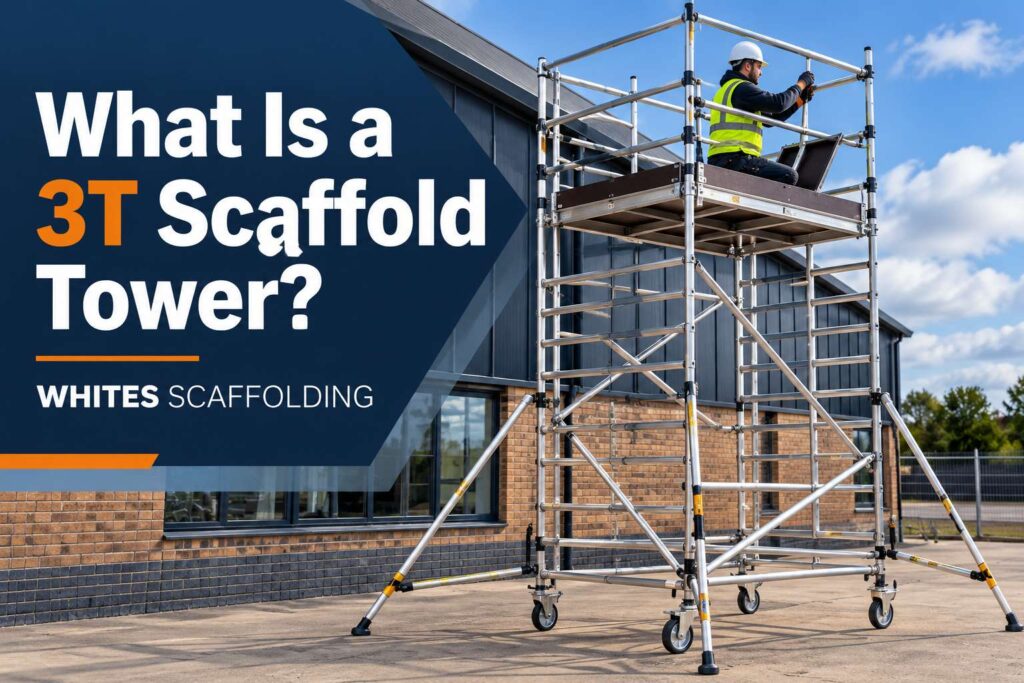
A scaffold tower is a compact freestanding structure designed to provide a protected working platform at height.
Many towers are mobile and use castors so they can be repositioned when the ground and surrounding area are suitable. Other configurations may use base plates rather than wheels.
Typical uses include:
- Painting.
- Minor pointing repairs.
- Gutter maintenance.
- Fascia and soffit work.
- Window repairs.
- Inspections.
- Electrical work.
- Small areas of maintenance.
The main advantage is that a tower provides access to a concentrated working area without requiring scaffold to be erected around an entire building.
Our mobile scaffold towers are suited to projects where a compact working platform provides enough access for the task.
What Is Full Scaffolding?
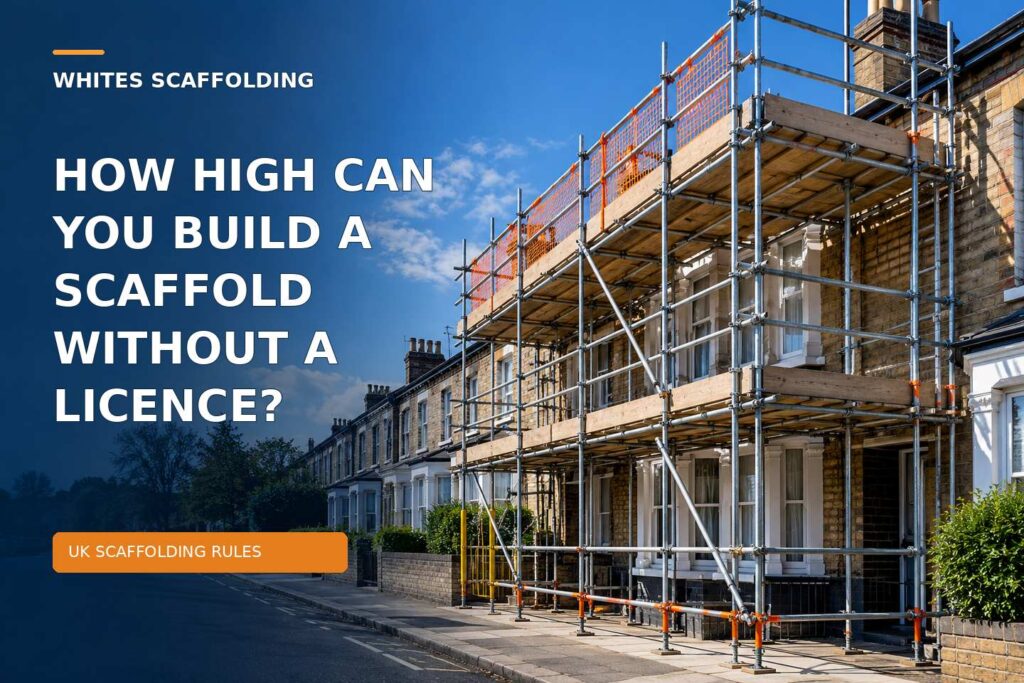
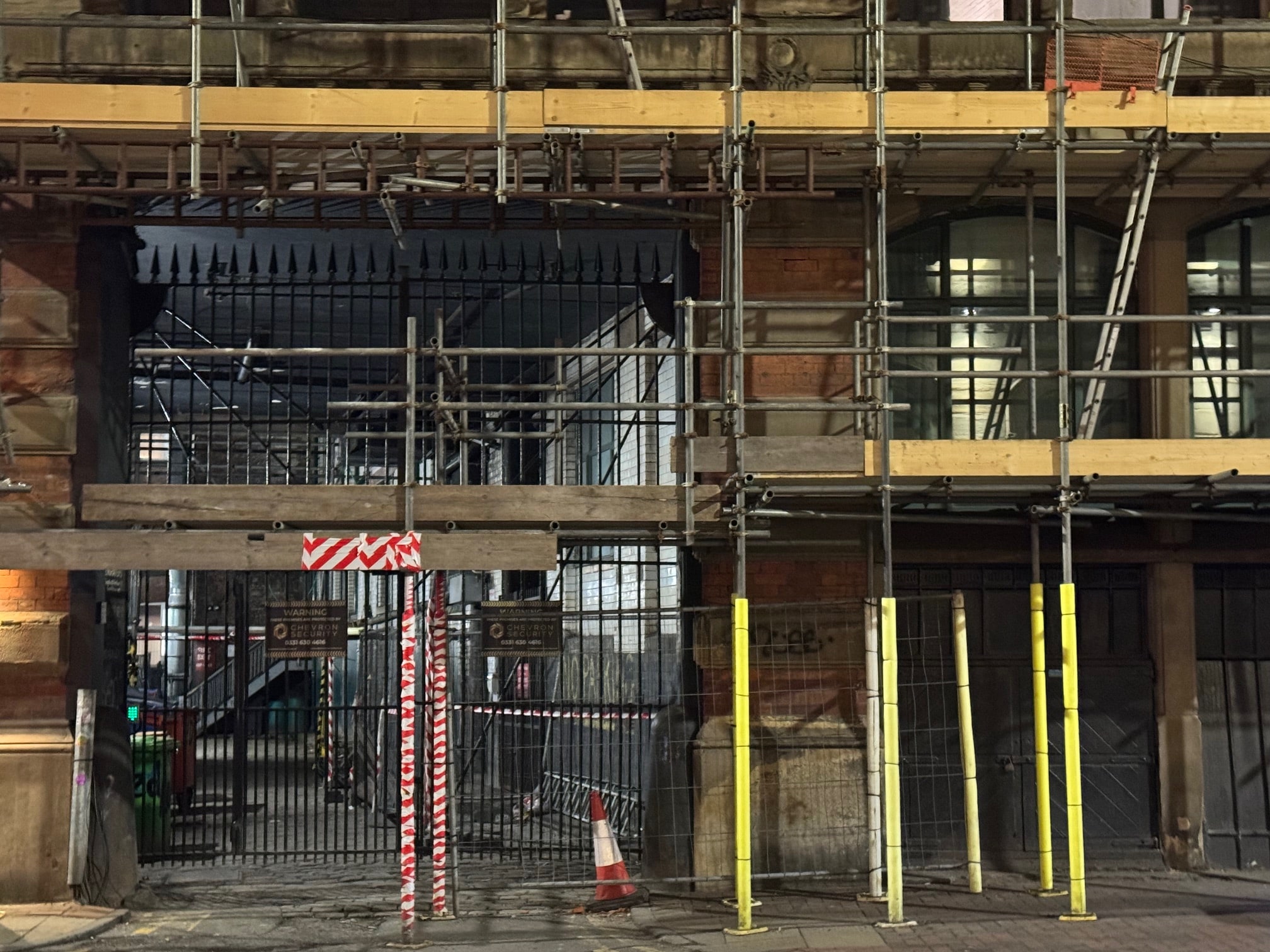
Full scaffolding is a larger temporary access structure that can run along complete elevations or around several sides of a building.
It can provide working platforms at different heights and give workers space to move horizontally without repeatedly relocating the scaffold.
Traditional scaffolding can include:
- Standards.
- Ledgers.
- Transoms.
- Scaffold boards.
- Bracing.
- Guardrails.
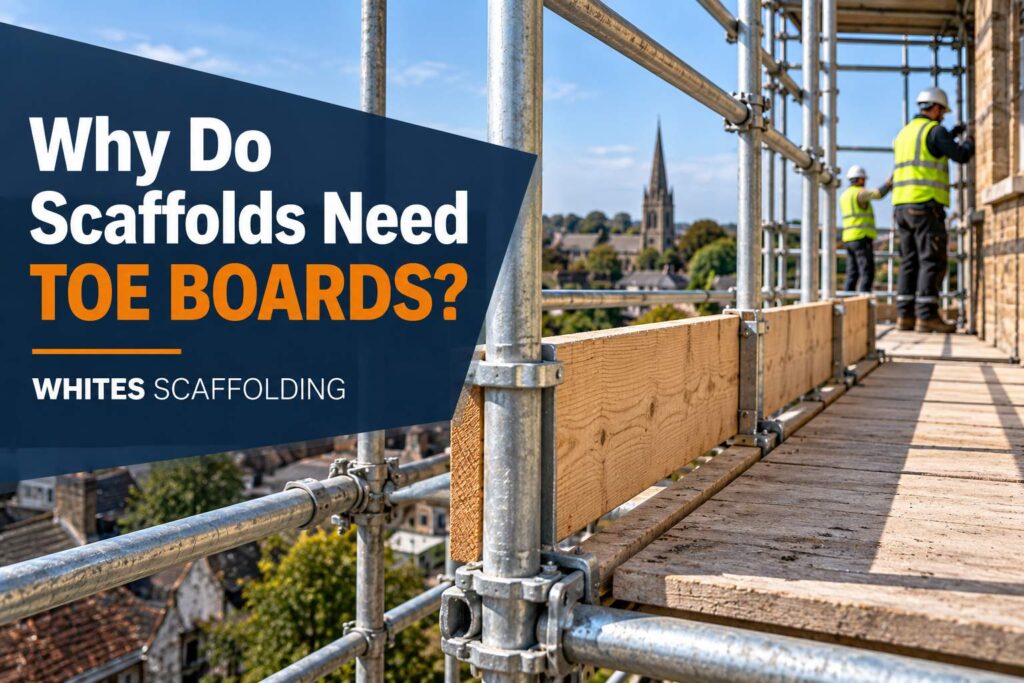
- Toe boards.
- Ties.
- Base plates.
- Ladders or staircase access.
Our traditional tube and fitting scaffolding can be adapted around different building shapes, rooflines and access restrictions.
This flexibility makes full scaffolding particularly useful for larger refurbishment and construction projects.
When Is a Scaffold Tower the Better Choice?
A tower normally makes sense when the job is concentrated in one small area.
Imagine that an upper-floor window surround needs painting.
The worker only needs access to a section a few metres wide. Building scaffold across the entire front of the house may provide considerably more access than the job requires.
A correctly positioned tower can provide a stable working platform without taking over the whole elevation.
Other suitable tasks may include:
- Repairing a short gutter section.
- Painting one gable.
- Replacing a light fitting.
- Carrying out a building inspection.
- Completing a small masonry repair.
- Maintaining one window.
For short-duration work, the reduced setup involved can make a tower particularly convenient.
When Is Full Scaffolding Better?
Full scaffolding becomes more useful as the working area becomes larger.
A complete roof replacement is a good example.
Roofers may need access along:
- Front eaves.
- Rear eaves.
- Gable ends.
- Chimneys.
- Dormers.
- Different roof sections.
A tower positioned in one place cannot provide continuous access to these areas.
Workers would have to repeatedly climb down, move the tower, check the new setup and climb again.
Full scaffolding creates a continuous working environment and can remain in place throughout the project.
Which Is Better for Roofing?
For a small isolated repair, a tower may sometimes provide enough access.
Examples might include checking one gutter outlet or completing a minor repair near an accessible section of roof.
A complete re-roof is different.
Roofers normally need continuous access along substantial sections of the roof edge. They may also require working platforms for tools and materials.
Full scaffolding is therefore usually the more practical choice for:
- Roof replacement.
- Chimney repairs.
- Major roof maintenance.
- Fascia replacement along complete elevations.
- Work involving several roof areas.
The access system needs to support the way the roofing work will actually progress.
Which Is Better for Painting?
A tower can work well for localised painting.
It may be suitable for:
- One upper-floor window.
- A small rendered section.
- Fascias.
- A short gable.
- Decorative features.
For painting an entire house, however, a tower can become inefficient.
The worker may need to descend, move the structure, check it again and climb back up every few metres.
With full scaffolding, decorators can move along the working platform without repeatedly changing the access setup.
For large elevations, this can save significant working time.
Which Is Better for Rendering and Repointing?
Full scaffolding is usually better for rendering and extensive repointing.
Both jobs involve progressing systematically across a wall.
Workers need access to wide sections of the façade and often need tools and materials close to the working area.
A scaffold tower only provides a narrow platform.
Repeatedly moving it could interrupt the work and make maintaining a consistent finish more difficult.
Full scaffolding allows trades to work horizontally across the elevation and can provide several working lifts where required.
Which Provides More Working Space?
This is one of the biggest differences between the two systems.
A tower provides a relatively compact platform.
That is useful when the worker only needs to remain in one position.
Full scaffolding can provide long working platforms covering complete elevations.
This matters when:
- Several workers need access.
- Tools need to remain at height.
- Materials are being used.
- Workers need to move sideways.
- Several trades are involved.
The amount of usable platform space should therefore be considered before choosing the access method.
How Many Workers Will Be Using the Scaffold?
A tower has limited platform space and a defined loading capacity.
Even where more than one person is permitted on the tower, the platform may not provide enough practical working room for several trades.
Full scaffolding can provide much more space.
This can be important on larger projects where roofers, bricklayers, decorators or window installers may need access at different stages.
The structure can also be arranged with different working lifts where appropriate.
What Materials Need to Be Carried?
Material requirements can quickly change which option is most suitable.
A painter using lightweight tools has very different access requirements from a bricklayer or roofer.
Projects may involve materials such as:
- Bricks.
- Blocks.
- Mortar.
- Roof tiles.
- Timber.
- Insulation.
- Render.
- Window units.
A tower has limited working and storage space.
Full scaffolding can be configured with larger platforms or suitable loading areas where the project requires them.
Any access system must still remain within its permitted loading limits.
Which Is Better on Uneven Ground?
Ground conditions are especially important with scaffold towers.
A mobile tower needs firm, level and properly supported ground.
Minor differences may sometimes be accommodated using the approved adjustable components for the tower, but it should never be levelled using loose bricks, blocks, pieces of timber or other improvised packing.
Our guide to scaffolding on uneven ground explains why ground conditions matter so much when setting up access equipment.
Full scaffolding can often be adapted more effectively around varying levels because the base arrangement can be planned specifically for the site.
That does not mean full scaffolding can simply be erected on poor ground without assessment. The supporting surface still needs to carry the loads safely.
Does Working Height Decide Which You Need?
Height is important, but it should not make the decision on its own.
Two jobs at exactly the same height can require completely different access systems.
For example, repairing one window on a two-storey house may suit a tower.
Repointing the complete front elevation of the same house may require full scaffolding.
Our guide to safe scaffolding height explains why the required working position and scaffold configuration matter more than simply quoting the overall building height.
The key question is how workers need to use the access once they reach the correct level.
Can You Move a Scaffold Tower?
Many mobile towers can be repositioned when conditions allow.
Before moving one, the route should be checked for:
- Slopes.
- Kerbs.
- Potholes.
- Loose gravel.
- Debris.
- Overhead cables or obstacles.
People and loose materials should be removed from the tower before it is moved.
It should also be moved carefully from low down rather than being pulled from the upper frame.
Mobility can be a major advantage for short tasks, but moving a tower repeatedly during a large project can quickly become inconvenient.
Full Scaffolding Provides Continuous Access
Once full scaffolding is erected, workers can move along the platform rather than moving the access structure.
This is particularly useful for:
- Roofing.
- Rendering.
- Repointing.
- Exterior painting.
- Window replacement.
- Major maintenance.
For jobs lasting several days or weeks, continuous access can improve productivity considerably.
This is one reason why full scaffolding may sometimes represent better overall value even though the initial access cost is higher.
Which Is Faster to Set Up?
A tower will normally require less assembly than full scaffolding.
For a quick repair, this is a major advantage.
Full scaffolding requires more components, delivery, erection and dismantling.
However, setup time needs to be considered alongside the duration of the project.
Spending longer erecting full scaffolding may be worthwhile if workers then save time every day by having continuous access to the complete work area.
Which Is Cheaper?
For a short and localised job, a scaffold tower will normally be cheaper because it requires less equipment and labour.
Full scaffolding generally costs more due to:
- More scaffold material.
- Longer erection time.
- Longer dismantling time.
- Transport.
- Larger working areas.
- More complicated access arrangements.
Fixed price comparisons can be misleading because cost varies according to the individual project.
Important factors include:
- Height.
- Scaffold length.
- Hire duration.
- Ground conditions.
- Site access.
- Number of working platforms.
- Loading requirements.
- Design complexity.
- Highway licences where required.
The cheapest access system is not necessarily the one with the lowest initial hire cost.
If workers spend substantial time continually repositioning a tower, the overall project can become less efficient.
Which Is Better for a Two-Storey House?
Either may be suitable.
The fact that a house has two storeys does not automatically mean full scaffolding is required.
A tower may be ideal for one small repair.
Full scaffolding is more likely to be appropriate for:
- Full re-roofing.
- Whole-house rendering.
- Major repointing.
- Exterior decoration across several elevations.
- Multiple window replacements.
- Large extension projects.
The amount of working area matters more than the number of storeys alone.
What About House Extensions?
A tower may be useful for individual tasks during the early stages of a small extension.
As the structure reaches upper levels and roofing begins, full scaffolding often becomes more practical.
Trades may require access for:
- Brickwork.
- Roofing.
- Gutters.
- Fascias.
- Windows.
- Rendering.
These tasks may take place around several sides and at different heights.
A fixed scaffold can remain available as the work progresses.
What About Restricted Sites?
A tower occupies a relatively small central footprint, which can make it attractive on confined sites.
However, required stabilisers can increase the actual space needed.
Full scaffolding takes up more overall space but can be designed around site features such as:
- Conservatories.
- Extensions.
- Narrow passages.
- Bay windows.
- Building projections.
- Different ground levels.
Local properties can vary considerably. Projects involving scaffolding in Glastonbury can include older buildings, narrow access, commercial frontages and different ground conditions, all of which influence the choice of access system.
The scaffold needs to fit the site as well as the job.
Scaffold Tower Advantages
A scaffold tower can provide:
- Quick access for small jobs.
- Compact working space.
- Less equipment.
- Faster assembly.
- Repositioning where safe.
- Lower cost for many short projects.
Its biggest limitation is the restricted working area.
Full Scaffolding Advantages
Full scaffolding can provide:
- Continuous access across elevations.
- Several working levels.
- Larger platforms.
- More room for workers.
- Better access for materials.
- Greater flexibility around complex buildings.
- Long-term access during construction.
- Better suitability for major roof and façade work.
The main disadvantages are the additional equipment, erection time, space and cost involved.
Which One Do You Need?
Choose a scaffold tower when:
- Only a small area needs access.
- The task is relatively short.
- Materials are limited.
- The ground is firm and level.
- Repositioning the tower will not disrupt the work.
Choose full scaffolding when:
- Work covers a complete elevation.
- A full roof is being replaced.
- Rendering or repointing covers a large area.
- Several people need to work at height.
- Significant materials are required.
- Continuous roof-edge access is needed.
- The job will continue for a longer period.
- Ground levels or building shapes are complicated.
Final Thoughts
A scaffold tower and full scaffolding perform different roles.
A tower is usually ideal for small repairs, inspections, localised painting and short maintenance work where a compact working platform provides enough access.
Full scaffolding is generally the better choice for roofing, rendering, repointing, major refurbishment and work covering complete elevations.
The easiest way to choose is to consider how the work will actually be carried out.
Ask how much of the building needs access, how far workers need to move, how many people will use the platform, what materials are involved and how long the project will last.
The access system should suit the work rather than simply being the smallest or cheapest option available.