There is no single UK price for a scaffolding licence. The cost is set by the highway authority responsible for the road or pavement, and current fees vary significantly depending on location, scaffold size and how long the structure will remain in place.
For 2026/27, examples range from around £42 for a short scaffold permit in some areas to £660 per month for smaller residential and commercial scaffold licences in parts of London. Larger London sites can cost considerably more.
If the scaffolding remains entirely on private property and does not occupy or overhang the public highway, a highway scaffolding licence will not normally be required.
When Do You Need a Scaffolding Licence?
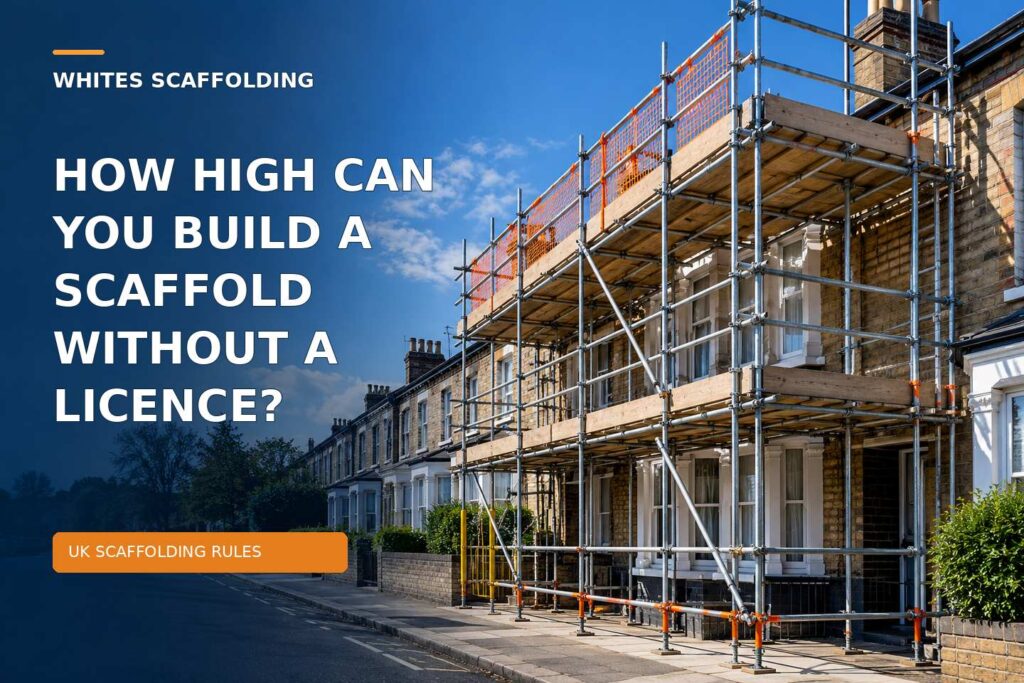
A licence is generally required when scaffolding occupies part of the public highway.
The public highway can include:
- Pavements.
- Roads.
- Verges.
- Public footways.
- Other highway land.
A licence may also be required where part of the scaffold projects or over-sails the highway, even if the main standards are positioned on private property.
For a normal detached property with enough private land around it, scaffolding may be erected completely within the boundary and no highway licence fee will apply.
Terraced properties, shops and buildings positioned directly beside pavements are more likely to require a permit.
This is particularly relevant for residential scaffolding on properties with little or no front garden, where there may be insufficient space to keep every part of the structure within the private boundary.
How Much Is a Scaffolding Licence in 2026/27?
Licence fees vary considerably between authorities.
The following current examples demonstrate how different the costs can be:
| Area | 2026/27 Scaffold Licence Fee | Licence Period |
|---|---|---|
| Lancashire | £42 | Standard duration of 1 week |
| Westmorland and Furness | £108 | Scaffold permit |
| Staffordshire | £127 domestic / £168 commercial | First month |
| Coventry | £185 | Up to 1 month |
| Derby | £205 | 28 days |
| Surrey | £208 | 28 days |
| Hammersmith & Fulham | £660 | Per month for smaller residential/commercial frontages |
| Hammersmith & Fulham – over 15m | £1,170 | Per month |
These figures show why it is difficult to quote one national average.
A licence that costs £42 in one part of the country can cost several hundred pounds elsewhere.
London authorities can be particularly expensive because highway space is often limited and scaffolding may affect busy pavements, parking spaces or heavily trafficked roads.
Do London Scaffold Licences Cost More?
They can.
A particularly clear example is Hammersmith & Fulham.
For 2026/27, a scaffold or hoarding licence for a commercial single frontage or residential site measuring up to 15 metres costs £660 per month.
Sites measuring more than 15 metres cost £1,170 per month.
There is also a refundable damage deposit of at least £1,000.
That means the initial amount required can be substantially higher than the actual licence fee, although the deposit may be returned following satisfactory completion and inspection.
This is why it is important to separate:
- The licence fee.
- Refundable deposits.
- Parking costs.
- Traffic management.
- Other highway charges.
They are not necessarily all part of the same fee.
Does Scaffolding on Private Property Need a Licence?
Normally, no highway scaffolding licence is required when the complete structure remains on private land and does not project over the public highway.
For example, scaffolding erected around a detached home with sufficient driveway and garden space may remain completely within the property boundary.
In this situation, the highway licence cost is effectively £0.
However, this should not be confused with other permissions that may apply to the building work itself.
The scaffold still needs to be safely planned, erected and inspected.
The absence of a highway licence does not remove normal scaffolding safety requirements.
Who Applies for the Scaffolding Licence?
In most cases, the scaffolding contractor handles the application.
Different authorities have slightly different rules about who may apply.
Some require the company erecting or owning the scaffold to submit the application rather than allowing the homeowner to apply directly.
This is because the authority may need evidence of:
- Public liability insurance.
- Contractor details.
- Scaffold dimensions.
- Location plans.
- Proposed dates.
- Pedestrian arrangements.
- Lighting and guarding.
- Traffic management.
The licence is therefore normally dealt with as part of the scaffolding planning process.
For larger commercial and industrial scaffolding projects, highway permissions can become particularly important because the structure may occupy a longer frontage or remain in position for several months.
Is the Licence Included in the Scaffold Quote?
Sometimes.
You should check the quotation rather than assume it is included.
A scaffold quote could show the licence as:
- Included within the total.
- Listed separately.
- Charged at cost.
- Invoiced once the authority confirms the fee.
This matters when comparing quotations.
One price may initially look higher because it includes the permit, while another may exclude the licence and add it later.
If the scaffold will be positioned anywhere near a public pavement, ask specifically whether the quotation includes all required highway licence costs.
What Happens If the Scaffold Stays Up Longer?
Scaffold licences are issued for a defined period.
If the building work continues beyond that period, the permit normally needs to be renewed or extended.
The additional cost varies by authority.
For example, Derby currently charges £102.50 for each additional two-week period following its initial 28-day licence.
Surrey charges £200 to renew a scaffolding or hoarding licence.
Staffordshire charges the same monthly rate for subsequent months as it does for the first month.
This means delays to the building project can increase the total highway licence cost even when nothing about the scaffold itself changes.
How Can Project Delays Increase the Cost?
Imagine a scaffold licence costs £200 for approximately one month.
The roofing work is expected to take three weeks, so one permit should be enough.
Bad weather then delays the roofers and the project moves into a second licence period.
The scaffold cannot simply remain on the highway after permission expires.
An extension must be arranged.
The additional licence cost is therefore a consequence of the longer highway occupation rather than an increase in the amount of scaffolding.
Coordinating contractors before erection can help reduce unnecessary licence extensions.
Does the Size of the Scaffold Affect the Licence Fee?
Sometimes.
Not every authority uses one flat charge.
Hammersmith & Fulham, for example, distinguishes between smaller frontages and sites measuring more than 15 metres.
Other authorities may apply additional charges according to:
- Scaffold length.
- Highway occupation.
- Commercial or domestic use.
- Duration.
- Traffic impact.
A large commercial scaffold can therefore have a very different permit cost from a small domestic elevation.
The licence should be checked against the actual proposed scaffold rather than assuming every structure receives the basic rate.
Are There Other Costs Besides the Licence?
Yes.
The headline scaffold licence fee may only be one part of the highway-related cost.
Depending on the location, additional charges could include:
- Parking bay suspension.
- Traffic management.
- Temporary traffic lights.
- Bus stop suspension.
- Highway deposits.
- Additional inspections.
- Extended permits.
- Emergency processing.
These costs are site-specific.
A scaffold erected along a quiet residential pavement may need little more than the permit and required pedestrian protection.
A scaffold on a busy town-centre road could require considerably more planning.
What Is a Scaffold Damage Deposit?
Some authorities require a refundable deposit before allowing scaffolding onto the highway.
The purpose is to cover potential damage caused to the pavement or road.
Hammersmith & Fulham currently requires a deposit of at least £1,000 for scaffold and hoarding licences.
The deposit is separate from the actual licence fee.
If the highway is left in satisfactory condition after the scaffold is removed, the deposit can normally be refunded according to the authority’s process.
This means a £660 licence could initially require significantly more money to be paid.
Do You Need Public Liability Insurance?
Highway authorities normally require the scaffold contractor to have appropriate public liability insurance.
The minimum cover varies.
Staffordshire currently requires at least £5 million.
Derby also specifies a minimum of £5 million.
Surrey requires £10 million.
This is another reason homeowners generally cannot simply submit a basic application themselves.
The authority wants to know that the company placing the structure on public land is properly insured for the work.
How Far in Advance Should You Apply?
Do not arrange a highway scaffold licence on the morning the scaffold is due to be erected.
Authorities need time to process applications.
The required notice varies, but applications can take several working days or longer.
Derby asks applicants to provide at least two weeks’ notice.
Staffordshire states that at least ten working days should be allowed.
Busy locations or structures requiring additional traffic management may take longer.
The scaffold should not be placed on the highway until the required permission has actually been granted.
Can You Put Scaffolding Up Before the Licence Is Approved?
No.
Submitting an application does not mean permission has been granted.
The licence needs to be approved before the highway is occupied.
This is important when scheduling roofing, rendering or other contractors.
If scaffold erection is booked before the licence has been confirmed, the whole project may need to be delayed.
What Happens If Scaffolding Is Erected Without a Licence?
Unauthorised scaffolding on the highway can lead to enforcement action and additional charges.
The exact consequences depend on the authority and circumstances.
Coventry, for example, currently charges £380 for a retrospective scaffold or hoarding licence, compared with £185 for a normal licence of up to one month.
Authorities may also require an unauthorised structure to be altered or removed.
Trying to save the permit fee by erecting scaffold without permission can therefore result in greater costs and disruption.
Does a Scaffold Over a Pavement Need a Licence?
It can.
A common misunderstanding is that a permit is only necessary when scaffold standards physically stand on the pavement.
The highway authority can also be concerned with structures that project over public land.
If the scaffold overhangs the footway, the contractor should establish whether permission is required before erection.
This often affects terraced properties, high-street buildings and other properties built directly against the pavement.
Landlords and Scaffold Licences
Landlords arranging exterior repairs should also check whether the scaffold affects public land.
The licence may be handled by the scaffolding contractor, but the landlord should still know that permission is required and allow enough time for it to be arranged.
Our guide to when a landlord should tell tenants about scaffolding work explains some of the other practical considerations involved when scaffolding is being erected around occupied rental property.
Licensing becomes especially relevant where tenants, neighbours and members of the public all need to continue using the surrounding access routes.
Do Chimney Scaffolds Need a Licence?
The work being carried out does not determine whether a licence is required.
The position of the scaffold does.
A chimney scaffold on a detached house could remain entirely on private property.
The same scaffold on a terraced town-centre property might have to stand partly on a pavement.
Our guide to chimney scaffold costs looks at how access, property height and permit requirements can affect the overall price of chimney work.
This is why similar repairs on two similar houses can have different scaffold costs.
Are Licences More Common in Towns and Cities?
They are often more relevant in dense urban locations because buildings tend to sit closer to roads and pavements.
For example, projects involving scaffolding in Bristol may include terraced homes, commercial frontages and busy urban streets where keeping the scaffold entirely within private land is not always possible.
Rural and suburban properties often have more private space, although this is not guaranteed.
The property boundary and scaffold footprint need to be checked for every job.
How Can You Keep Licence Costs Down?
The licence fee itself is set by the authority, so it cannot normally be negotiated.
However, unnecessary additional costs can sometimes be avoided through good planning.
Useful steps include:
- Confirming whether the scaffold can remain entirely on private land.
- Applying early enough to avoid delays.
- Coordinating building contractors before erection.
- Avoiding unnecessary hire extensions.
- Checking whether parking suspensions are needed.
- Confirming the licence period before work starts.
- Ensuring the scaffold is removed promptly once it is no longer needed.
The biggest avoidable cost is often extending a licence because the building work was not ready to begin when the scaffold was erected.
How Do You Find the Exact Licence Cost?
The exact cost depends on the highway authority responsible for the property.
A postcode can be used to identify the appropriate authority and its current scaffolding licence requirements.
Check the current fee rather than relying on old price guides.
Licence charges change over time, and a figure published several years ago may no longer be accurate.
For budgeting, you should confirm:
- The application fee.
- The permitted duration.
- Renewal charges.
- Required deposit.
- Insurance requirements.
- Any additional highway costs.
So, How Much Should You Budget?
For many areas outside London, a scaffolding licence may cost somewhere from around £40 to just over £200 for an initial short permit.
That should not be treated as a universal UK range.
Current charges show that some London licences can exceed £600 per month, with larger frontages costing more than £1,000.
The final amount could also include deposits, parking suspensions or traffic-management costs.
If the scaffold remains completely on private property without over-sailing the public highway, no highway scaffold licence will normally be needed.
Final Thoughts
There is no standard national price for a scaffolding licence.
Current 2026/27 examples range from £42 for a short scaffold permit in Lancashire to £660 per month for smaller residential and commercial sites in Hammersmith & Fulham. Larger sites in that London borough currently cost £1,170 per month.
The main factors affecting the cost are location, licence duration, scaffold size and whether additional highway measures are required.
Before arranging the scaffold, establish whether any part of the structure will occupy or project over a public pavement, road or other highway.
If it does, allow enough time for the scaffolding contractor to arrange the correct permission and confirm the licence cost before erection.
Doing that early helps prevent project delays, retrospective charges and unexpected additions to the scaffold bill.