
Steel scaffolding, in the modern sense, first started to appear in the early 20th century. Before that, scaffolding was mainly built from timber, rope and, in some parts of the world, bamboo. There were earlier experiments with iron scaffolding during the 19th century, but the steel tube-and-coupler systems recognised today became important in the 1900s.
The short answer is that steel scaffolding did not arrive on one exact day. It developed gradually. Iron scaffolding came first, then metal tubes and improved fixings followed, and eventually tubular steel scaffolding became the standard for construction, repair and access work.
For the UK scaffolding industry, the early 1900s were the turning point. The development of stronger metal couplers, standardised tubes and reusable fittings changed scaffolding from a mostly timber-based trade into something much closer to the systems used today.
Scaffolding Before Steel
Long before steel scaffolding existed, builders still needed safe ways to work at height. Ancient builders, medieval masons and early tradespeople used temporary platforms, poles, lashings and timber frames to reach walls, roofs, towers and ceilings.
For centuries, timber was the main material because it was available, workable and familiar. Poles could be cut, shaped, tied and supported using basic tools. In many places, timber scaffolds were lashed together with rope or other bindings.
The problem was that timber had limits. It could split, warp, rot, vary in strength and take up more space. Every scaffold depended heavily on the skill of the people putting it together. Larger buildings, taller structures and more demanding repair projects needed something stronger, more predictable and easier to standardise.
That is where metal scaffolding began to change the trade.
Was Iron Scaffolding Used Before Steel?
Yes. Iron scaffolding appeared before modern steel scaffolding. In the 19th century, iron was becoming more common in building, engineering and industrial work. It was used in bridges, factories, columns, beams, railways and other structures, so it is not surprising that people also experimented with iron access equipment.
Iron scaffolding was not the same as the steel tube-and-fitting scaffold used today. It was an earlier step in the same direction. The main idea was simple: metal could be stronger, more durable and more reusable than timber.
However, early iron scaffolding did not instantly replace timber. Timber was still widely used because it was cheaper, familiar and easier to obtain. Metal systems needed manufacturing, transport, fittings and confidence from the building trade. Change took time.
When Did Modern Steel Scaffolding Begin?
Modern steel scaffolding began to take shape in the early 20th century. This was when metal tubes and purpose-made couplers started to replace rope-lashed timber systems on more demanding projects.
A major breakthrough came with improved scaffold couplers. A coupler is the fitting that connects scaffold tubes together. Without reliable couplers, steel tubes would not have been practical in the same way. Strong, reusable fixings made it possible to build scaffold structures that were more consistent, adaptable and secure.
The Jones brothers, Daniel Palmer-Jones and David Henry Jones, are often linked with this important period in scaffolding history. Their work on scaffold fixing systems helped move the industry towards modern tube-and-coupler scaffolding.
Why Was the Coupler So Important?
The coupler changed scaffolding because it allowed metal tubes to be joined in a controlled and repeatable way. Before couplers, scaffolding relied much more on rope lashings, timber connections and site-made arrangements.
A reliable metal coupler offered several advantages:
- Stronger Connections Between Scaffold Tubes
- Faster Assembly on Suitable Projects
- Easier Dismantling and Reuse
- More Consistent Scaffold Layouts
- Better Adaptability Around Buildings
- Less Dependence on Rope Lashings
- Improved Strength for Taller or More Complex Work
The tube was important, but the coupler made the tube useful. Together, they created the basis of modern scaffolding.
What Happened at Buckingham Palace?
Buckingham Palace is often mentioned in the history of modern scaffolding because the Jones brothers’ scaffolding methods were used during repair work there in 1913. This helped bring attention to their system and showed how metal scaffold components could be used on a high-profile building.
The importance of this moment is not just that scaffolding was used at Buckingham Palace. Scaffolding had already existed for thousands of years. The important point is that modern metal scaffold technology was gaining recognition on a major project.
High-profile projects matter because they give new methods credibility. If a system works on a famous and complicated building, other contractors, engineers and clients are more likely to take it seriously.
Did Steel Scaffolding Immediately Replace Timber?
No, steel scaffolding did not replace timber overnight. The change was gradual. Many builders and scaffolders continued using timber for a long time, especially on smaller jobs or where traditional materials were cheaper and easier to source.
Steel systems became more popular because they offered clear practical benefits. Tubes could be manufactured to consistent sizes. Couplers could be reused. Scaffolds could be adapted to different shapes and heights. Components could be stored, transported and assembled more efficiently.
Over time, steel scaffolding became the preferred choice for many construction and maintenance projects because it was strong, reliable and suitable for repeated use.
Why Was Steel Better Than Timber?
Steel offered several advantages that made it ideal for scaffolding. It was not perfect for every situation, but it solved many of the problems associated with timber scaffolds.
Key advantages included:
- Better Strength for Heavy-Duty Work
- More Predictable Component Quality
- Longer Reusable Lifespan
- Easier Standardisation
- Better Suitability for Taller Structures
- Greater Flexibility Around Complex Buildings
- Reduced Reliance on Large Timber Sections
- Improved Compatibility With Engineered Designs
Steel also helped scaffolding become more professional and more regulated. As building projects became larger and safety expectations increased, standardised scaffold components became more valuable.
What Is Tube-and-Fitting Scaffolding?
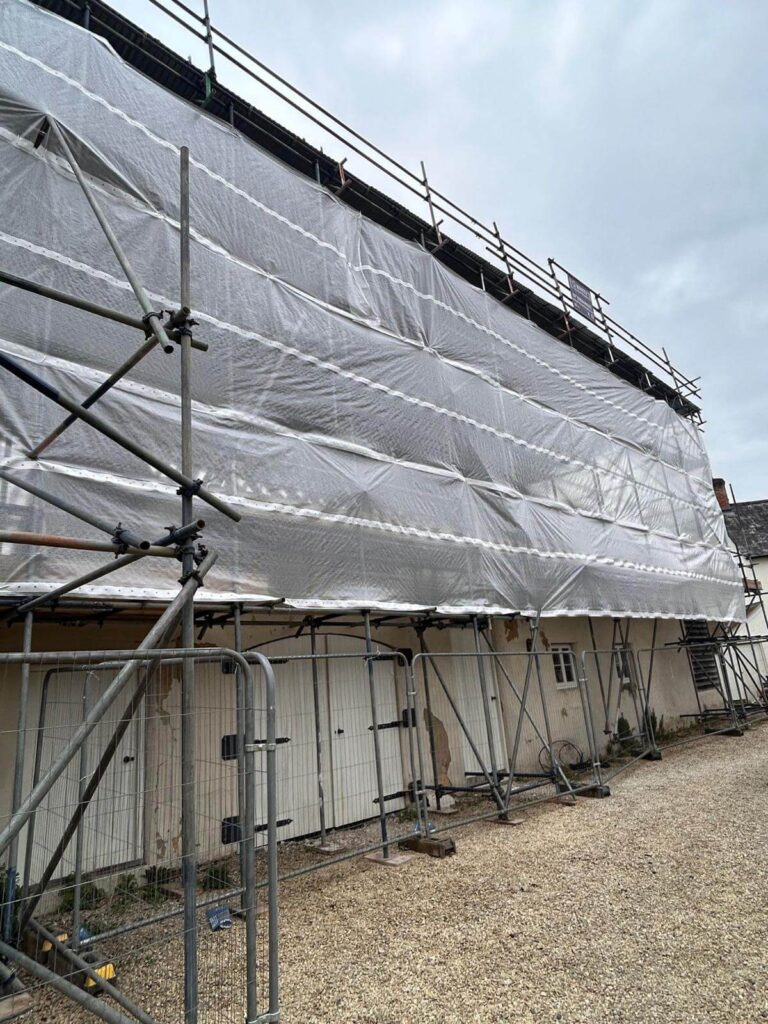
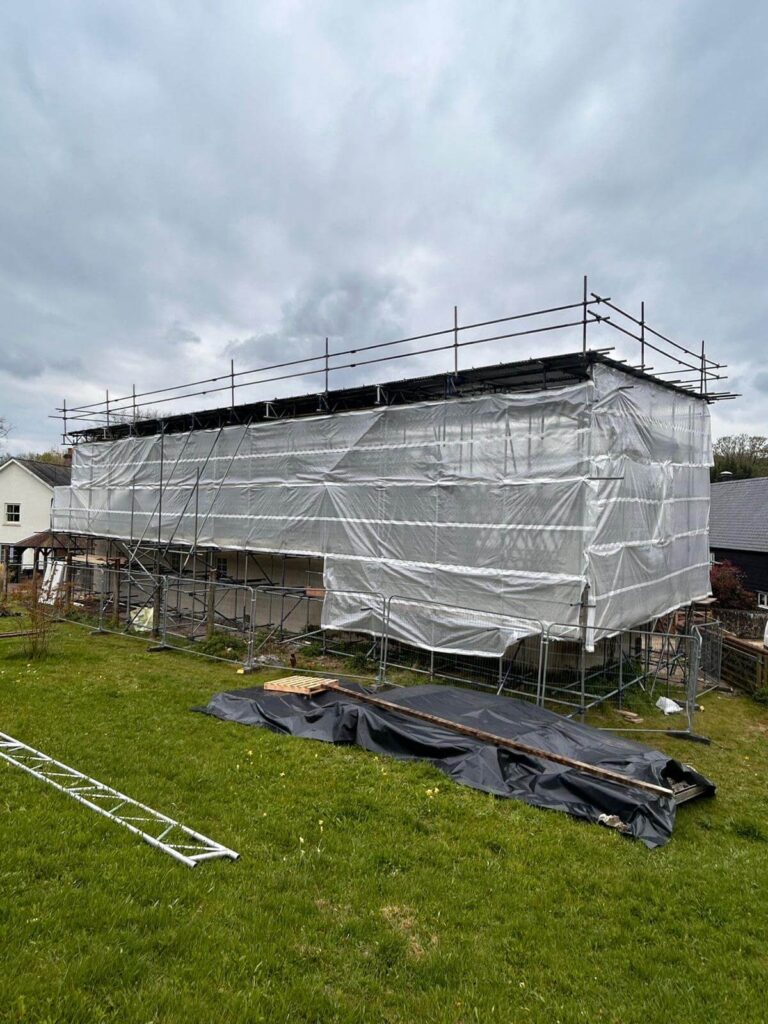
Tube-and-fitting scaffolding is one of the classic forms of steel scaffolding. It uses scaffold tubes connected with couplers to create a temporary access structure. The system is flexible because it can be adapted around different buildings, shapes and site conditions.
A tube-and-fitting scaffold can be used for many types of work, including:
- Roof Repairs
- Chimney Work
- Brickwork Repairs
- Painting and Decorating
- Window Replacement
- Commercial Maintenance
- Industrial Access
- Heritage Building Repairs
- Temporary Roof Structures
- Difficult Access Projects
The flexibility of tube-and-fitting scaffolding is one reason it remains widely used. Even with modern system scaffolds available, tube-and-fitting is still valuable where the building shape or access requirement is more complicated.
When Did Steel Scaffolding Become Common?
Steel scaffolding became more common during the 20th century as manufacturing improved and construction became more standardised. The rise of larger building projects, urban maintenance, commercial construction and post-war rebuilding all increased the need for strong reusable scaffold systems.
By the middle of the 20th century, steel scaffolding was well established. It had become a normal part of construction work, especially on larger and more demanding projects.
As safety rules developed, properly designed and erected scaffolding became even more important. The industry moved further away from improvised access and towards planned structures installed by trained scaffolders.
Is All Modern Scaffolding Made From Steel?
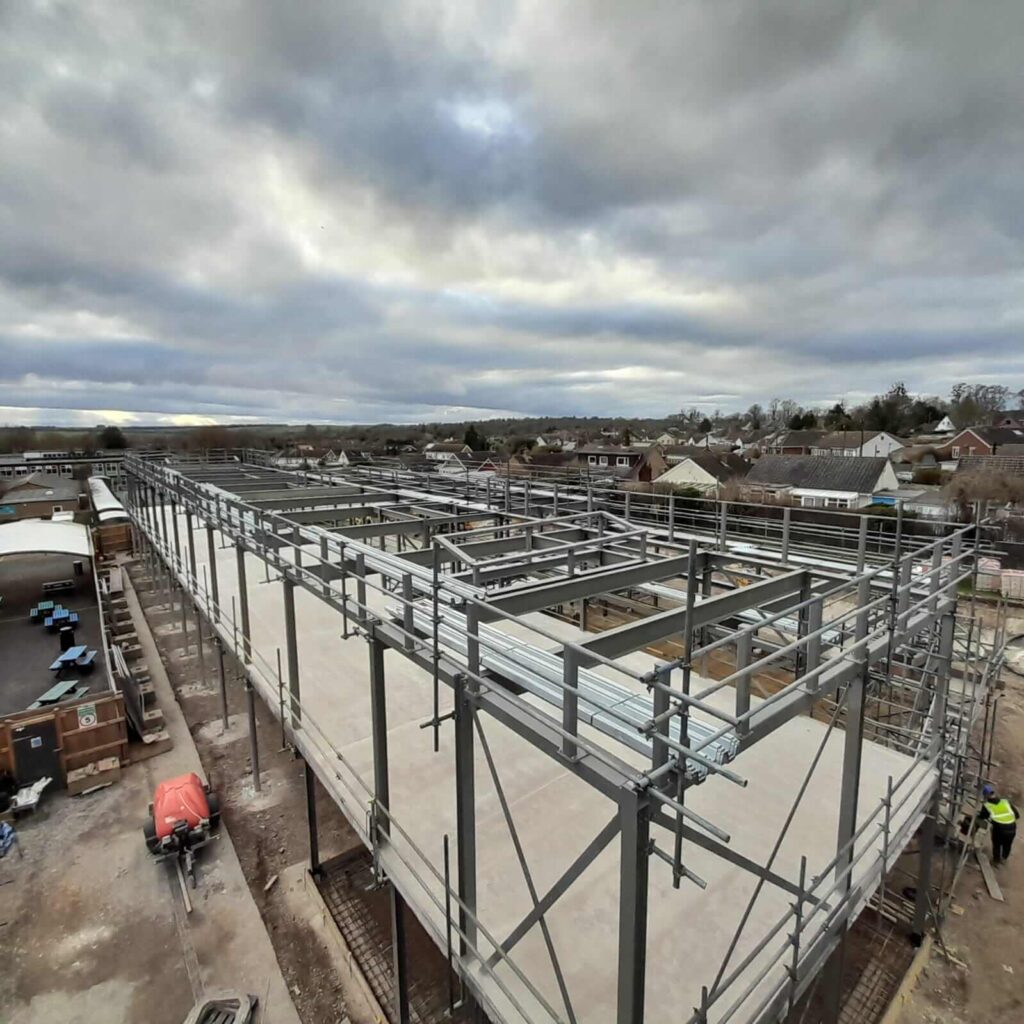
No, not all modern scaffolding is steel. Steel is still common, especially for tube-and-fitting scaffolding and many heavy-duty access structures, but aluminium is also used. Aluminium is lighter, which makes it popular for mobile towers and certain access systems.
Different materials suit different jobs. Steel is strong and durable, while aluminium is easier to move and handle. Some specialist systems may use a mix of materials depending on the type of scaffold and the work involved.
Even so, steel remains one of the most important materials in scaffolding because of its strength, availability and proven use across construction.
Why Does the History Matter?
The history of steel scaffolding matters because it shows how much the trade has changed. Scaffolding was once based heavily on timber, rope and the judgement of individual builders. Modern scaffolding is based on tested components, recognised methods, competent installation and planned safety.
That change did not happen by accident. It came from better materials, better fixings, better engineering and a stronger focus on worker safety.
Steel scaffolding helped make access work more consistent. It allowed scaffolders to build stronger temporary structures around homes, commercial buildings, industrial sites, churches, bridges and public buildings.
Common Misunderstandings About Steel Scaffolding History
It is easy to confuse different stages of scaffolding history. Scaffolding itself is ancient, but steel scaffolding is modern by comparison.
Common misunderstandings include:
- Thinking Steel Scaffolding Has Always Existed
- Confusing Iron Scaffolding With Modern Steel Tube Scaffolding
- Assuming One Person Invented All Scaffolding
- Believing Timber Stopped Being Used Immediately
- Treating Every Metal Scaffold as the Same System
- Forgetting the Importance of Couplers and Fittings
The real story is more gradual. Scaffolding moved from timber to iron experiments, then to steel tubes, improved couplers and modern engineered systems.
Final Thoughts
Steel scaffolding was first used in its modern form in the early 20th century, although earlier iron scaffolding existed during the 19th century. The biggest change came when steel tubes could be connected with reliable metal couplers, creating a stronger and more adaptable scaffold system.
The early 1900s marked the start of modern tube-and-coupler scaffolding. The Jones brothers played an important role in that development, and their scaffold fixing systems helped move the industry away from older timber and rope methods.
Steel scaffolding became popular because it was strong, reusable, adaptable and better suited to the demands of modern construction. Today, it remains one of the most important access solutions in the scaffolding industry.
If you need safe, professionally installed scaffolding for repairs, maintenance, roofing, refurbishment or specialist access work, White’s Scaffolding can help. Our team provides reliable scaffold solutions for domestic, commercial and industrial projects across the South.