If you are planning work at height, you will likely hear the same question come up again and again: how thick are scaffold boards?
It sounds like a small detail, but it shapes how safe the platform feels under your feet. It affects how much weight the board can carry. It influences how confident workers feel when they step onto it.
If you want a clear answer, without guesswork, you are in the right place. I will walk you through the real thickness, what it means for your project, and how it connects to safety, strength, and everyday use.
What is the standard thickness of scaffold boards?
In the UK, the standard scaffold board thickness is 38mm.
You will see this size used across most domestic and commercial jobs. It has become the industry norm because it balances strength and weight in a practical way.
At 38mm thick, the board provides enough support for workers, tools, and materials when used correctly. It does not feel overly heavy during handling, which matters when boards move around a site.
You might also see the full dimensions written as 38mm thick, 225mm wide, with lengths that vary depending on the job.
That 38mm figure is the key number. It tells you what the board can handle and how it performs under load.
Why does 38mm thickness matter so much?
Thickness controls strength. That connection is simple, but important.
When a scaffold board sits between supports, it carries weight across that span. If the board is too thin, it bends more easily. If it bends too much, it becomes unsafe.
At 38mm, the board holds its shape under typical working loads. It spreads weight across its length and keeps the platform stable.
This matters when you think about real situations. A roofer steps onto the board with tools in hand. Materials sit nearby. Movement happens constantly. The board must handle all of that without flexing too much.
That is why thickness is not just a number. It is a safety factor built into every step.
Are all scaffold boards the same thickness?
Most boards follow the 38mm standard, but not all boards are identical.
You will come across different types:
- Traditional timber scaffold boards
- Machine graded boards
- Flame retardant boards
- Plastic or composite boards
Each type still tends to stay close to the standard thickness, but the internal strength can vary.
For example, a graded timber board has been tested to meet specific load requirements. A basic timber board may not offer the same consistency.
So while the thickness often stays the same, the performance can change depending on the material and grading.
How wide are scaffold boards and why does it matter?
Thickness works alongside width.
In the UK, most scaffold boards measure 225mm wide. This width creates a stable walking surface when several boards sit side by side.
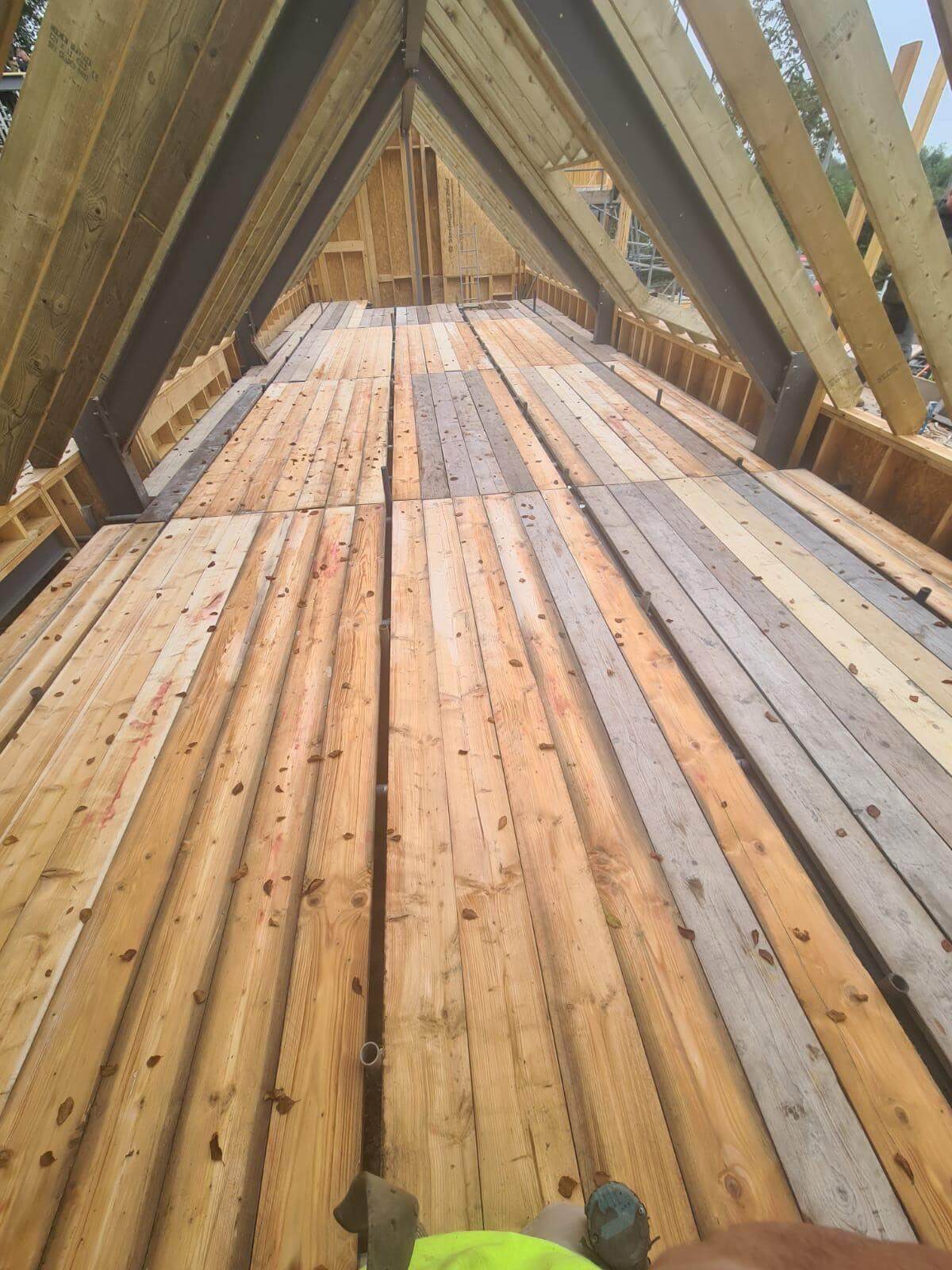
When you stand on a scaffold platform, you are usually standing on multiple boards placed together. The width of each board helps create that overall surface.
If the boards were narrower, the platform would feel less secure. If they were wider, they would become harder to handle.
The 38mm thickness and 225mm width work together. They create a balance between strength, stability, and practicality.
How much weight can a 38mm scaffold board hold?
This is where thickness becomes real.
A properly supported 38mm scaffold board can carry significant weight, but only when used within safe limits.
The load depends on how far apart the supports sit. This distance is often called the span.
A shorter span increases strength. A longer span reduces it.
In typical use, scaffold boards are supported every 1.2 metres. At this spacing, a standard board can safely support the loads expected on a working platform.
If the span increases beyond this, the board bends more. That is when risks start to grow.
So the thickness works together with support spacing. One without the other does not give you the full picture.
What happens if scaffold boards are too thin?
If a board lacks thickness, it loses strength.
You may notice more flex when weight is applied. Over time, this can lead to cracks or failure.
Even small amounts of extra bending can affect how safe the platform feels. Workers may hesitate. Movement becomes less confident. That slows the job.
In more serious cases, a thin or damaged board can fail under load. That risk is exactly what proper standards aim to avoid.
This is why you should never assume any piece of timber can act as a scaffold board. The thickness alone does not guarantee safety, but it plays a critical role.
Do scaffold boards change thickness over time?
In theory, the thickness stays the same. In practice, wear and damage can affect performance.
Boards face heavy use. They get exposed to weather. They absorb moisture. They dry out again. Over time, this cycle can weaken the material.
Edges may chip. Surfaces may crack. Metal end bands can loosen.
Even if the board still measures close to 38mm, its strength may no longer match its original condition.
That is why inspections matter. A board that looks worn should not remain in use without proper checks.
What are metal end bands and why do they matter?
You will notice metal strips at the ends of most scaffold boards.
These bands protect the board from splitting. They hold the timber together, especially when weight presses down near the edges.
Without these bands, the board could crack along its length. Once that happens, the strength drops quickly.
The bands do not change the thickness, but they help maintain the board’s structural integrity.
When you see a board without secure end bands, it is a sign to question its condition.
Are plastic scaffold boards the same thickness?
Plastic or composite boards often follow similar dimensions, including thickness.
However, they behave differently under load.
These boards resist water and do not rot like timber. They also tend to offer more consistent strength because they are manufactured to precise standards.
Even so, the 38mm thickness remains a common reference point. It ensures compatibility with existing scaffold systems.
If you are using alternative materials, always check their load ratings rather than relying on thickness alone.
How does thickness affect safety on site?
When you step onto a scaffold platform, you rely on what sits beneath your feet.
A board that feels solid gives confidence. A board that moves or flexes creates doubt.
That feeling matters more than you might expect. Workers perform better when they trust the platform. They move more freely. They focus on the task rather than the risk.
Thickness plays a direct role in that experience. It supports the structure. It reduces movement. It helps create a stable working surface.
Safety is not just about rules. It is about how the setup feels in real use.
Do different jobs require different scaffold board setups?
Yes, they do.
A light painting job may not place heavy demands on the boards. A roofing project with materials stacked nearby creates a different load.
For heavier work, scaffolders may adjust the setup. They may reduce the span between supports. They may use additional boards to spread the load.
The thickness remains the same, but the overall system adapts to the job.
This flexibility is what makes scaffolding effective across different types of work.
Can you use scaffold boards for other purposes?
You may have seen scaffold boards used in gardens, furniture, or DIY projects.
While they can be repurposed, you should remember their original purpose.
They are designed for strength and durability, not for decorative use. If you use them elsewhere, check their condition first.
A worn board may still look solid but may not offer the same structural integrity.
For scaffolding use, only boards that meet proper standards should be used.
How do you know if a scaffold board meets standards?
In the UK, scaffold boards often follow recognised grading systems.
Machine graded boards meet specific strength requirements. They have been tested to ensure they perform under load.
Visually graded boards rely on inspection to confirm quality.
You may also see markings or stamps that indicate compliance with standards.
If you are unsure, ask your scaffolder. They will know whether the boards meet the required specifications.
What should you look for before using scaffold boards?
Before any work begins, take a moment to look at the boards in place.
Check for visible cracks. Look at the ends to see if the bands are secure. Notice whether the boards sit flat without excessive movement.
You do not need to inspect every detail, but a quick visual check can highlight obvious issues.
If something looks wrong, raise it before work starts.
How does thickness connect to overall scaffold design?
Thickness is one part of a larger system.
The scaffold structure includes vertical poles, horizontal supports, and platforms made from boards.
Each part works together. The boards rely on the supports. The supports rely on proper assembly.
You cannot look at thickness in isolation. It forms part of a system designed to carry weight safely.
When everything aligns, the result is a stable and reliable platform.
What is the simplest way to think about scaffold board thickness?
If you want a clear takeaway, keep it simple.
A standard scaffold board in the UK is 38mm thick. This thickness supports safe working when the board is used correctly, supported properly, and maintained in good condition.
Everything else builds on that foundation.
Final thoughts: why this small detail matters more than you expect
At first glance, thickness feels like a minor detail. But when you look closer, it connects to safety, performance, and confidence on site.
When you understand what 38mm represents, you start to see how scaffolding works as a system. You see how each part supports the next.
If you are planning work on your home, this knowledge helps you ask better questions. It helps you understand what you are paying for. It gives you clarity when decisions need to be made.
And most importantly, it helps you feel confident that the structure around your home is built to support the job properly.
If you want to be certain about your setup, speak to a professional scaffolder. They will confirm the details, check the materials, and make sure everything meets the standards your project needs.
That conversation is where small details, like board thickness, turn into real peace of mind.