When you start planning work on your home, one question often comes up early: what size scaffolding do I actually need?
It sounds simple, but the answer depends on more than just the height of your house. The size of the scaffold shapes how safe the job feels, how fast the work moves, and how much you end up paying. Get it right, and everything runs smoothly. Get it wrong, and you risk delays, added costs, and unnecessary stress.
If you are trying to figure this out before speaking to a scaffolder, this guide will help you understand what matters, what affects size, and what you really need for your specific job.
Why does scaffolding size matter so much?
Scaffolding is not just about reaching high places. It creates a working environment. When the size fits the job, everything feels more stable, more organised, and easier to manage.
If the scaffold is too small, workers struggle to move. Materials sit in awkward places. Work slows down. Safety risks increase because people start working around limitations.
If the scaffold is too large, you pay for space you do not use. The setup takes longer. It may even block access you need around your home.
The right size gives you balance. Enough room to work safely. Enough coverage to complete the job. No wasted space.
What parts of your house affect the scaffold size?
You might think the height of your house is the only factor. In reality, several details shape the final setup.
The width of your property plays a big role. A small terrace needs far less structure than a wide detached home.
The number of storeys matters. A single-storey extension needs a very different setup compared to a three-storey townhouse.
The roof design changes everything. A simple pitched roof is easier to access than a complex structure with dormers, chimneys, or multiple levels.
Access around your home also matters. If space is tight, the scaffold may need to be adjusted to fit safely without blocking pathways or neighbouring properties.
Each of these factors combines to determine the overall size.
What size scaffold do you need for a typical house?
Most homeowners want a simple answer, so here is a rough guide based on common UK property types.
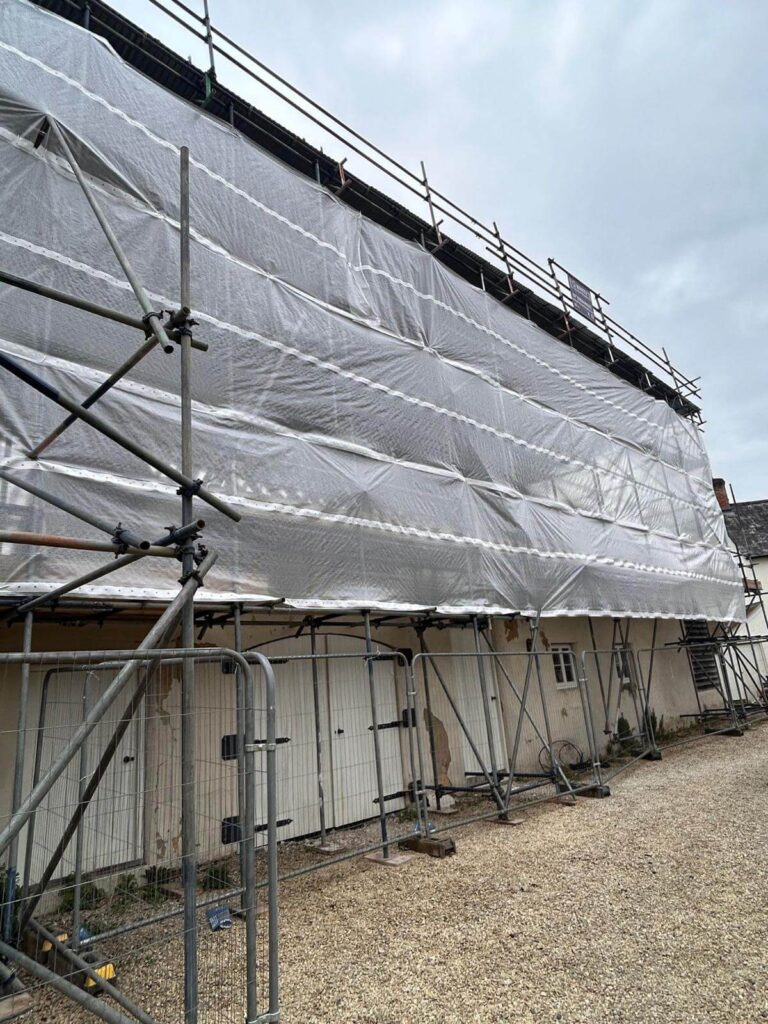
For a standard two-storey semi-detached house, scaffolding across the front usually measures around 6 to 10 metres wide and up to the roofline. This is often enough for roof repairs, gutter work, or painting.
For a mid-terrace property, the width is usually smaller, often between 4 and 6 metres. If you only need access to one side, the structure stays compact.
For a detached house, the size increases. Full access around the property can mean 15 to 30 metres of scaffold, depending on the footprint.
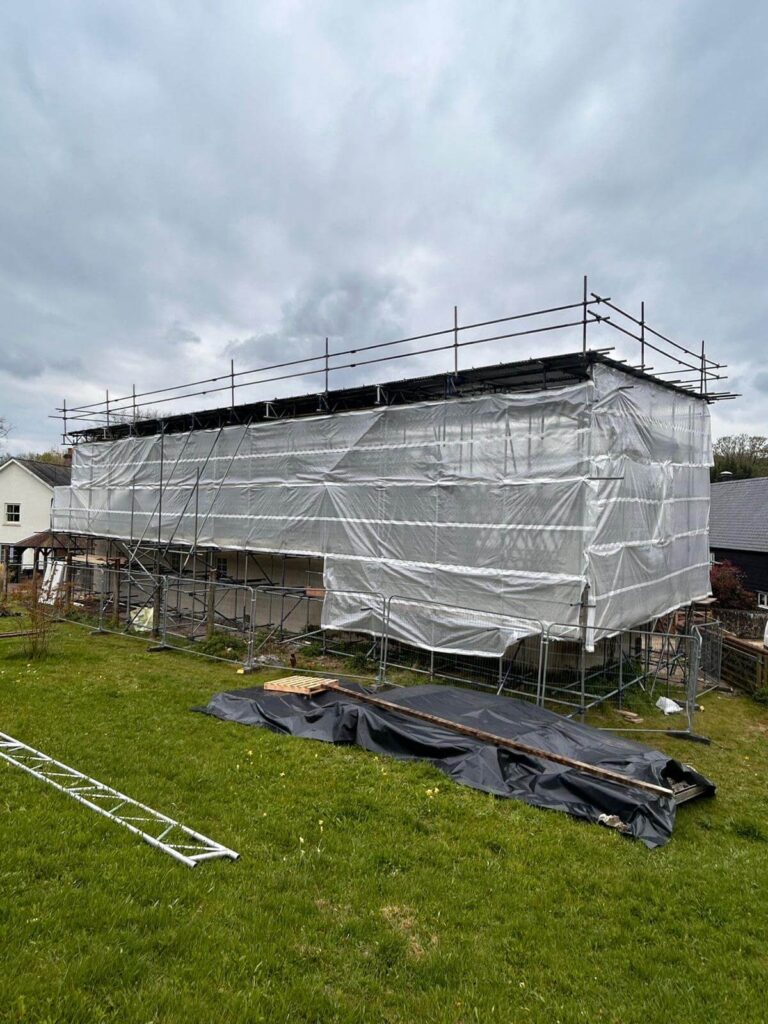
If your project involves the entire roof, a full wrap-around scaffold becomes necessary. This means covering all sides, which increases both size and cost.
These are starting points. Your actual setup depends on the work being done.
Do you need full scaffolding or just partial access?
One of the biggest decisions you will face is whether you need full scaffolding or just a smaller section.
Partial scaffolding works well when the job focuses on one area. For example, if you are repairing a chimney or fixing a small section of roof, you may only need access on one side.
Full scaffolding makes sense when the work spreads across the entire property. Roof replacements, rendering, or large-scale painting projects usually need full coverage.
Think about the job from start to finish. If workers need to move around the house, full access often saves time and avoids repeated setup costs.
How high should your scaffolding go?
Height is one of the most important parts of sizing.
The scaffold must reach slightly above the working area. This gives workers a safe platform and space to move tools and materials.
For most homes, the height follows a simple pattern:
- Single-storey work usually needs scaffolding up to around 3 to 4 metres
- Two-storey homes often require 5 to 7 metres
- Three-storey properties may need 8 metres or more
The key point is this: the platform should sit at a comfortable working height, not at the exact level of the job. This makes the work safer and more efficient.
How wide should the scaffold platform be?
Width often gets overlooked, but it matters just as much as height.
A narrow platform might be enough for quick inspection work. But if workers need to carry materials, tools, or equipment, the platform must be wider.
Most domestic scaffolding uses standard board widths that create a stable working area. For roofing work, a fully boarded platform is usually the safest option.
This gives enough space to:
- Move freely without stepping off the platform
- Store materials close to where they are needed
- Work without feeling restricted
When the platform feels secure, the job moves faster and with fewer risks.
What size scaffold do you need for roofing work?
Roofing projects often require larger scaffolding than you expect.
If you are replacing tiles, repairing the structure, or installing new roofing, the scaffold must cover the full working area. This often means:
- Full width of the house
- Access up to the roofline and slightly above
- Guardrails and edge protection for safety
For larger projects, a temporary roof structure may also be needed. This protects your home from weather while work takes place.
This type of setup increases both size and complexity, but it keeps the project moving even in poor conditions.
Do extensions or conservatories change the scaffold size?
Yes, they do. Any structure attached to your home changes how scaffolding is built.
If you have a conservatory, garage, or extension, the scaffold may need to bridge over it. This requires extra support and careful design.
The size increases because the scaffold must span a wider area while staying stable.
This is where experience matters. A good scaffolder will design a setup that works around these features without putting them at risk.
How much space do you need around your house?
Before scaffolding goes up, you need to think about access.
There must be enough space to install the structure safely. This includes room for base plates, support poles, and working platforms.
If your house sits close to a pavement or road, additional measures may be needed. This can include permits or protective barriers.
If space is tight, the scaffold design may change to fit the area without blocking access.
Planning this early helps avoid delays.
Can you reduce the size to save money?
It is tempting to cut down the size to reduce costs. In some cases, this works. In others, it creates bigger problems.
If the scaffold becomes too small, workers may need to reposition it during the job. This adds time and labour costs.
In many cases, a slightly larger scaffold saves money overall because the job finishes faster and with fewer interruptions.
The goal is not to go as small as possible. The goal is to get the size right.
How do scaffolders decide the right size?
A professional scaffolder does not guess. They assess your property and the job requirements before recommending a size.
They look at:
- The type of work being carried out
- The structure and layout of your home
- Access points and surrounding space
- Safety requirements for the job
From this, they design a scaffold that fits both the job and the property.
This is why site visits matter. They ensure the size is accurate and practical.
What happens if you choose the wrong size?
Choosing the wrong size usually shows up quickly.
If the scaffold is too small, workers struggle to complete the job efficiently. They may need to adjust the structure, which delays progress.
If the scaffold is too large, you pay more than necessary and deal with a setup that feels excessive.
In both cases, the experience becomes more stressful than it needs to be.
Getting the size right from the start avoids these issues.
Do you need scaffolding for small jobs?
Not every job needs full scaffolding.
For small repairs, alternatives like access towers or ladders may work. But these come with limits.
If the job lasts more than a short time or involves heavy materials, scaffolding usually becomes the safer option.
Even for smaller tasks, a compact scaffold can provide better stability and peace of mind.
How long will the scaffold stay up?
The size of the scaffold often links to how long it stays in place.
Larger projects usually need longer hire periods. Smaller setups can come down quickly once the work finishes.
It is worth planning your timeline in advance. This helps you choose a scaffold size that matches the duration of the job.
How do you know what size you need without guessing?
The simplest way is to describe your project clearly.
Think about what work you are doing, where it is located, and how long it will take.
When you speak to a scaffolder, they will use this information to guide you. Many will also visit your property to confirm the details.
You do not need to figure everything out on your own. But understanding the basics helps you ask the right questions.
What should you do next?
If you are planning work on your home, take a moment to think about access before anything else.
Ask yourself:
- Where will the work take place?
- How high does access need to be?
- Will workers need to move around the property?
These questions give you a clear starting point.
From there, a professional scaffolder can design a setup that fits your home and your project.
Final thoughts: getting the size right makes everything easier
Scaffolding is one of those things you only notice when it causes problems. When it is sized correctly, it simply works in the background.
The right size gives you safety, efficiency, and peace of mind. It helps the job run smoothly and finish on time.
If you are unsure, do not guess. Speak to someone who understands how to match the scaffold to the job.
It is a small decision at the start, but it makes a big difference to how everything unfolds.