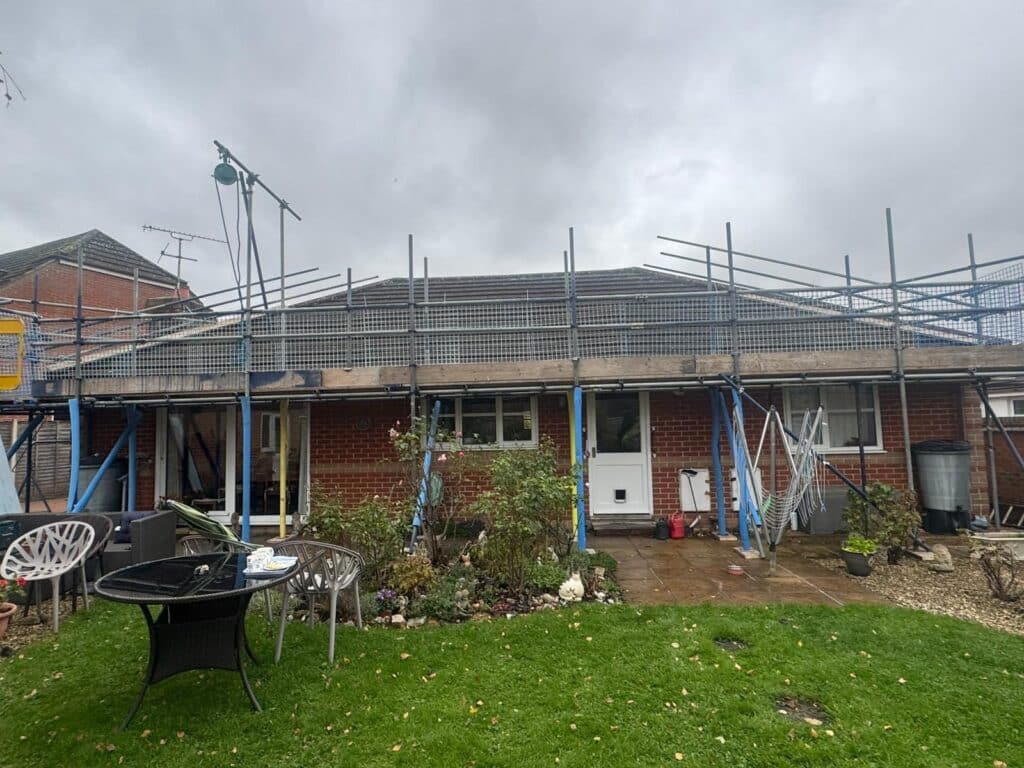
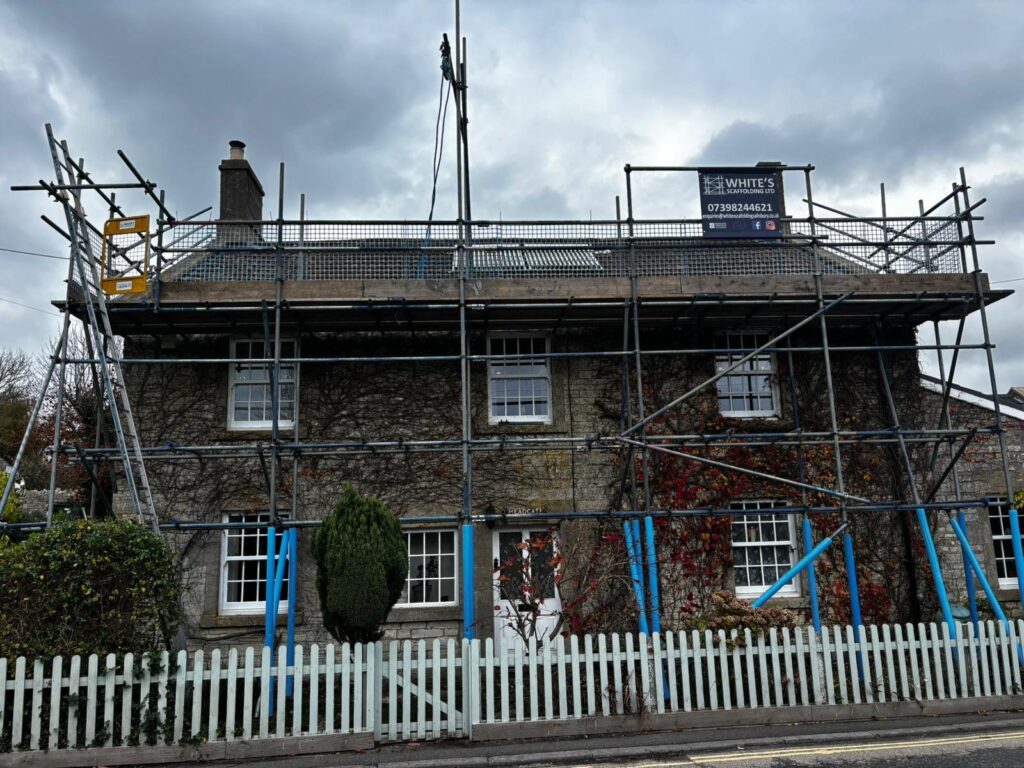
Scaffolding for Nursing Homes and Care Facilities

Scaffolding for Nursing Homes planned around residents, staff, visitors and live care operations

  • Safe access for roof repairs, gutters, windows, chimneys, cladding and external maintenance
  • Careful scaffold layouts around bedrooms, entrances, gardens, ambulance access and communal areas
  • Phased scaffold hire for care homes, residential homes, assisted living sites and healthcare buildings

Experienced Scaffolders

With over 15 years of experience in the scaffolding industry, White’s Scaffolding delivers quality workmanship and dependable service across Wiltshire, Hampshire, and Dorset.

All Projects, Large or Small

From domestic homes and extensions to industrial and commercial sites, we provide safe, reliable scaffolding tailored to every type of project.

Fair and Competitive Pricing

We offer realistic, transparent rates with no hidden charges, providing exceptional value and professional results from start to finish.

Safety First, Always

Our fully trained and insured team works to strict health and safety standards on every job, ensuring secure structures and complete peace of mind.

Scaffolding for Nursing Homes That Need Calm, Controlled Access

Scaffolding for Nursing Homes needs to be planned around vulnerable residents, care staff, visitors, medical access and the daily routine of a live care setting. A nursing home is not the same as an empty building site. Residents may be resting, receiving care, moving through communal areas, using gardens or waiting for family visits while essential roof repairs, gutter work, window replacement, chimney maintenance or exterior refurbishment takes place around them.

A well-planned scaffold helps separate the working area from the care environment. It can provide safer platforms for trades while reducing unnecessary disruption around bedrooms, lounges, dining rooms, reception areas, staff entrances, delivery points and emergency routes. The scaffold layout should also consider noise, privacy, window positions, resident movement, restricted access zones and how the home continues to operate while the work is being completed.

Whites Scaffolding provides scaffold hire for nursing homes, residential care homes, assisted living properties and healthcare buildings where careful planning matters. Whether the project needs roof scaffolding for a care home, access scaffold for exterior repairs or temporary roof scaffolding during weather-sensitive works, Whites Scaffolding can assess the site and recommend a practical setup. Contact Whites Scaffolding to arrange a quote before maintenance work affects residents, staff or essential care routines.

Where Care Homes Need Scaffold Access

Nursing home scaffolding is often needed when planned maintenance cannot be delayed but the building must remain occupied. The access method has to support the contractor while keeping resident safety, staff movement and visitor access clear. This is especially important where the work sits above bedroom windows, garden paths, mobility routes, reception areas or car parks used by families and care professionals.

Common care-home scaffold uses include:

  • Roof repairs above resident bedrooms where trades need safe edge access without disrupting internal care.
  • Gutter, fascia and soffit works around lounges, dining rooms, courtyards and entrance canopies.
  • Window replacement or external decoration where privacy and resident comfort need careful consideration.
  • Chimney, brickwork, render or cladding repairs on older care home buildings and converted properties.
  • Temporary roof scaffolding for weather-sensitive works where water ingress would create a serious operational issue.

Whites Scaffolding can provide care home scaffold hire that is planned around the actual building and its daily use. If your nursing home needs safe access without creating avoidable disruption, contact Whites Scaffolding and discuss the maintenance programme before trades are booked in.

Why Choose Whites Scaffolding?

Whites Scaffolding understands that nursing home access work has to be handled with more care than a standard commercial scaffold. A care setting may have residents with mobility needs, staff moving between shifts, relatives visiting, deliveries arriving, medication routines, meal times and emergency routes that must remain usable. Those pressures affect how the scaffold should be positioned and when work should happen.

The team can support residential care home scaffolding, nursing home maintenance scaffolds, assisted living scaffold hire, healthcare building scaffolding and safe access for live care environments. Rather than treating the property as an empty site, Whites Scaffolding considers access routes, resident areas, staff entrances, quiet zones, gardens, vehicle movement and the trades using the platform.

Choosing Whites Scaffolding gives care home managers, facilities teams and contractors a practical way to organise safe working access. If you need scaffolders for nursing homes who understand the importance of planning around people, contact Whites Scaffolding and arrange a quote before the maintenance schedule is finalised.

How Nursing Home Scaffold Planning Protects Daily Operations

A scaffold in a care setting should make maintenance safer while keeping the building calm, accessible and manageable for residents and staff.

Resident-Focused Access

The scaffold layout can account for bedroom windows, lounges, garden routes, mobility aids and areas where residents spend time each day.

Clear Staff Movement

Care teams need predictable routes for shifts, medication rounds, cleaning, laundry, catering, visitors and emergency movement through the site.

Phased Maintenance

Larger care homes may benefit from phased scaffolding so one elevation or courtyard area is handled at a time instead of disrupting the whole site.

Controlled Working Areas

Physical separation, careful access points and tidy setup planning help keep contractors away from resident routes and sensitive parts of the home.

Scaffold Setups For Care Home Buildings And Grounds

Care home buildings vary widely. Some are purpose-built nursing homes with large wings, flat roof sections, plant areas and multiple entrances. Others are converted houses, older residential properties, retirement complexes or specialist care facilities with pitched roofs, chimneys, extensions, courtyards and garden areas. The scaffold setup should match the building rather than forcing one standard layout onto every care environment.

Typical scaffold arrangements include:

  • Independent scaffolding for roofline repairs, external painting, pointing, cladding and general maintenance.
  • Temporary roof scaffolding where roof repairs must continue while protecting occupied rooms below.
  • Bridge sections over entrance canopies, conservatories, plant areas and single-storey extensions.
  • Scaffold towers for smaller inspection jobs, localised maintenance and controlled short-duration access.
  • Guarded platforms around gutters, high windows, dormers, chimneys and upper-level building defects.

Whites Scaffolding can help facilities managers decide whether the job needs a full scaffold, a phased scaffold, a tower, a temporary roof or a more specific arrangement. If you need access scaffolding for care homes that supports maintenance without overwhelming the site, contact Whites Scaffolding for advice before work begins.

Care-Sensitive Access For Live Nursing Home Sites

A live nursing home needs access planning that respects both safety and care. Work may need to avoid rest times, visiting periods, meal services, medication rounds, ambulance access, resident transfers and busy staff handover periods. A scaffold can be a major help, but only if it is positioned and managed with the daily rhythm of the home in mind.

Important planning considerations include:

  • Keeping main entrances, fire exits, ambulance routes and delivery points clear wherever possible.
  • Considering bedrooms, lounges and dining areas where residents may be affected by noise, privacy or restricted daylight.
  • Maintaining safe routes for wheelchairs, walking frames, staff trolleys, visitors and contractors.
  • Planning material drop-off and scaffold erection around quieter times where the site requires it.
  • Using phased access where roof, gutter or façade works can be split into more manageable sections.

Whites Scaffolding can work with care home managers, facilities teams and contractors to plan scaffold access around residents and operations. If your project needs nursing home roof scaffolding, commercial care home scaffolding or safe access for a live healthcare site, contact Whites Scaffolding to discuss the safest route forward.

How The Scaffolding for Nursing Homes Process Works

The process starts with a detailed look at the building and the care environment. Whites Scaffolding reviews the working height, roof shape, external surfaces, vehicle access, resident routes, staff entrances, garden areas, fire exits, delivery points and the maintenance task being carried out. This helps decide whether the job needs independent scaffolding, a tower, phased scaffold access, a temporary roof or a more bespoke layout.

Once the access requirement is clear, the scaffold plan can be agreed around the nursing home’s daily operation. This may include where materials can be delivered, which entrances must remain clear, whether the scaffold should be installed in phases, how resident privacy should be protected and whether certain works are better scheduled around quieter periods. For larger care homes, phased elevation access may be more practical than surrounding the whole building at once.

After erection, the scaffold should be checked before use and inspected at the required intervals while it remains in place. Contractors can then complete roof repairs, gutter work, window replacement, render repairs, cladding, decoration or chimney maintenance from a safer platform. Once the work is finished, Whites Scaffolding removes the structure in an organised way so the home can return to normal as quickly as possible.

Scaffolding for Nursing Homes Prices And Cost Factors

Scaffolding for Nursing Homes prices vary because live care buildings often need more planning than standard empty-site access. A small scaffold tower or short-term localised access for a minor repair may start from around £750 to £1,450. A single-elevation scaffold for gutter work, roofline repairs, decoration or upper-window maintenance may commonly range from £1,900 to £5,800 depending on height, duration, access and the level of separation needed.

Larger nursing home projects can cost more because they may involve phased access, several elevations, protected resident routes, temporary roof cover, debris netting, sheeting, guarded platforms, out-of-hours erection, longer hire periods or public-facing areas. A multi-elevation care home scaffold, roof refurbishment scaffold or large temporary roof structure may range from £6,000 to £18,000 or more where the site is complex or the hire period is extended.

The main cost factors include building size, scaffold height, number of elevations, hire duration, access restrictions, resident protection measures, loading needs, inspection requirements, delivery access, temporary roof requirements and whether the scaffold has to support several trades. Whites Scaffolding can provide a more accurate quote after reviewing the home, the maintenance plan and the areas that need safe access.

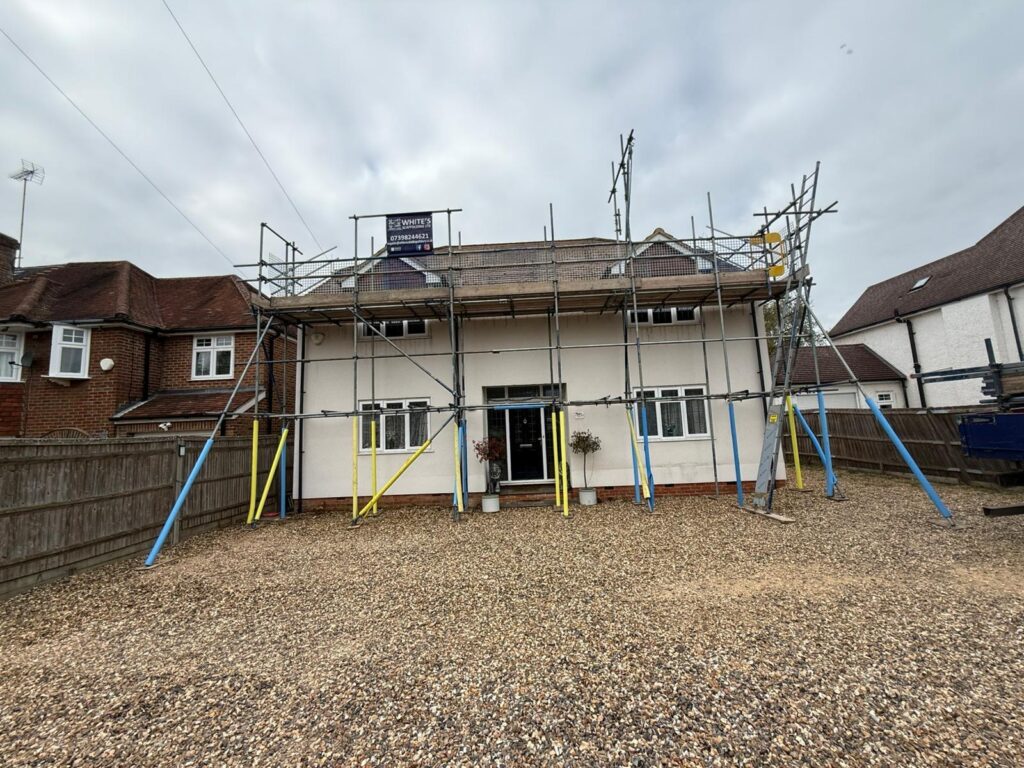
FAQs

Scaffolding for nursing homes can cost more than simple domestic scaffold hire because the building is usually occupied and the work has to account for residents, staff, visitors and care operations. Smaller access jobs may cost from hundreds to low thousands, while larger care home scaffolds can cost several thousand pounds.

Whites Scaffolding can provide a more accurate quote once the building, access route, working height and maintenance plan are understood. The price depends on the scaffold size, hire duration, phasing, protection measures and whether temporary roof cover is needed.

Yes, scaffolding can often be used while a nursing home remains open, but the layout must be planned carefully. The scaffold should account for resident movement, staff routines, visitors, emergency routes, deliveries and areas where people may be resting or receiving care.

Whites Scaffolding can help plan access around a live care setting so essential maintenance can continue with less disruption. Phased scaffold installation may be useful where the home needs to keep certain entrances, wings or gardens available.

Many care home roof repairs need scaffolding because roofers require stable platforms, edge protection and safe access to materials. This is especially important where the work sits above occupied rooms, communal lounges, dining spaces or busy entrance areas.

Whites Scaffolding can plan nursing home roof scaffolding around the affected elevations and site restrictions. The scaffold can be arranged to give trades safe access while helping the care home maintain essential routes.

Scaffolding should be inspected before first use, at intervals of no more than seven days while it remains in place, and after high winds, alteration, impact or anything else that could affect safety. This applies whether the scaffold is on a domestic, commercial or care-sector site.

For nursing homes, inspection planning matters because the scaffold may be close to resident areas, visitor routes and staff access points. Whites Scaffolding can explain the inspection expectations when the scaffold hire is arranged.

Yes, scaffold work can often be phased around residents, especially on larger nursing homes with several wings, courtyards or elevations. Phasing can help reduce disruption by keeping the work focused on one area at a time rather than affecting the whole building.

Whites Scaffolding can discuss phased access with care home managers, facilities teams and contractors. This can be useful for roof repairs, gutter replacement, window works, decoration and façade maintenance.

Main entrances, fire exits, ambulance routes, staff entrances, delivery points, wheelchair routes and visitor paths should be considered before scaffold installation. Some areas may need to remain clear at all times because they are essential to the care home’s daily operation.

Whites Scaffolding can review these routes before planning the scaffold layout. This helps reduce avoidable conflict between the maintenance work and the home’s care responsibilities.

Scaffolding can include protection measures such as toe boards, debris netting, sheeting and controlled working areas where appropriate. The exact protection depends on the type of work, the elevation, the site layout and whether resident or visitor routes pass nearby.

Whites Scaffolding can advise what protection may be sensible for nursing home maintenance work. The aim is to create a safer working area while helping the care home keep people away from the contractor zone.

Yes, scaffolding can be used for upper-floor window replacement in care homes where installers need safe platforms for lifting, removing, sealing and finishing frames. It can be particularly useful where several rooms are being worked on in sequence.

Whites Scaffolding can plan access around bedroom windows, communal areas and privacy concerns. Early coordination helps the care team manage resident communication and room access around the works.

Temporary roof scaffolding can be suitable for nursing homes when roof work needs weather protection. This can be important where water ingress could affect occupied rooms, electrical systems, care equipment or communal areas.

Whites Scaffolding can discuss temporary roof scaffolding for care homes where repairs are larger, exposed or weather-sensitive. The cost depends on the span, building height, duration and complexity of the cover.

Scaffold towers can be useful for shorter, localised tasks where the working area is small and the ground is suitable. They may not be enough for roofline repairs, longer elevations, chimney work, window replacement programmes or projects involving several trades.

Whites Scaffolding can advise whether a tower is suitable or whether a fixed scaffold would be safer. The decision should be based on the task, resident routes, working height and how long the access is needed.

Scaffold installation and maintenance work can often be planned around quieter parts of the day where the care home requires it. Visiting times, meal periods, shift changes, medical visits and resident activities may influence the best time to deliver materials or erect scaffold.

Whites Scaffolding can discuss timing with the care home team before installation. Clear planning helps reduce disruption for residents, relatives and staff.

Scaffolding can affect privacy where platforms pass bedroom windows, bathrooms, lounges or communal rooms. This should be considered before installation so the care home can plan communication, temporary privacy measures or room-use changes if needed.

Whites Scaffolding can help identify where scaffold platforms may pass sensitive areas. Early awareness gives managers more time to coordinate with residents, families and care staff.

Gutter replacement, fascia repairs and roofline maintenance often need scaffolding on nursing homes because the work may run along long elevations and above occupied areas. A stable platform helps trades work safely and complete the job in a more controlled way.

Whites Scaffolding can provide access for guttering and roofline projects around care home buildings. The layout can be planned around entrances, gardens, car parks and resident movement routes.

Scaffolding can be installed near vehicle routes only with careful planning. Ambulance access, staff parking, deliveries and emergency movement should be reviewed before scaffold standards, loading areas or materials are placed on site.

Whites Scaffolding can discuss vehicle access with the care home before installation. Where routes must remain clear, the scaffold layout should be designed with those requirements in mind.

The main price factors are scaffold height, number of elevations, hire duration, access restrictions, phasing, protection measures, loading needs, inspection requirements and whether temporary roof cover is required. Live care environments may also need more careful planning than empty buildings.

Whites Scaffolding prices each nursing home scaffold around the actual site. A small localised repair will not need the same structure as a multi-elevation roof refurbishment or temporary roof system.

Yes, scaffolding can support exterior decorating at care homes, especially on upper elevations, gables, rendered walls, timber details and large façades. Decorators need stable platforms for preparation, filling, sanding and finishing.

Whites Scaffolding can plan access for painting and decorating while considering resident windows, entrances, gardens and visitor routes. This helps the work progress without unnecessary disruption.

Scaffold hire is often useful for planned maintenance programmes because several jobs can sometimes be completed from one access setup. Roofline repairs, gutter cleaning, window work, pointing and decoration may be coordinated to reduce repeat disruption.

Whites Scaffolding can help plan the access side around a maintenance schedule. This can make the scaffold more cost-effective and easier for the care home to manage.

Scaffolding can be used near care home gardens, but resident movement, seating areas, paths, planted areas and outdoor activities should be considered first. Gardens may be important for wellbeing, so blocking them unnecessarily can cause avoidable disruption.

Whites Scaffolding can review garden access before installation. In some cases, phased scaffold work may help keep part of the outdoor space available while maintenance is completed.

Urgent scaffold access may be possible for leaks, storm damage, unsafe chimneys, loose materials or exterior defects that could affect the building. Availability depends on the scaffold size, site access and current workload.

Whites Scaffolding can advise what is realistic once the issue is explained. Photos, access details and information about occupied areas will help the team understand what scaffold is needed.

To get a quote, provide the care home location, photos if available, the type of work, affected elevations, approximate height, access restrictions and expected hire period. Mention entrances, resident routes, ambulance access, gardens, car parks and any sensitive areas near the work.

Whites Scaffolding can then assess the access requirement and provide a quote based on the actual care setting. Clear information at the start helps avoid delays once maintenance contractors are ready to begin.